
What's in the Water?
Chemistry and biology students present research projects at joint poster session
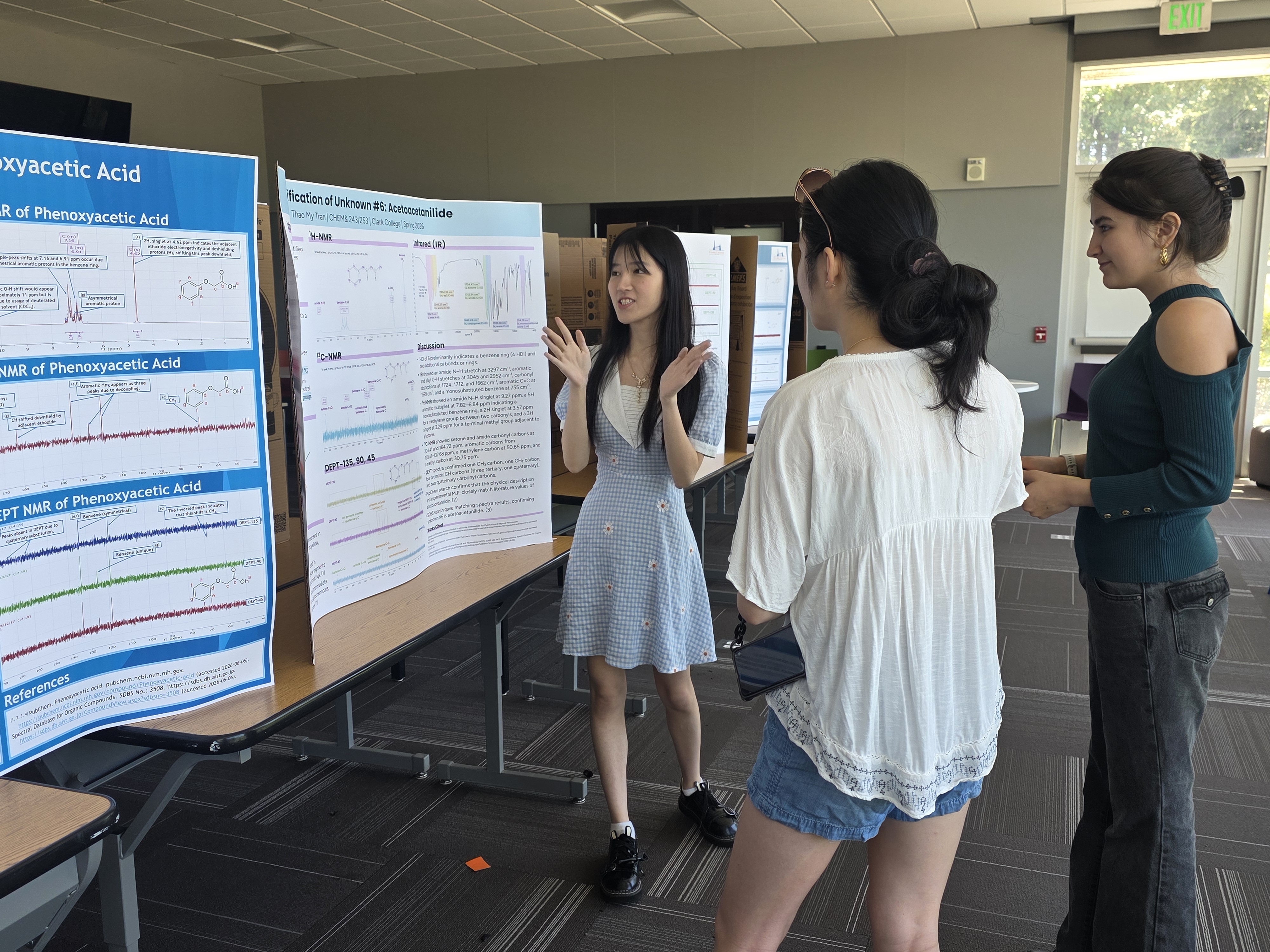
Are there microplastics in our drinking water? How does wind speed affect bee pollination? What exactly is fluoride, and how does it impact our health? These are the kinds of questions students strove to answer at the 5th annual Chemistry and Biology Joint Poster Session held on June 12.
Students, professors, and other members of the Clark community browsed the posters lining the STEM building lobby while chatting with the future scientists. It was the culminating presentation after months of investigation, and the students proudly showcased their hard work by answering questions and sharing their research.
While each poster identified similar data points — background information, a guiding research question, methods for collecting data, research findings, and why it matters — the topics varied by class.
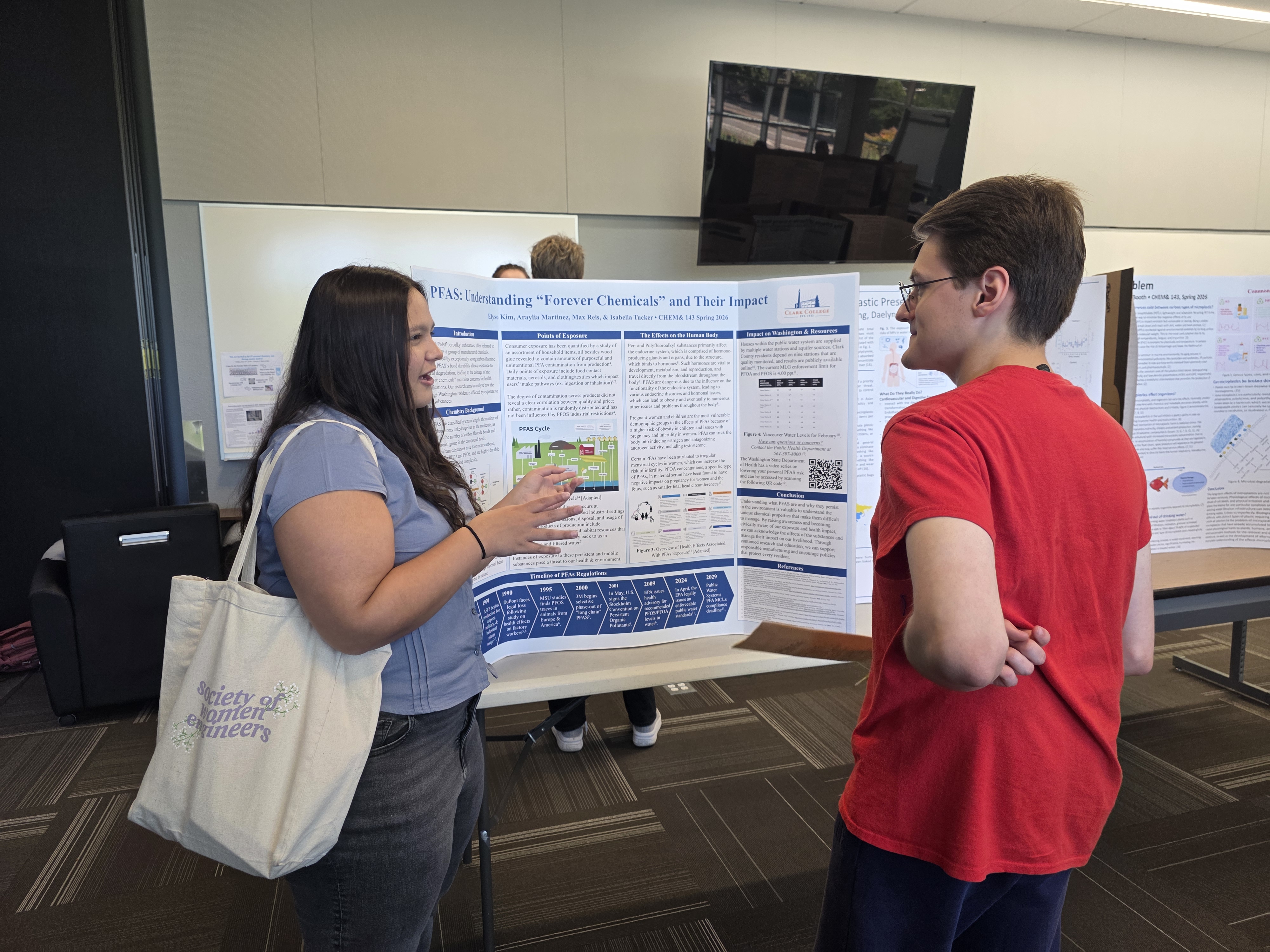
In Chem 142, students posed questions that related to the theme of “What’s in the Water,” relating to one of three topics: fluoride, microplastics, or “forever chemicals.” They spent the term finding sources and creating annotated bibliographies that addressed their questions. Then, in Chem 143, they answered the questions they posed in the previous class, finding data that supported their hypotheses and creating visuals to explain their findings.
For organic chemistry students in Chem 253, their projects focused on something a little more ambiguous. They used various spectroscopic methods, such as melting points, to perform tests on a sample until they could identify an unknown compound. The process for this project also helped students apply lab techniques they learned throughout the term.
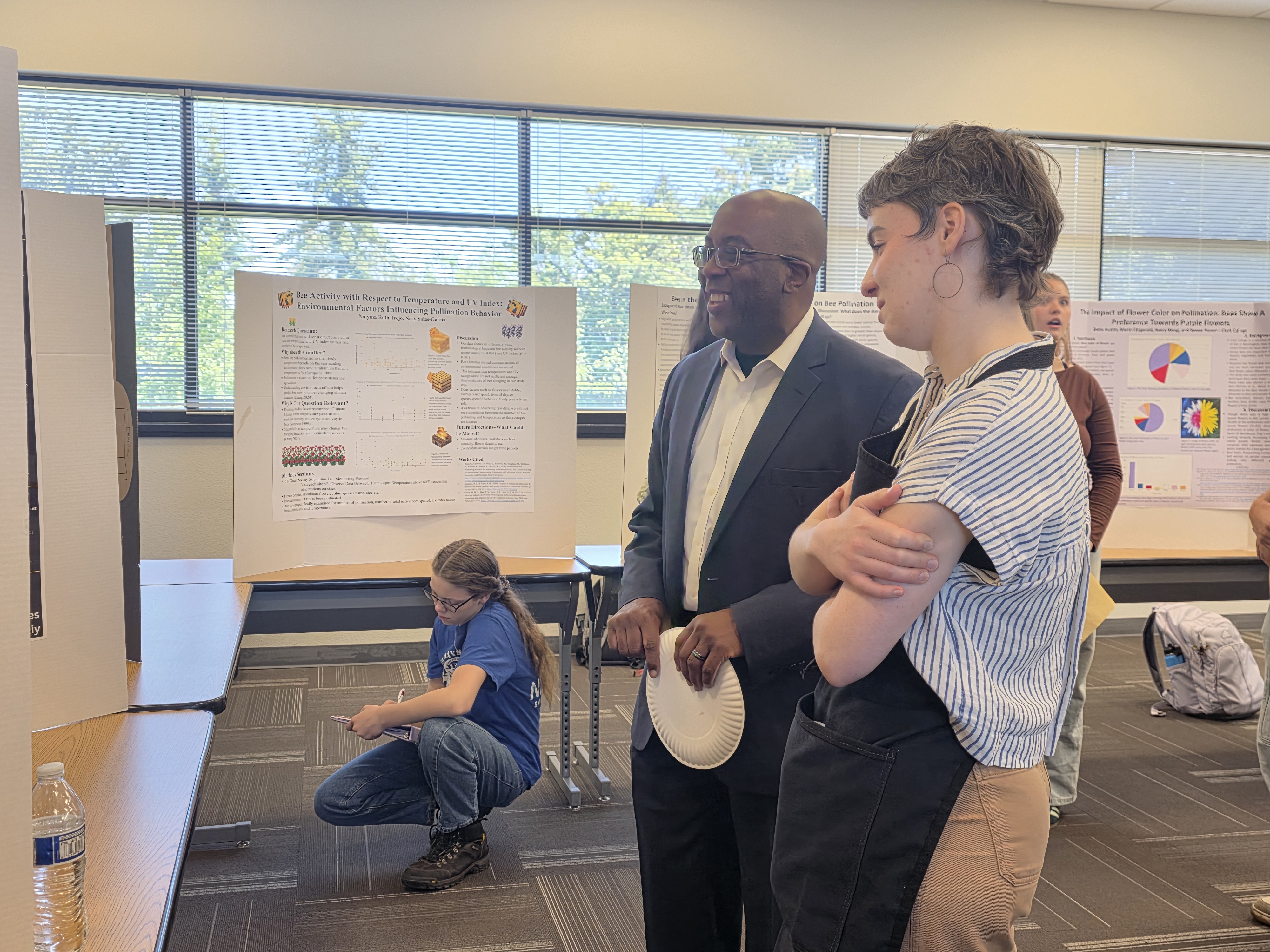
Pictured above: Dr. Terry Brown reviews a biology poster about pollination
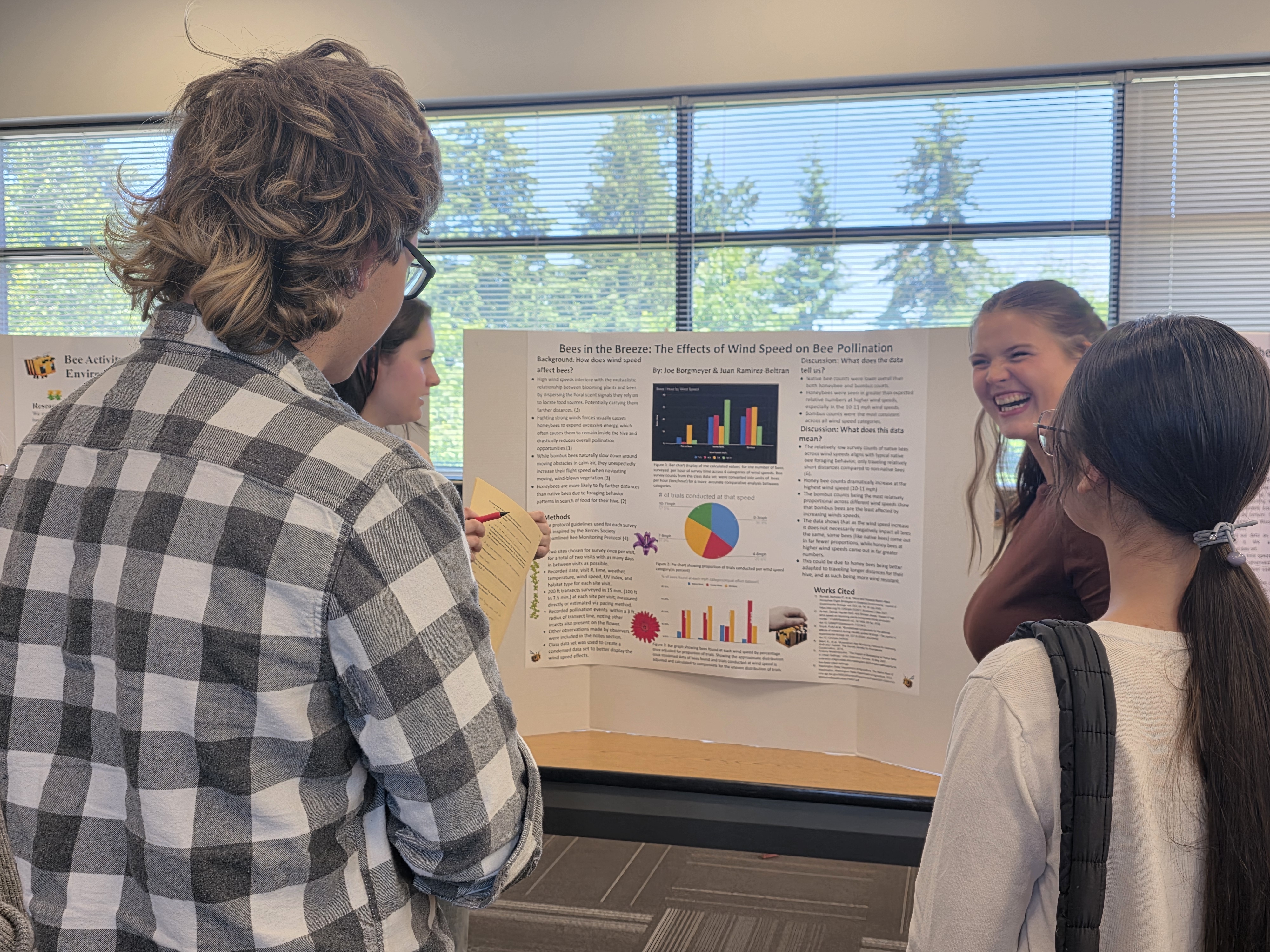
On the other side of the lobby, biology students buzzed with new information about Clark’s bee population. After learning how to conduct field surveys, they collectively surveyed the bee gardens and determined six to 10 parameters that they could pull data from. They then each formed their own hypotheses about the pollinators on campus.
Some of their questions addressed bee preferences; variables such as flower size or color, and the time of day, were examined. Other students considered how external factors, such as wind speed or temperature, might impact pollination.
While each student brought their own perspective and research to the table, they all shared a high level of work ethic.
“They impress me every single time with how much work they put in and their investment in the project,” said Chemistry Professor Darcy Kennedy. “It’s always super fun to see what they do with everything they’ve learned so far."
Learn More About Clark College's Chemistry and Biology Programs
Chemistry is part of the physical sciences and involves the study of energy and matter through observation of their characteristics and properties. Clark’s program uses modern lab equipment and offers hands-on experience in a collaborative learning environment that includes courses for non-science majors, pre-professional health programs, and general inorganic and organic chemistry. Learn more about Clark’s Chemistry department.
Biological Sciences is the study of living things and their relation to their environment. Students learn to use the scientific method to examine scientific facts and understand natural processes occurring in the world. Clark’s program offers an exchange between the support areas of Chemistry, Geology, and Physics to create a well-rounded basis for science-based techniques. The department also provides students with a rare opportunity to learn from hands-on field or lab work that can include examining human cadavers, attempts to discover new antibiotics, desert field trips, and searching for native species in the Columbia River Gorge. Learn more about Clark’s Biology department.
Photos: Clark College/Malena Goerl
Story by Malena Goerl, Staff Writer, Communications and Marketing