
The Science and Art of Chocolate
Award-winning chocolatier shares expertise with Clark's baking students
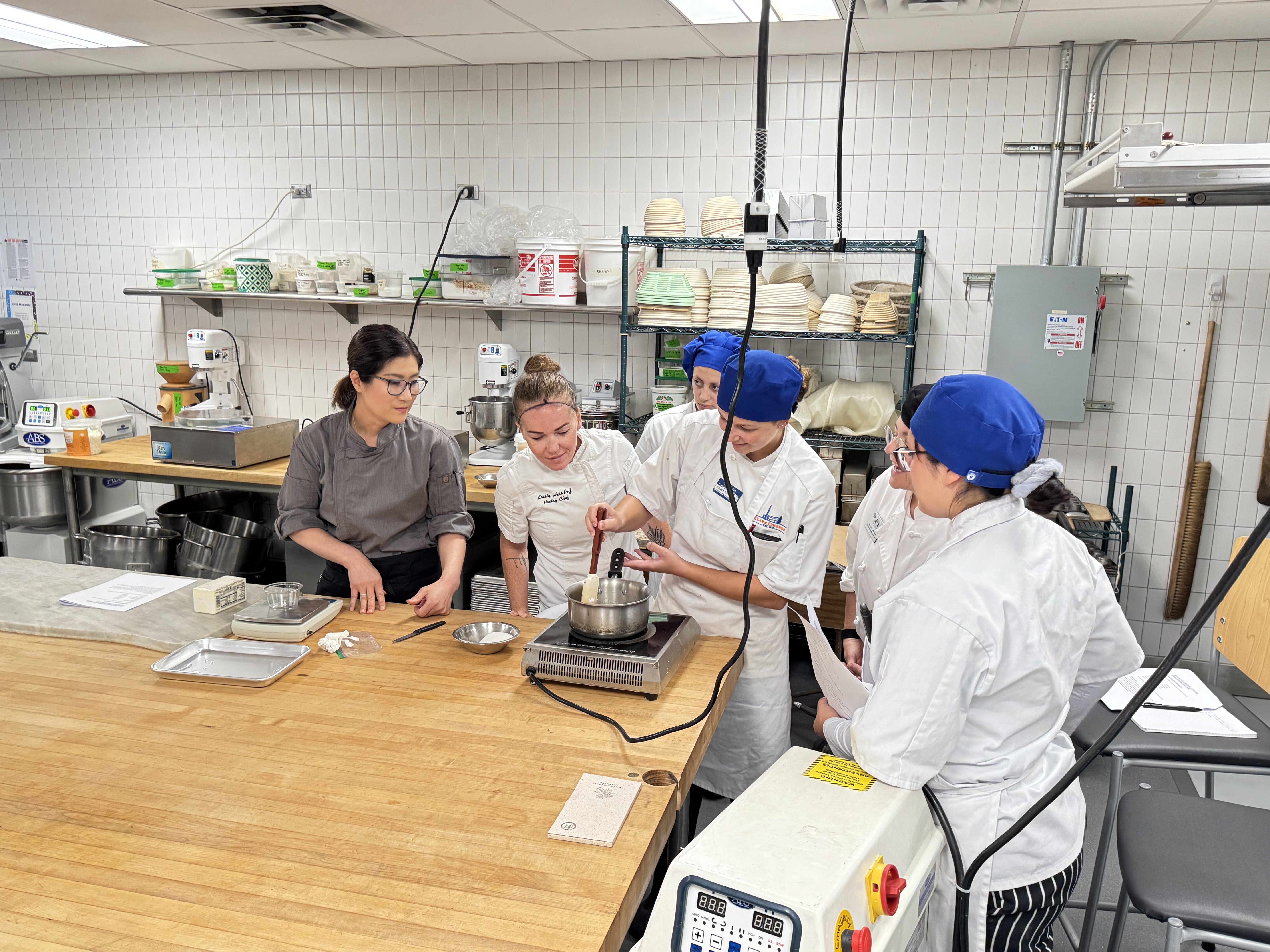 Pictured: Award-winning chocolatier Chef Jin Caldwell (left) works with Clark baking
students and Chef Melanie
Pictured: Award-winning chocolatier Chef Jin Caldwell (left) works with Clark baking
students and Chef MelanieGlucose dripped from the spoon as Clark's second-year baking students leaned in closer, watching the sweet, clear liquid stream into a pot on the burner.
On July 29, students got an inside look at the science, technique, and creativity behind one of pastry's most beloved ingredients when award-winning chocolatier Chef Jin Caldwell joined the class for a day devoted to chocolate.
Chef Jin, the owner of James Beard Award recipient JinJu Patisserie in Portland, shared the story of chocolate from its beginnings as a cacao bean to its transformation into bonbons, truffles, and other confections. She also demonstrated the techniques professional chocolatiers use to temper chocolate while offering advice drawn from years of experience in the industry.
Originally from Korea, Chef Jin has operated JinJu Patisserie for seven years and has spent many more developing her skills as a classically trained chocolatier.
As she shared with the class, understanding chocolate starts long before it reaches the kitchen.
From Bean to Bonbon
Cacao beans are grown in specific regions around the world, and much of their eventual flavor develops during fermentation, a process that can take about three weeks. Once fermented and dried, the beans may be roasted, like coffee beans, or processed into cocoa nibs.
Chef Jin also explained that the objective of tempering is to carefully manipulate the temperature of the chocolate to create the stable crystal structure that gives properly tempered chocolate its characteristic shine, snap, and texture.
There are three things to remember, she told students: temperature, movement, and time.
The process requires bringing chocolate slowly to specific temperatures depending on the type of chocolate being used. Too much or too little movement can affect the result, as can rushing the process.
"Stirring cools down the process, so you don't want to do it too much," Chef Jin explained as she demonstrated the technique.
She also showed students that chocolate's behavior can change depending on the ingredients around it. Even seemingly similar ingredients, such as glucose and corn syrup, can have different effects on the texture and shelf stability when used in preparations such as ganache.
And then there's the cardinal rule of chocolate.
"Water is the enemy of chocolate," Chef Jin said, explaining that moisture can create problems ranging from changes in texture to the potential for bacterial or mold growth.
Learning by Doing
Throughout the class, Chef Jin moved easily between technical instruction and practical advice. At one point, she carefully scraped the seeds from a vanilla bean with the back of a knife while talking with students about another part of professional baking: sourcing ingredients. Finding high-quality ingredients doesn't necessarily mean spending extravagantly, she explained. The key is learning what works.
"You learn from experience," Chef Jin said. "Start small. It doesn't have to be a massive product. Keep a sample in your fridge with the date. Someday, you'll get an 'aha' moment that makes it so much fun."
Students asked her questions throughout the demonstration, ranging from the technical challenges of working with chocolate to what it's like to build a career as a woman in the industry. Her advice was simple: give yourself time to learn.
"You just have to take the time to study for yourself," she said.
Rather than constantly chasing new recipes, she encouraged students to find one or two foundational recipes with textures they enjoy. From there, they can experiment with flavors and create their own variations.
"Chocolate is scientific, but you can use it for so many things!" she said.
See more of Clark's baking students' adventures with chocolate:
Learn More About Clark's Culinary Institute
The Tod and Maxine McClaskey Culinary Institute at Clark College is the only public, accredited culinary program in the metro region offering a two-year associate in applied technology degree. Students benefit from a rigorous curriculum, a seasoned team of instructors with real-world experience, state-of-the-art culinary facilities, and strong industry partnerships. Learn more about Clark's Professional Baking and Pastry Arts program.
Photos: Clark College/Cary Rae Zent
Story by Malena Goerl, Staff Writer, Communications and Marketing