
The Color Bead Sorter
Mechatronics students build automated bead sorter for annual capstone presentation
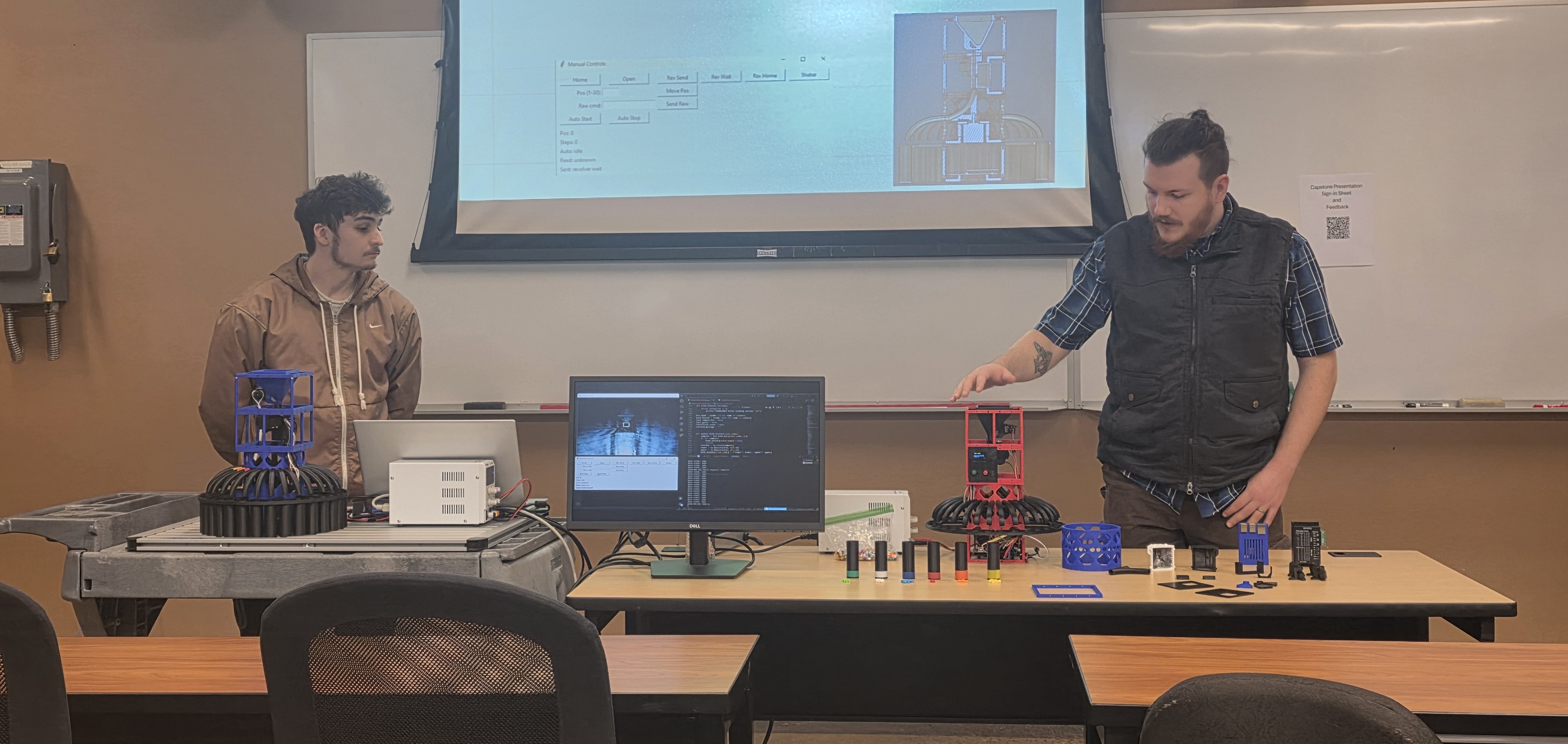 Pictured: Mechatronics students Kyle Rule (L) and Brayson Moore (R) showcase their
color bead sorters at the annual Mechatronics capstone presentation.
Pictured: Mechatronics students Kyle Rule (L) and Brayson Moore (R) showcase their
color bead sorters at the annual Mechatronics capstone presentation.After watching a friend spend a long time sorting Perler beads by color, mechatronics student Kyle Rule wondered whether a machine could do the job instead. He brought the idea to fellow cohort member Brayson Moore, and together, they took on the challenge for their capstone project.
The pair designed and built two fully automated machines that identify and sort Perler beads by color. During their presentation on June 9, they discussed not only the technical skills they developed in class but also the problem-solving required to bring the idea to life.
Perler beads are often used in pixel-style art projects by arranging them on a grid and fusing them together with heat. But when using multiple colors on one piece, a lot of time is spent simply sorting the beads. Kyle and Brayson’s quest to make this process more efficient led to nine weeks of designing, building, and refining a machine capable of recognizing and separating 30 different bead colors at one time.
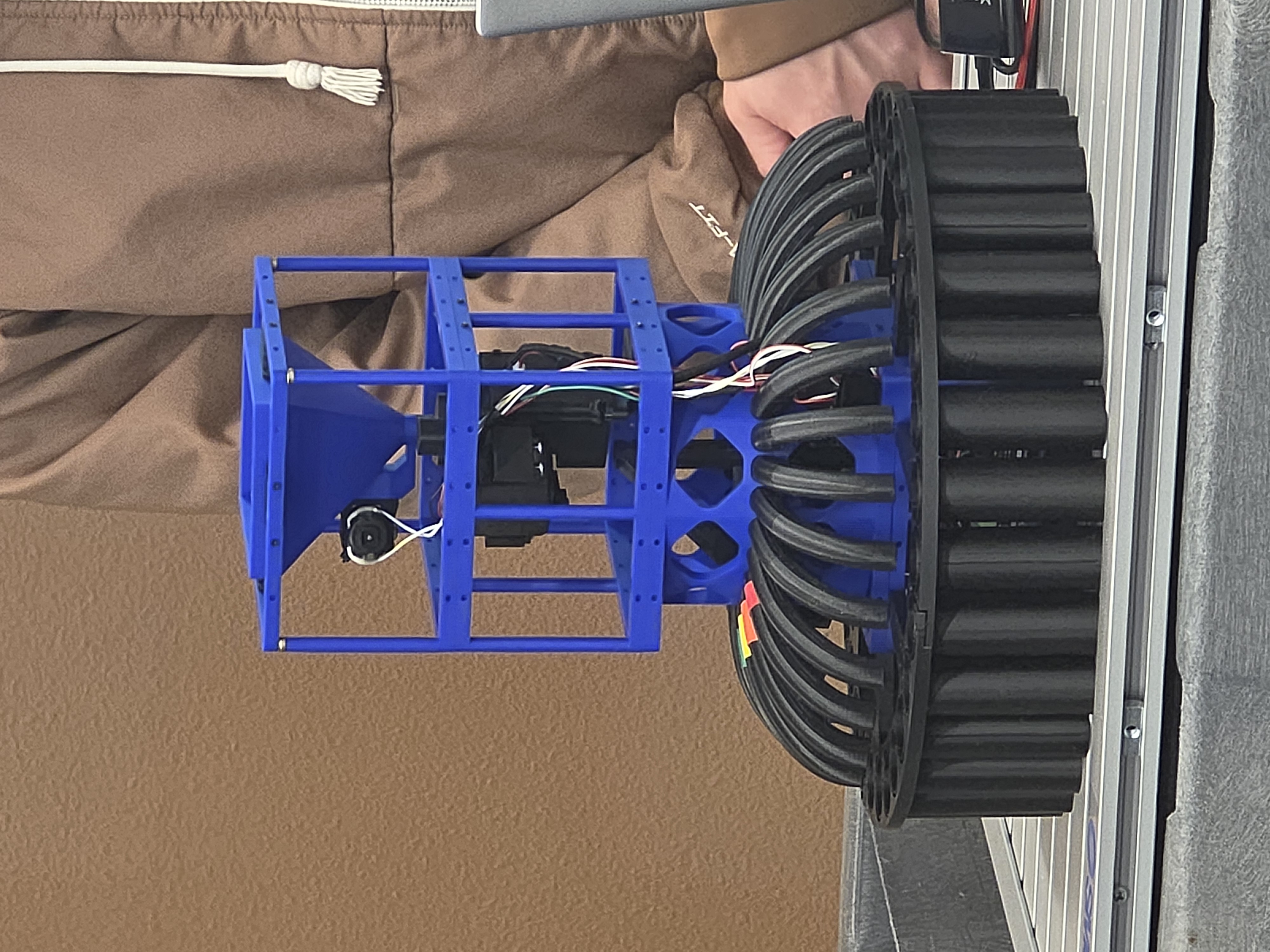
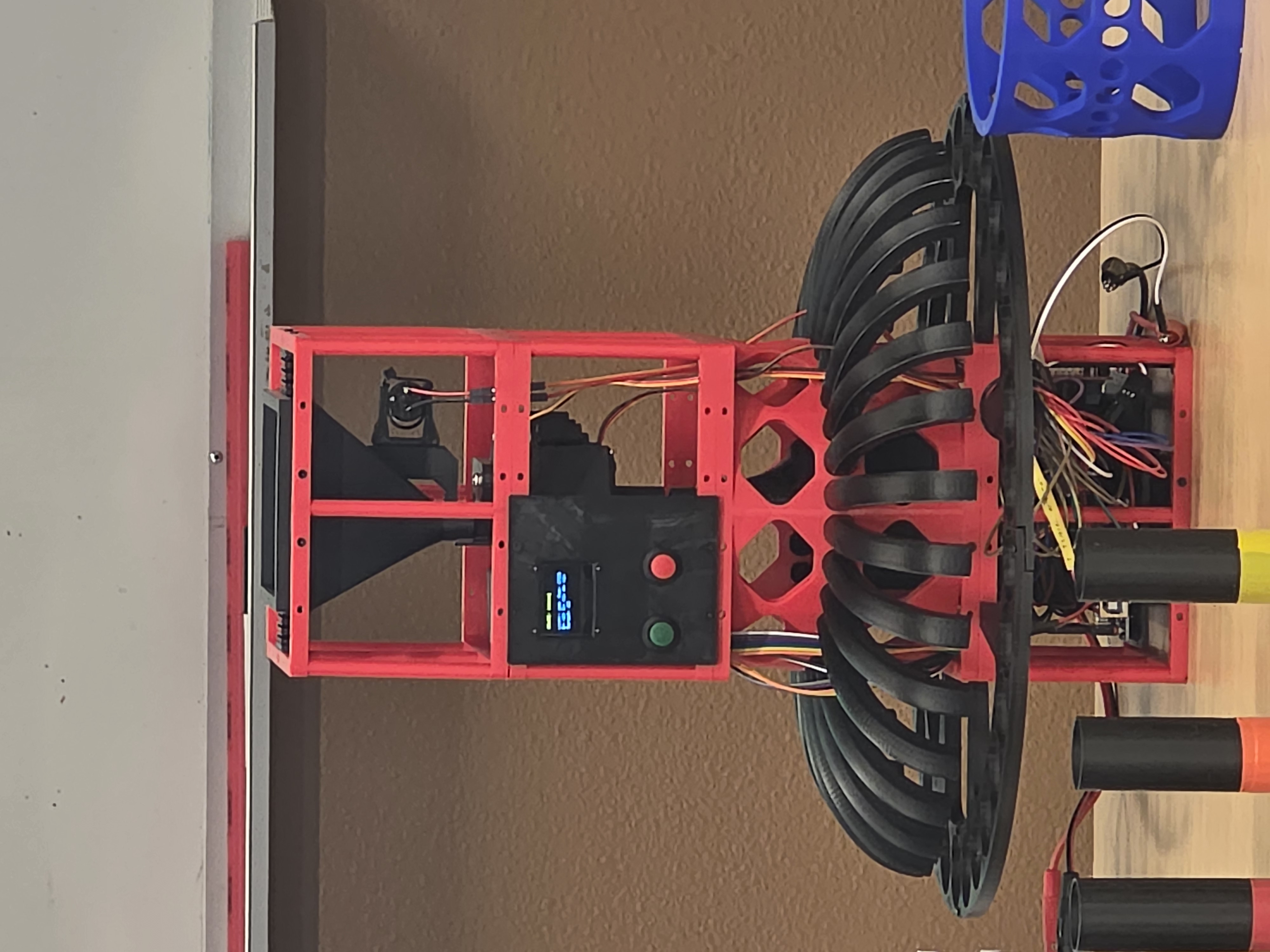
The sorter uses a camera and computer software to determine each bead’s color before directing it to the appropriate container. The modular machine, which is made up of more than 150 parts, can also be adapted to sort other small objects by color, such as Lego pieces. The students prioritized accuracy over speed, creating a system that sorts about eight to 10 beads per minute while automatically recovering from jams by restarting.
“We have the foundation set, and there are a lot of variations we can make from it,” Brayson said. “Because it can detect color, we can set the code to sort in sequences.
About a month into the project, the students realized their original design wasn’t working as planned. Their first system, built around a Raspberry Pi single-board computer, was too limiting, leading them to redesign the project using an Arduino platform that offered more reliable motor control.
But the system wasn’t their only hurdle. Along the way, both students learned Python and C++ — programming languages neither had used before. They also experimented with artificial intelligence as a learning tool, using it to explain unfamiliar code and generate starting points that they tested and refined themselves.
“It’s a good translator,” Kyle said of AI. “It won’t give you a polished piece.”
Brayson agreed, saying that AI was helpful with understanding small pieces of code instead of using it to solve the entire problem at once.
The project required continual testing and debugging as the students worked to make the machine’s hardware and motors communicate. The Color Bead Sorter finally came together the morning of their capstone presentation. In the end, it wasn’t just about automating a tedious task. Kyle and Brayson learned to solve problems, embrace setbacks, and keep improving until their solution worked.
Learn More About Mechatronics at Clark College
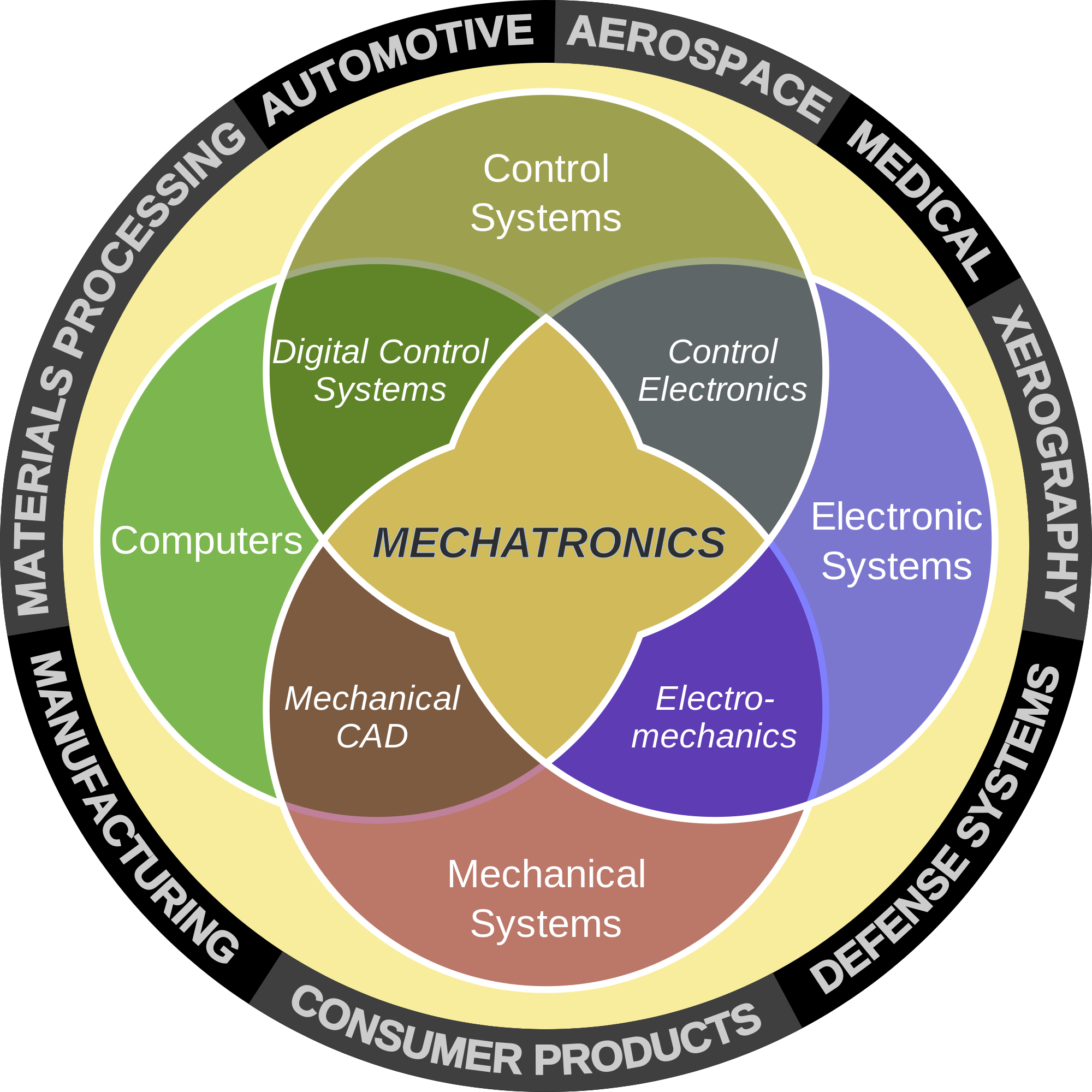 Clark’s Mechatronics program emphasizes current concepts and technology through practical,
hands-on training with industry-standard equipment. Students receive real-world, state-approved
technical instruction from experienced faculty. Graduates can earn an Associate in
Applied Technology (AAT) degree in mechanical and instrumentation automation in two
years.
Clark’s Mechatronics program emphasizes current concepts and technology through practical,
hands-on training with industry-standard equipment. Students receive real-world, state-approved
technical instruction from experienced faculty. Graduates can earn an Associate in
Applied Technology (AAT) degree in mechanical and instrumentation automation in two
years.
Mechatronics graduates are equipped to work in manufacturing industries, including semiconductor, fabrication, aerospace, and more. Clark’s graduates work at companies including Intel, Amazon, Columbia Machine, SEH America, nLight, Kyocera, TSMC (formerly Wafertech), Analog Devices, Inc. (ADI), and Georgia Pacific. The program’s faculty has built relationships with several local employers to ensure that the program stays current. Learn more about Clark College’s Mechatronics department.