
Students Join Restoration Efforts at Steigerwald
Clark’s ecology students participate in restoration efforts while learning about local wildlife
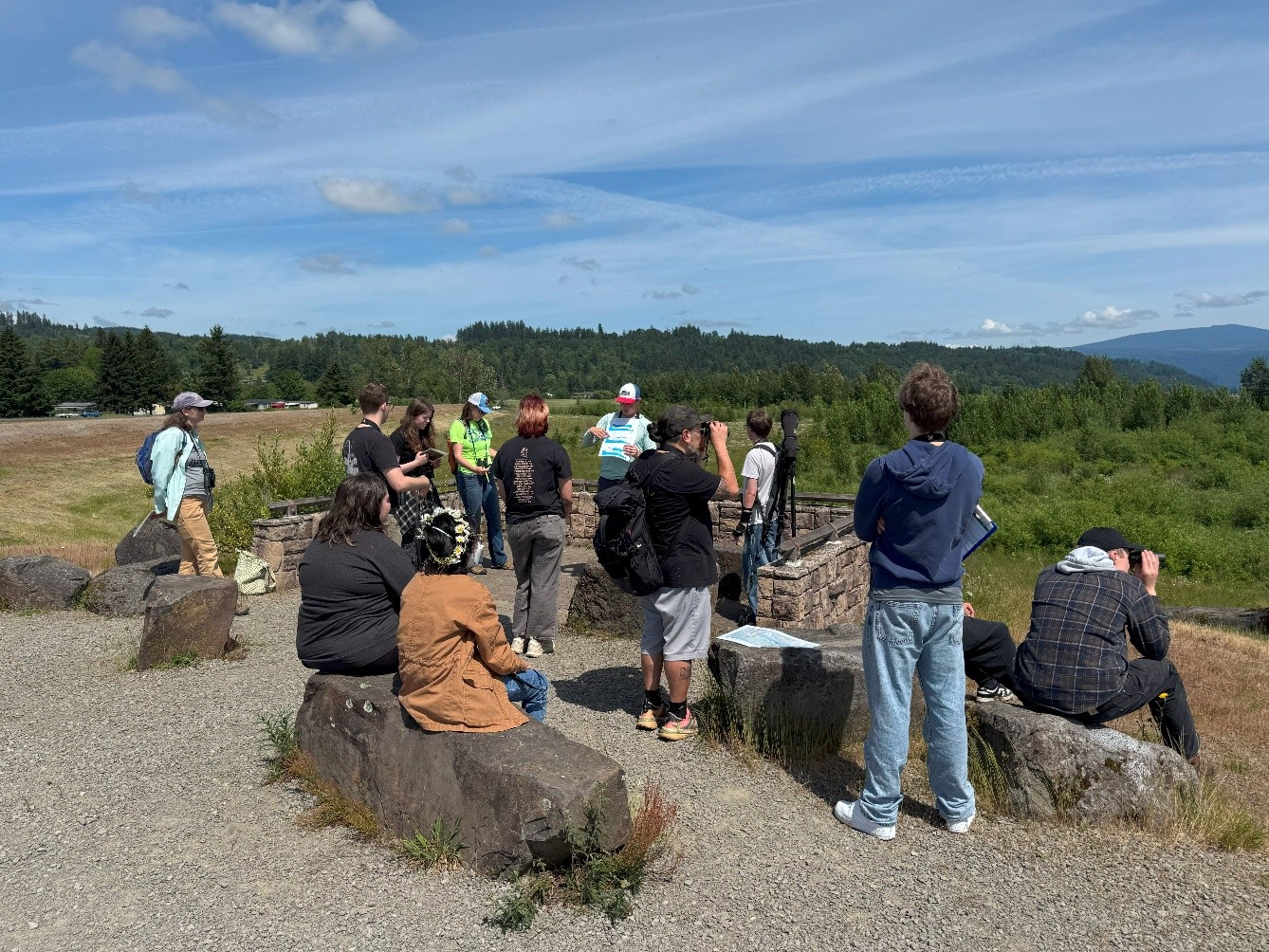
On an early sunny afternoon in May, students of Dr. Josie Lesage's Intro to Ecological Restoration class arrived at Steigerwald National Wildlife Refuge, located on the Columbia River Gorge, just over 15 miles from Clark College. Andy Bauer, an environmental educator with the Lower Columbia Estuary Partnership, greeted the team with maps of the restoration site and a summary of recent restoration efforts in Steigerwald.
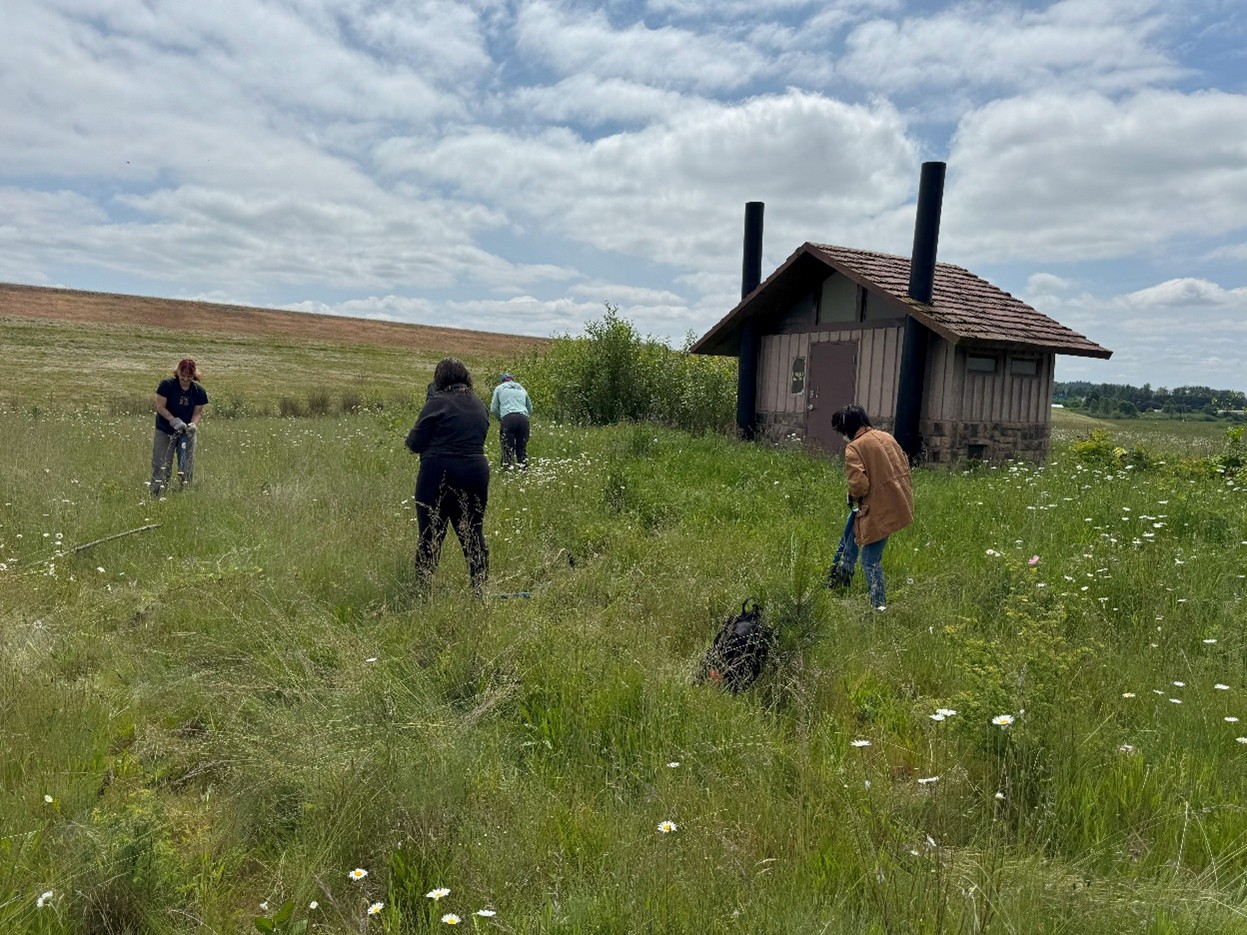
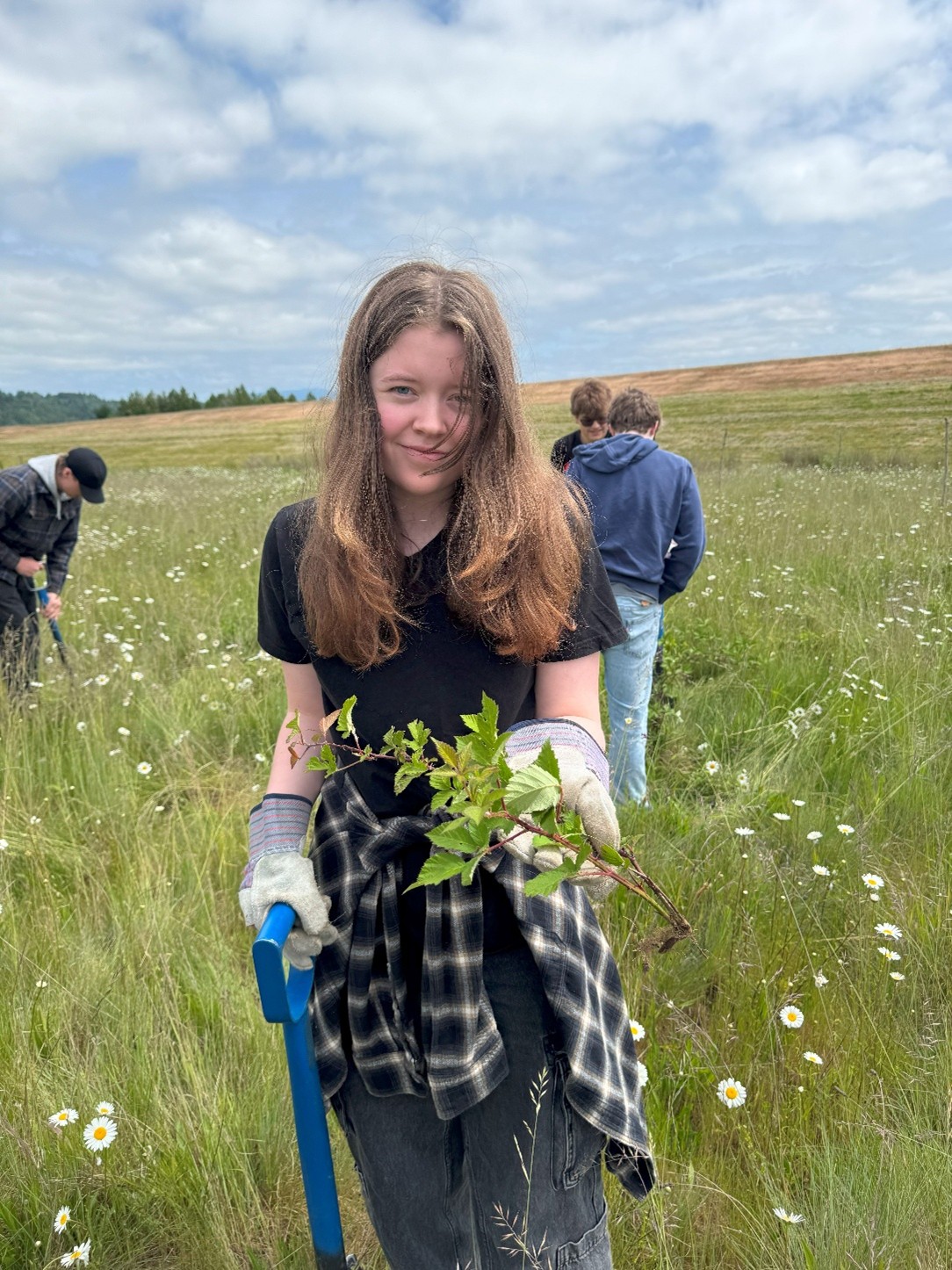
Empowered with this information, students made their way to a grassy field filled with daisies to begin removal of invasive plants. The primary target of removal was the Himalayan blackberry. Students gloved up and took shovels to the dry, rocky soil to remove as many of the stubborn roots as possible. Occasionally, when the laborious efforts to remove the blackberry plants drained their energy, students shifted their focus to the invasive oxeye daisy, which put up much less of a fight.
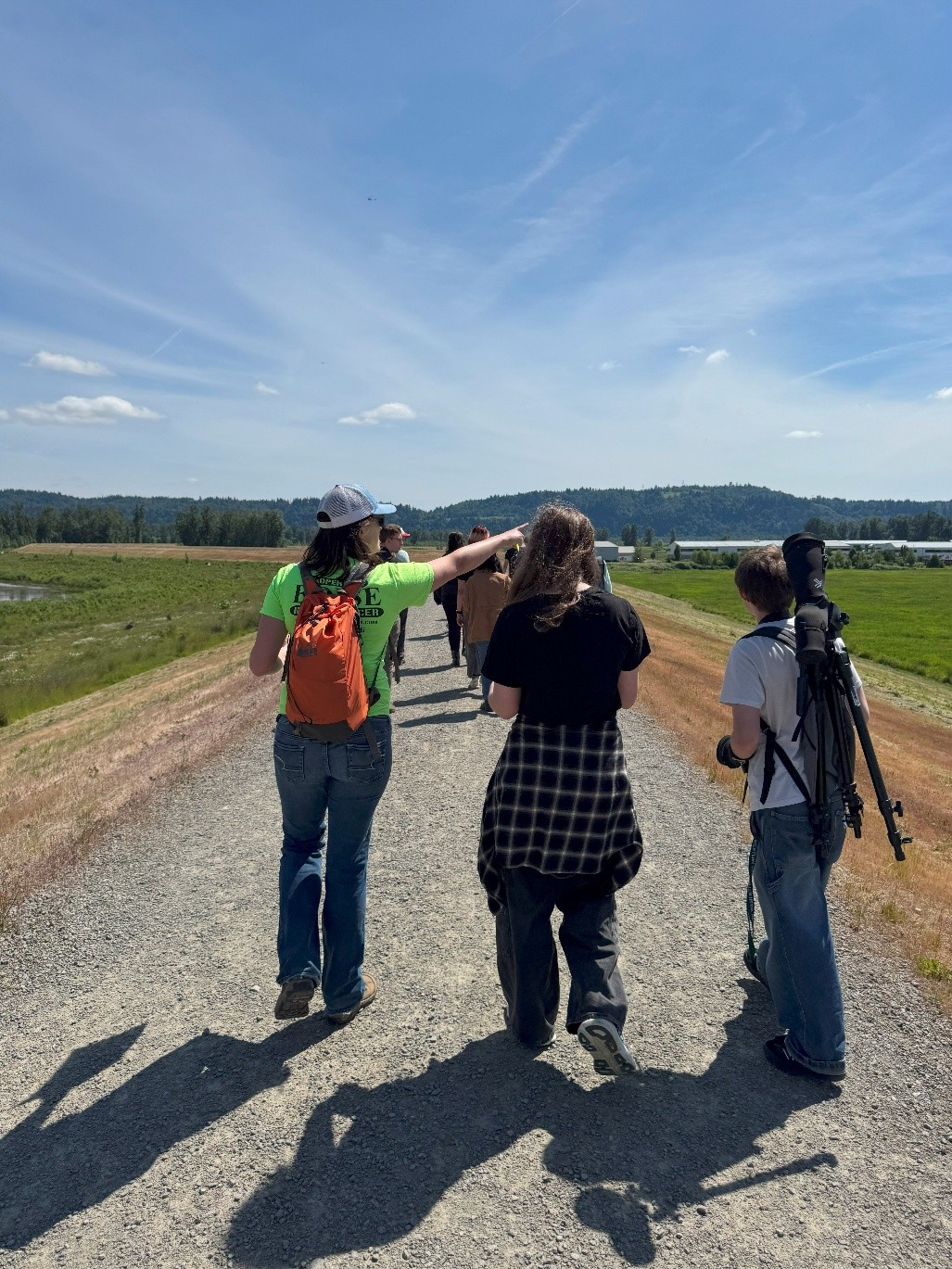
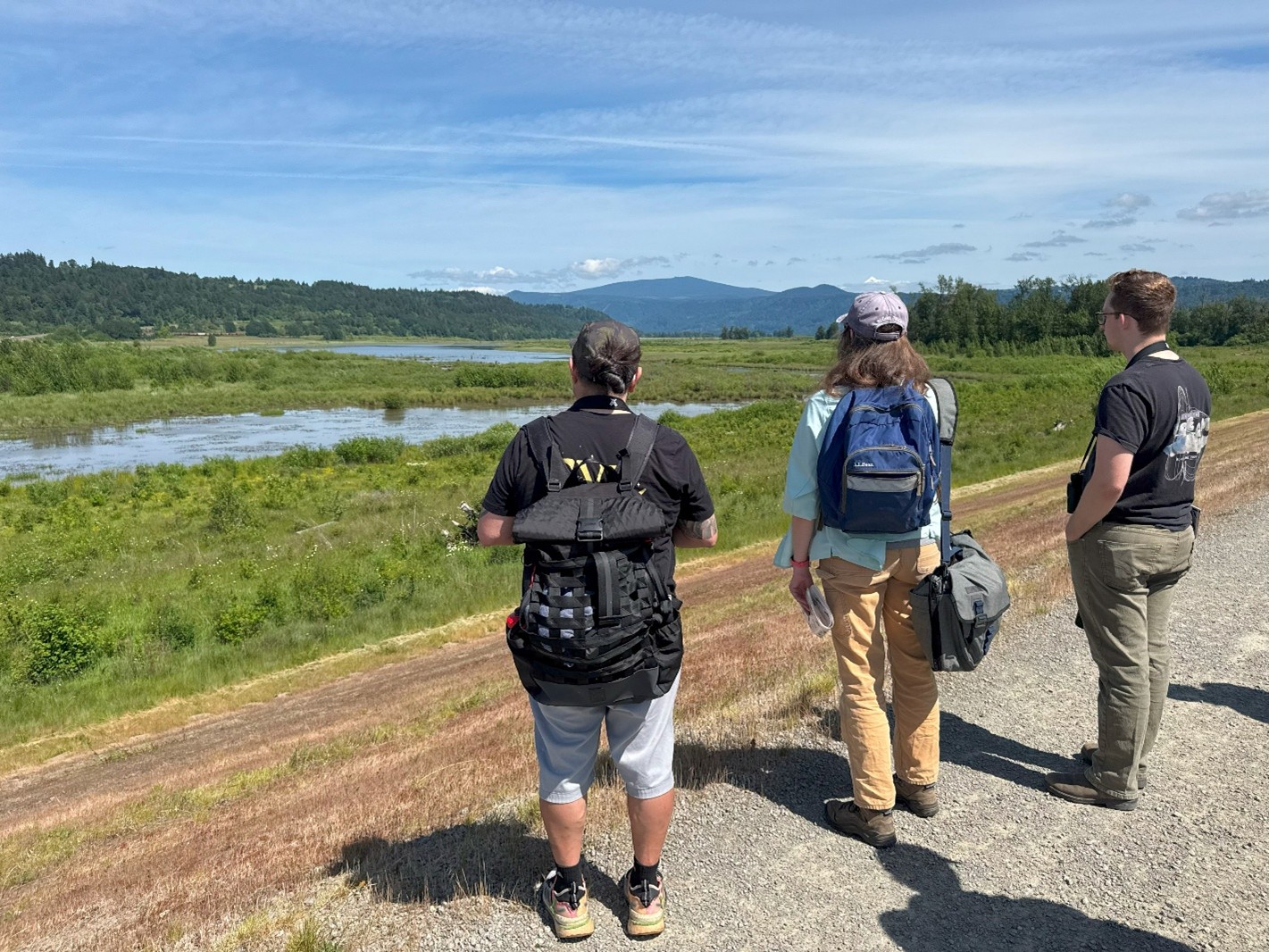
After the students cleared many of the blackberry plants, Andy led the way farther up the path and onto the levee. From higher ground, a stunning view of Mount Hood appeared on the horizon, as well as a view of the beautiful plains and lush vegetation onsite.
With the vegetation comes habitat for many different species, including an array of birds. Steigerwald is well known among birders for its abundance and variety of bird species nesting in the habitat. Andy handed out binoculars and tasked students with identifying as many birds as possible, with the help of a printed visual guide. By the end of the trip, about 15 different species of birds were identified, including bald eagles, vultures, and red-winged blackbirds. Occasionally, Dr. Lesage would chime in with additional fun facts about the birds that were spotted. When the class made it farther up the levee, Andy gave students the opportunity to look through his telescope to see a little beaver swimming by its dam.
Behind the Project
Steigerwald National Wildlife Refuge had recently undergone the Steigerwald Reconnection Project, which connected Gibbons Creek to the Columbia River. The project, which cost over $32 million and was completed in 2022, helped restore floodplains, reduce flooding risk, and allow for the flourishing of native wildlife. Seeing the site in person allows students to see the results of such extensive efforts while learning about local ecology. The Lower Columbia Estuary Partnership educates students at Steigerwald with hands-on experiences. They also connect community members with restoration projects, such as planting native species and removing invasive ones.
Join Local Restoration Efforts
Learn more about restoration efforts in the Steigerwald Reconnection Project through an interactive Story Map showing before and after aerial images of the land.
Join the restoration happening with the Lower Columbia Estuary Project.
Support the Native Plant Center greenhouse on campus! The greenhouse hosts seasonal native plant sales, and many of their plants go to restoration sites designated by the Department of Natural Resources and the National Forest Service.
Photos: Clark College/Carly Rae Zent
Story by Masha Yaremenko, Digital Media Student Intern, Communications and Marketing