
Preparedness Starts at Home
Latest emergency management training focuses on at-home readiness
Imagine this scenario: You’re driving home when a winter storm blankets the roads in snow and ice. Traffic slows, then stops. Hours pass. Do you know what you need to have with you? Are those items already packed in your car?
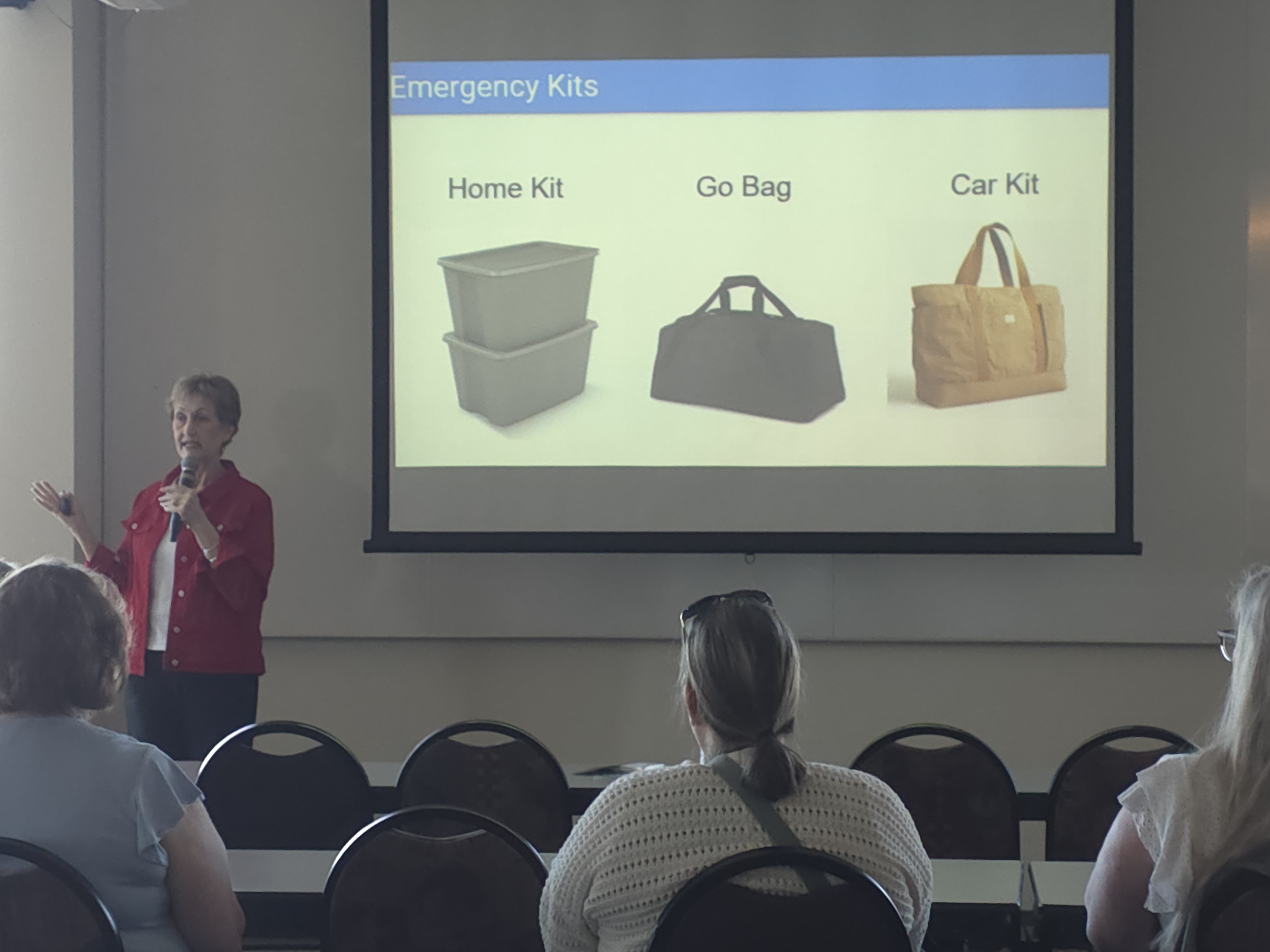
These are the questions audience members were asked to consider during the final installment of this year’s Emergency Preparedness training series. Held on Thursday, April 9, and presented by Jodi Blackwood, Emergency Management Coordinator for Clark Regional Emergency Services Agency (CRESA), the training shared how individuals and families can prepare for emergencies.
Jodi began by highlighting the reality of emergency preparedness.
“911 receives approximately 1,300 calls from Clark County every day,” she shared. “However, fewer than 100 emergency responders are on shift for more than 520,000 residents, and at any given time, 30% of those responders may not be available.”
It might be hours. It might be days. It might even be weeks before emergency personnel arrive. This often means you may be on your own until then, making it especially important to be prepared and have a plan in place.
“Planning ahead and being prepared for all types of emergency situations can help reduce fear and anxiety and minimize potential loss,” she said.
Stay In-the-Know
Jodi encouraged audience members to sign up for Public Alerts, which allows you to receive alerts regarding emergencies and critical information for your specific area. You can add additional addresses if there are other locations you want to receive alerts for, such as the home of a loved one or Clark College’s campus.
Your neighbors are the ones closest to you who can immediately help in an emergency. Connect with them by:
-
- Having a conversation about emergency plans,
- Joining an online neighborhood forum, such as Nextdoor,
- And creating a neighborhood contact list. Identify who may need additional assistance, such as those who are elderly or have a mobility issue.
Plan with Your Household
A household emergency plan is vital for keeping your family on the same page during emergencies and ensuring you have the information emergency personnel might need. Include family member names, medical information, insurance policies, and pet information.
List contact information for emergency contacts, both locally and outside of the area. Upload important documents to a thumb drive or a Cloud storage, such as Google Drive, so that they are readily available.
Additionally, determine meeting spots for household members, both near the house and outside the neighborhood.
Have Supplies Ready with Emergency Kits
Another important step is to organize transportable emergency kits:
-
- Home kit — for example, if your area loses power
- Car kit — for example, if you get stuck in a snowstorm
- Go-bag — for if you need to quickly evacuate
Food and water should be in every kit. But certain scenarios might require different items, such as flashlights with batteries in your home kit, a change of clothes in your go-bag, and an emergency blanket in your car. Also think through everyday items you might not remember in emergencies, such as a cell-phone charger and hygiene items.
Jodi noted that you do not need to spend a lot of money on these kits. Use what you have, or check thrift stores or garage sales. She also recommended knowing how things work before adding them to your kits, sharing that she recently added a tent to her emergency kit and practiced setting it up in various weather scenarios to ensure she was prepared for any situation.
Pets should also have their own kit. In addition to food, dishes, and leashes, it’s helpful to bring comfort items, like a toy your dog can chew on to relieve stress, or a blanket and carrier to safely transport your cat.
If someone in your household takes medication, ask their doctor for a two-week back-up supply. 37% of Americans can only go a week or less without their medications or medical devices before facing a crisis, making it imperative that these items are included in your planning.
When thinking about whatto pack, Jodi listed the top five priorities:
-
- Water: Stored in containers you can easily carry
- Food: Aim for high-energy, high-protein e.g. canned food, white rice, peanut butter, and dehydrated camping food are long-lasting and easily stored
- First-aid: Pre-made kits or household items, such as bandages, scissors, antiseptic, and aspirin
- Shelter: Seasonal clothing and safety items, such as bug spray or sunscreen, and items for making your own shelter, such as tarps, sleeping bags, and rope
- Sanitation: Toilet paper, hand sanitizer, buckets, or items that you can use for a hand-washing station
Learn More About Emergency Preparedness
Visit CRESA’s website to learn more about how you can prepare for emergencies at home.
Keep an eye on the Emergency Training Resources page and the Internal Events Calendar on ClarkNet for upcoming emergency trainings, and stay tuned next academic year for additional sessions in the Emergency Preparedness series.
Photo: Clark College/Malena Goerl
Story by Malena Goerl, Staff Writer, Communications and Marketing