
Honoring the 2026 Medical Assisting Graduates
Sixteen medical assisting students celebrate accomplishments at traditional pinning ceremony
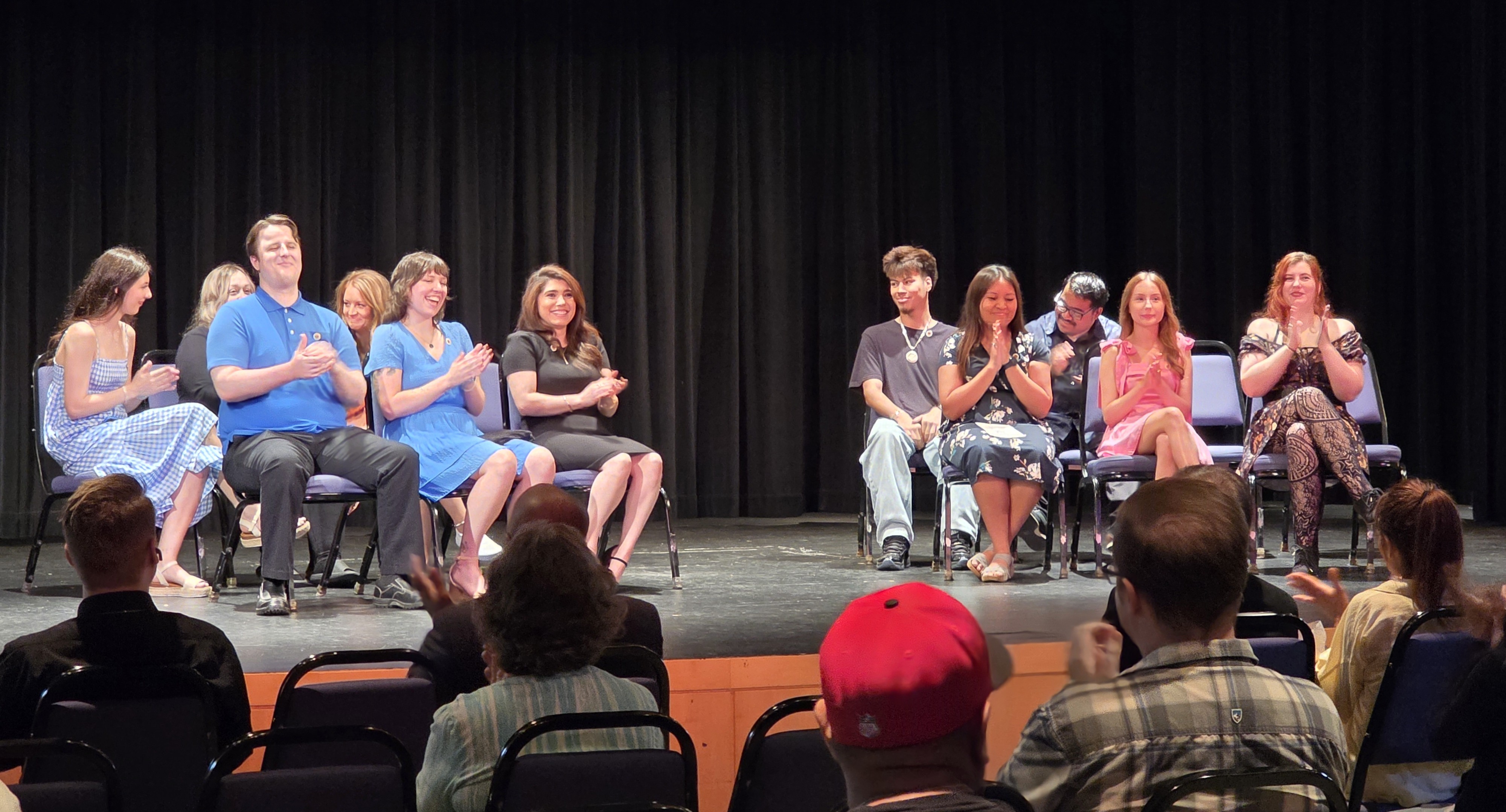 Pictured: Medical assisting graduates celebrate at the official pinning ceremony
Gaiser Hall was overflowing with pride on the evening of August 27, as staff, faculty, and loved ones gathered to celebrate Clark's 16 medical assisting graduates.
The annual pinning ceremony is a time-honored tradition, marking both the closing of one chapter and the beginning of the next for these young professionals. As guests arrived, slides featuring photos and personal messages of thanks from each graduate played across the screens, offering a glimpse into the people and experiences that helped bring them to this moment.
Chair of Clark's Board of Trustees, Marilee Scarbrough, and Board member Suzanne Donaldson also attended the ceremony to support the graduates and recognize the significance of their accomplishment.
Dr. Cara Cocchiarella, Interim Dean of Business and Health Sciences, highlighted the support of community partner Workforce Southwest Washington, which provided more than $9,300 in the past year to help reduce financial barriers for students while strengthening our local health care workforce. She also emphasized the importance of the role the graduates are stepping into.
"Your clinical knowledge and skills are essential," she said. "But so is your compassion, your empathy, your patience and communication, and your ability to help others feel safe and respected."
Dr. Cocchiarella also thanked the medical assisting faculty and staff for the passion, knowledge, and empowerment they gave to their students, as well as their commitment to preparing graduates to enter the health care workforce with confidence.
Dr. Terry Brown, Vice President of Instruction, also took the stage to congratulate the graduates. He spoke of the pride he felt in their dedication, and the relief he felt knowing they were entering the profession well prepared.
"I know what kind of program you all are coming from," he said. "I know that you are well trained and well equipped to handle the field that you will be entering and the tasks and responsibilities that you will hold."
He reminded the graduates that medical assistants are often among the first people patients encounter when they are vulnerable or distressed.
"Sometimes you will be the comforter, the caretaker, or the translator," he said. "There will be times when you will be the ones who empower people in their health care decisions. And that is something we desperately need."
Dr. Brown noted that this year's graduates make up the 14th cohort of Clark's medical assisting program. One hundred ninety-nine graduates have come before them, "which means that the first student called during the ceremony will be lucky graduate #200," Dr. Brown joked — Joshua Adams, the first graduate in alphabetical order, silently cheered from his seat on the stage.
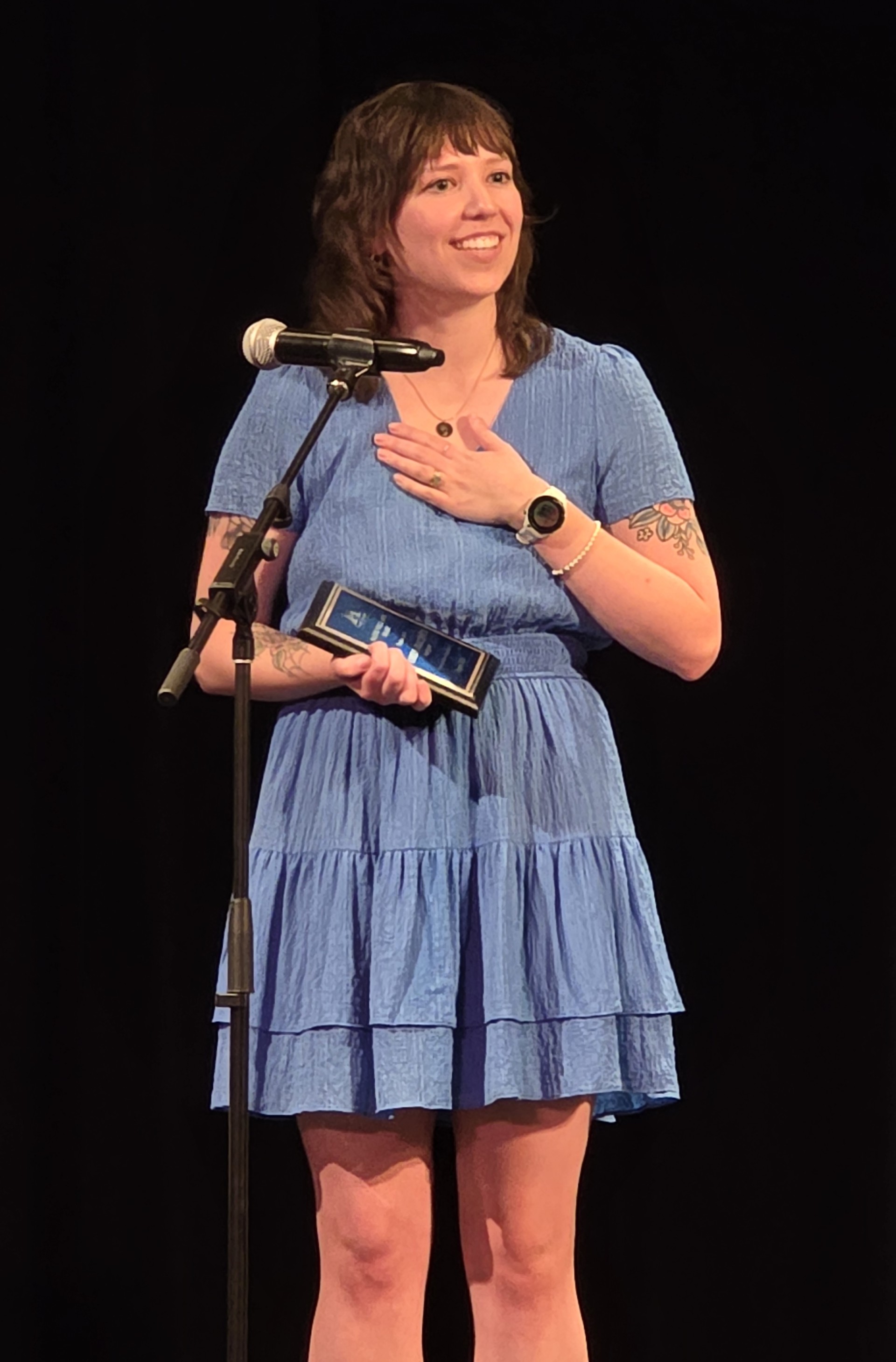
The Maxine Williams Award
Each year, one member of the graduating class receives the Maxine Williams Award, honoring a student who demonstrates dedication and compassion, serves as an academic and professional role model, and inspires fellow students throughout the program. The award is named after Maxine Williams, the co-founder and first president of the American Association of Medical Assistants.
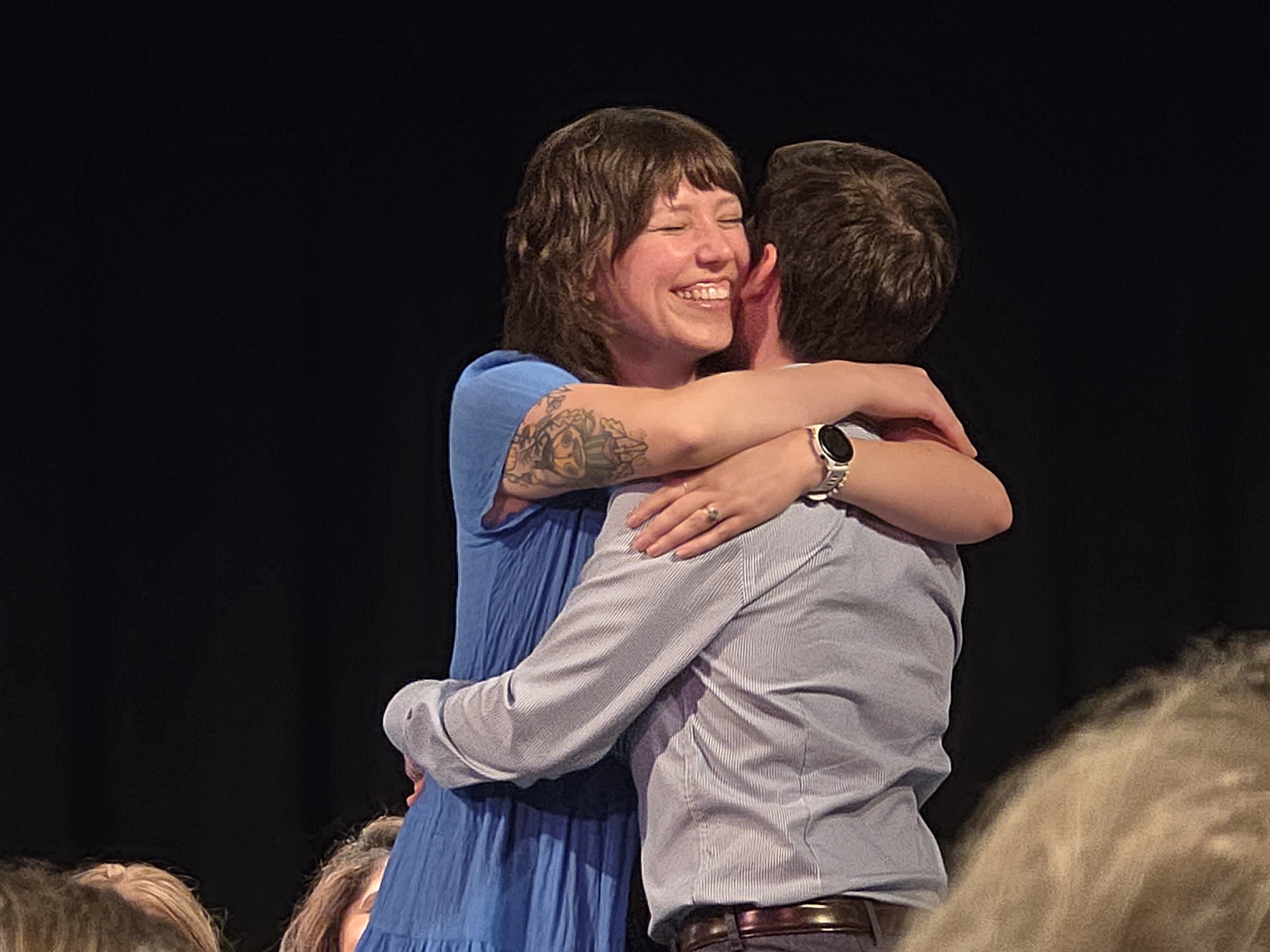
Professor Alejandra Maciulewicz-Herring presented this year's award to Amelia Haltiner (pictured right), praising her punctuality, work ethic, willingness to learn, and commitment to her academic and professional goals.
As she accepted the award, Amelia thanked her husband, classmates, and instructors for supporting her throughout the program.
The Meaning of the Pinning Ceremony
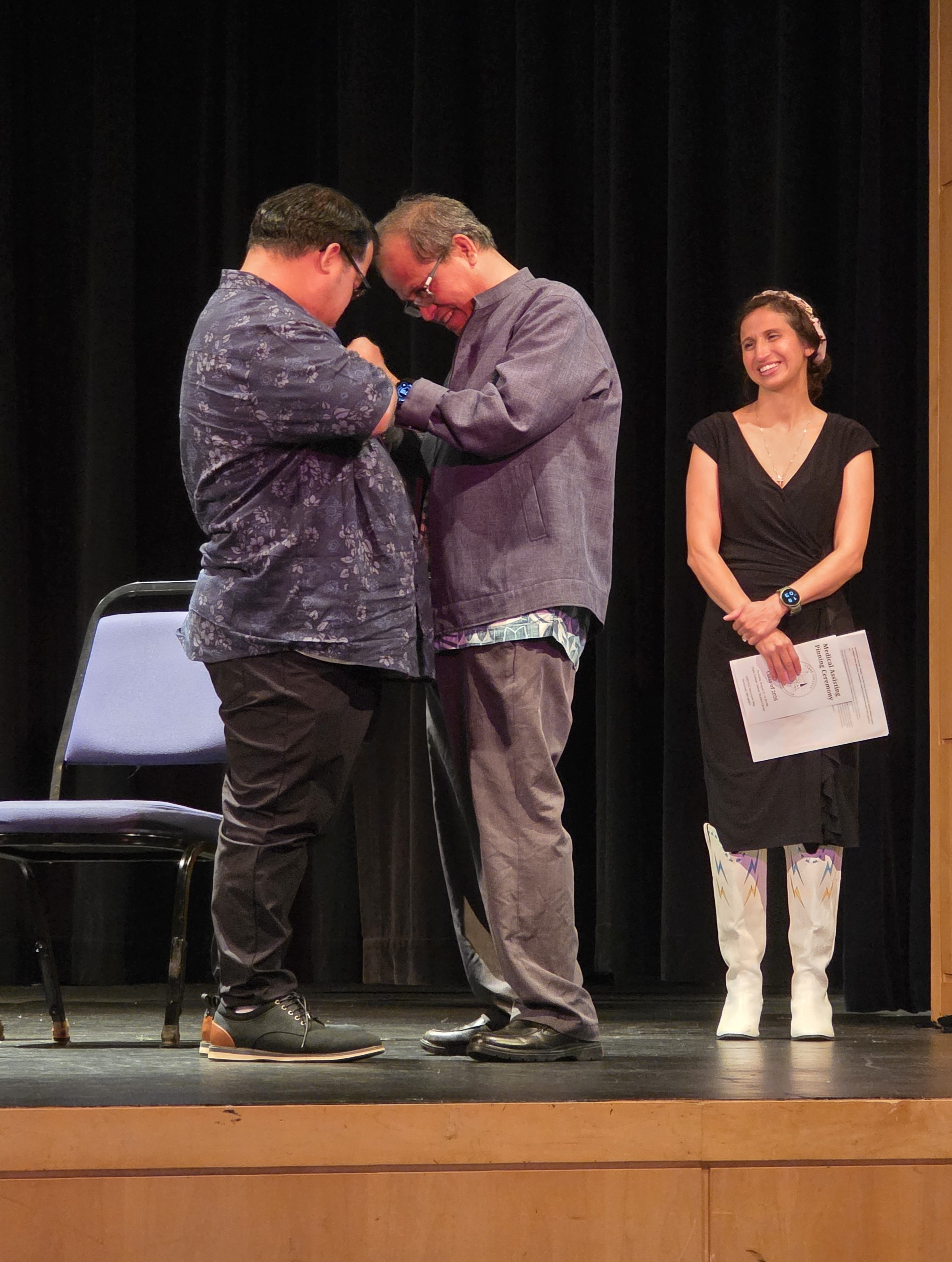
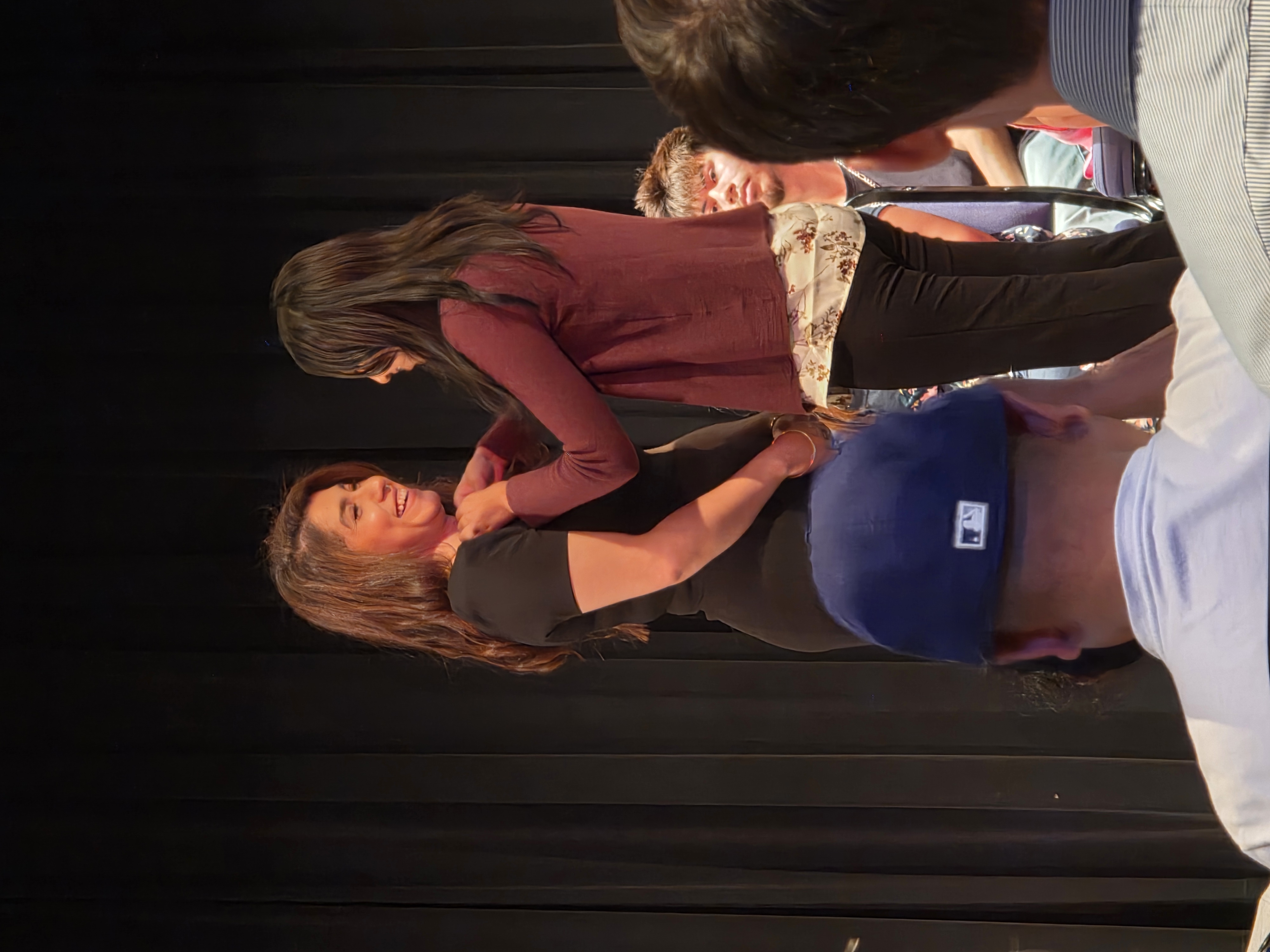
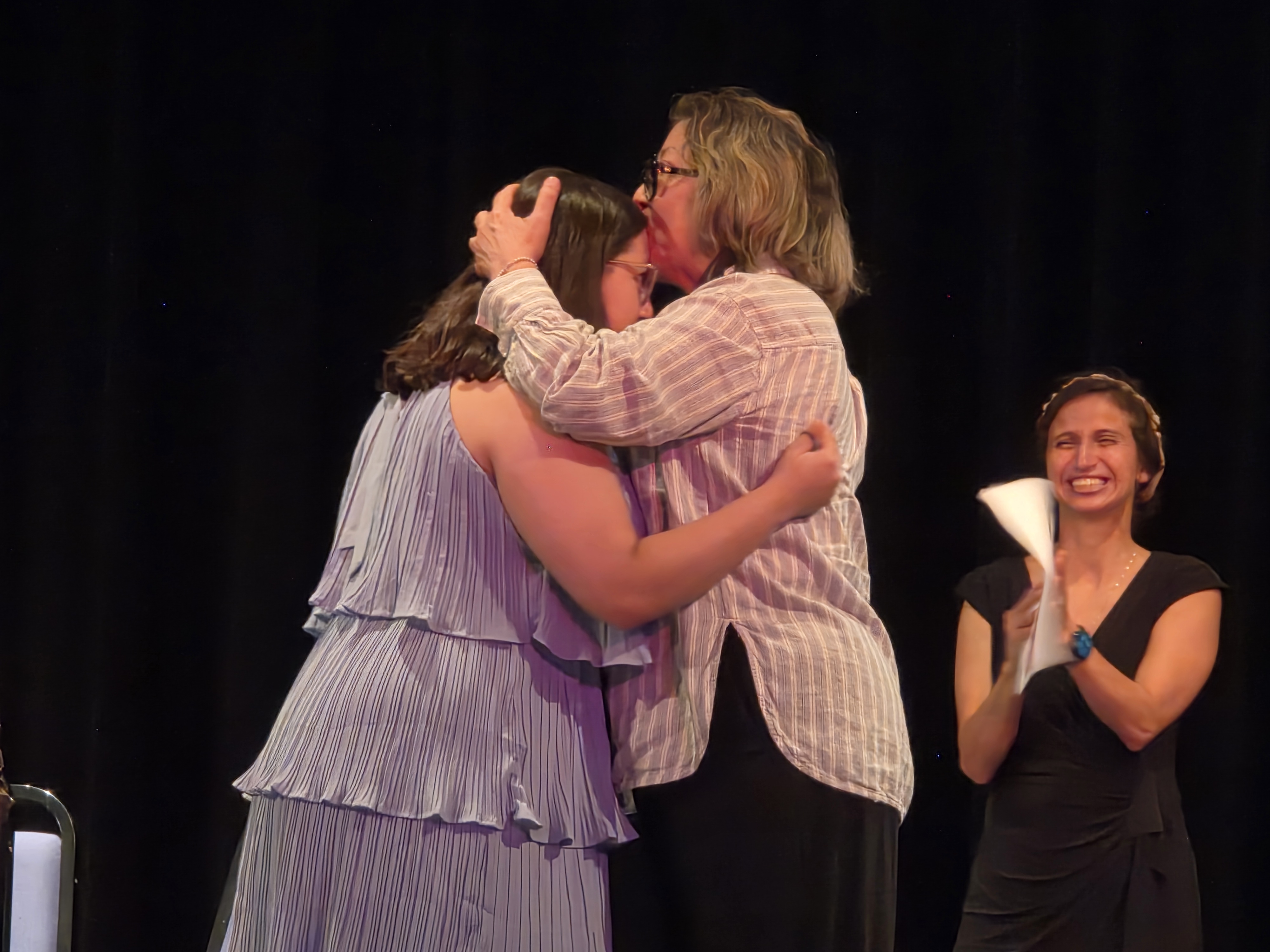
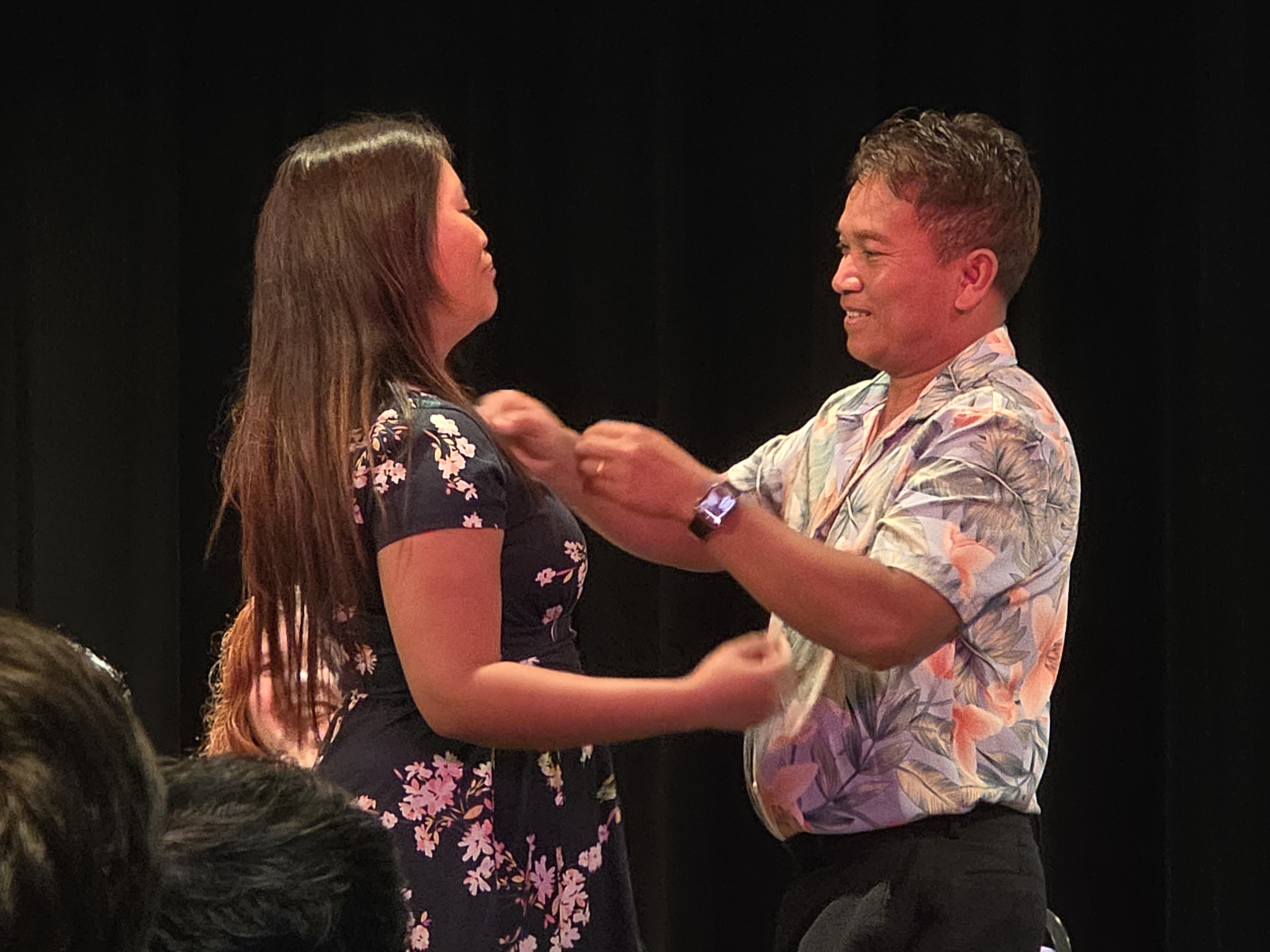
Each graduate chose one special person to present them with their pin on stage. Some chose a parent or a child; others chose a significant other. One graduate beamed with joy as her grandmother gently placed the pin on her dress before enveloping her in a hug.
Dr. Sarah Kuzera, chair of the medical assisting department, encouraged the graduates to continue to persevere as they take their next step in their careers. Pinning ceremonies have a long history in health care, dating back to the 19th century when Florence Nightingale was honored with a jeweled pin for her service as a nurse.
But for Clark's medical assisting graduates, the pin represented something much more personal.
"When you look at this pin," Dr. Kuzera said, "I hope you don't simply see a piece of metal. I hope you see the nights you spent studying. I hope you remember the assignments you weren't sure about. I hope you remember the tests that challenged you. I hope you remember the laughter you shared with your classmates and with us. I hope you remember the people who encouraged you. And most importantly, I hope you remember the version of yourself who refused to quit. You came here as students and tonight you leave as medical assistants — professionals who have earned the right to wear this pin and carry everything it represents."
She also reminded graduates that the evening was about more than their own accomplishments. It was an opportunity to recognize the friends, family members, and loved ones who had encouraged them, made sacrifices for them, and believed in them when they didn't always believe in themselves.
Learn More About Clark's Healthcare & Biosciences Programs
Clark College has a long-standing reputation as a premier educator of health care professionals, preparing students for a range of settings, including home care, hospitals, medical offices, pharmacies, and dental offices. The Allied Health program inspires the next generation of professionals through hands-on career exploration opportunities in areas such as dental hygiene, emergency medical services, health information management, medical billing and coding, medical assisting, nursing, pharmacy technician, phlebotomy, and surgical technology. Learn more about Clark's Health Care and Biosciences, and explore the medical assisting program at Clark.
Photos: Clark College/Malena Goerl
Story by Malena Goerl, Staff Writer, Communications and Marketing