
Finding Community at Clark's Creative Writing Festival
Annual week-long event features author readings, workshops, and literary celebrations
It was a week of storytelling and exploring creativity at Clark College. More than 100 members of the Clark and local community attended workshops, listened to best-selling authors, celebrated literary achievements, and shared their own work at the Creative Writing Festival.
The annual event kicked off on May 9 with the Creative Writing Workshop and continued throughout the following week with readings, workshops, and ceremonies celebrating the written word.
The Art of the Zine
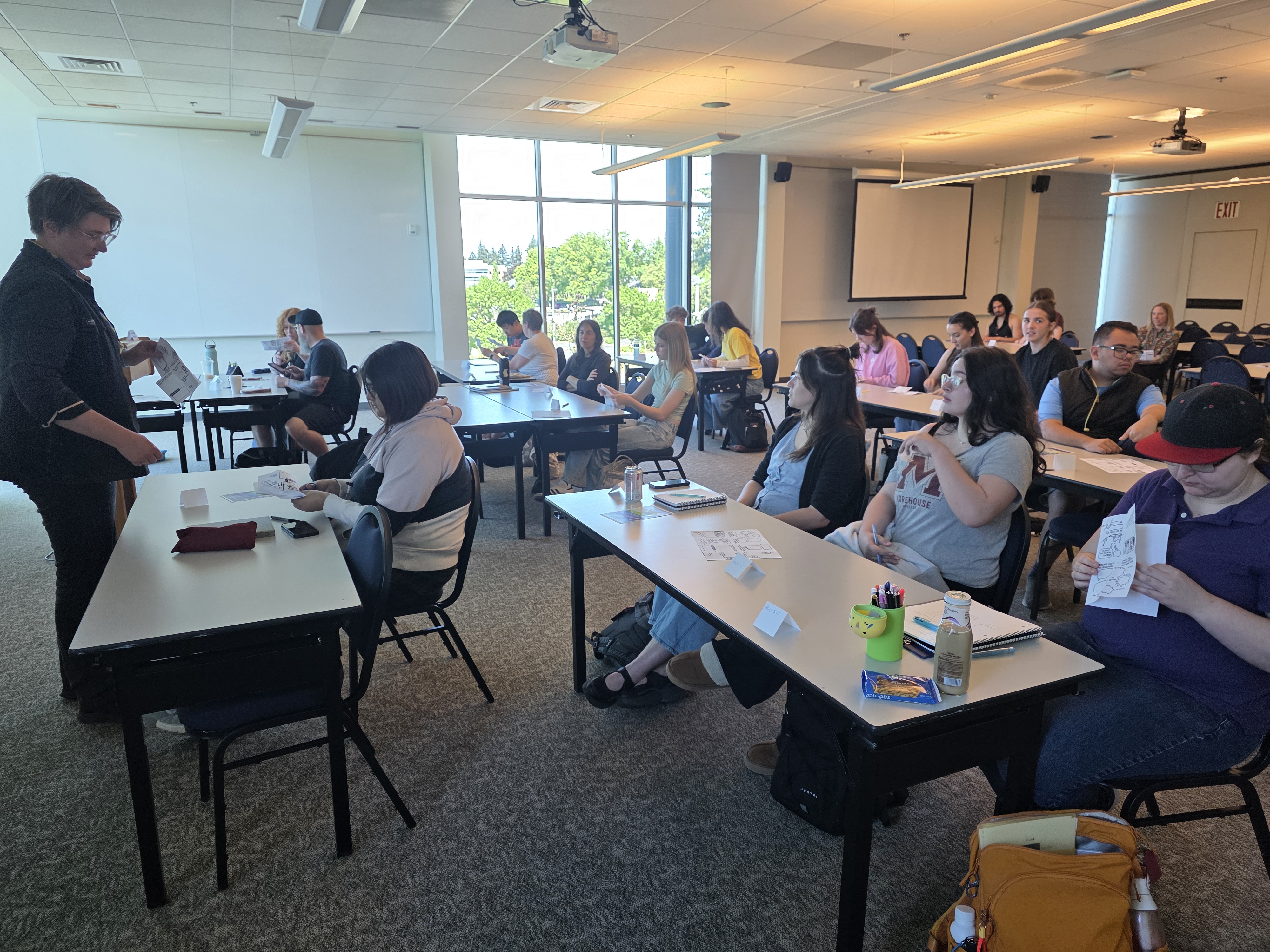
In the Nonfiction Comics Workshop, students learned about zines with comics journalist Shay Mirk, who has crafted six books and thousands of zines. The workshop began with a tutorial on cutting and folding a simple zine before students created their own mini publications.
“You have the tools you need, and you can make whatever you want!” Shay told the students as they worked.
Shay also shared their journey from traditional journalism to comics. A connection with a former guard at the Guantanamo Bay detention camp inspired a book highlighting the voices of people connected to the camp. While researching and illustrating the comic, Shay focused on capturing sensory details that made the setting feel authentic.
Students asked Shay about their creative process, from scripting and thumbnail sketches to collaborating with multiple artists while maintaining a cohesive visual style.
When Climate Meets Community
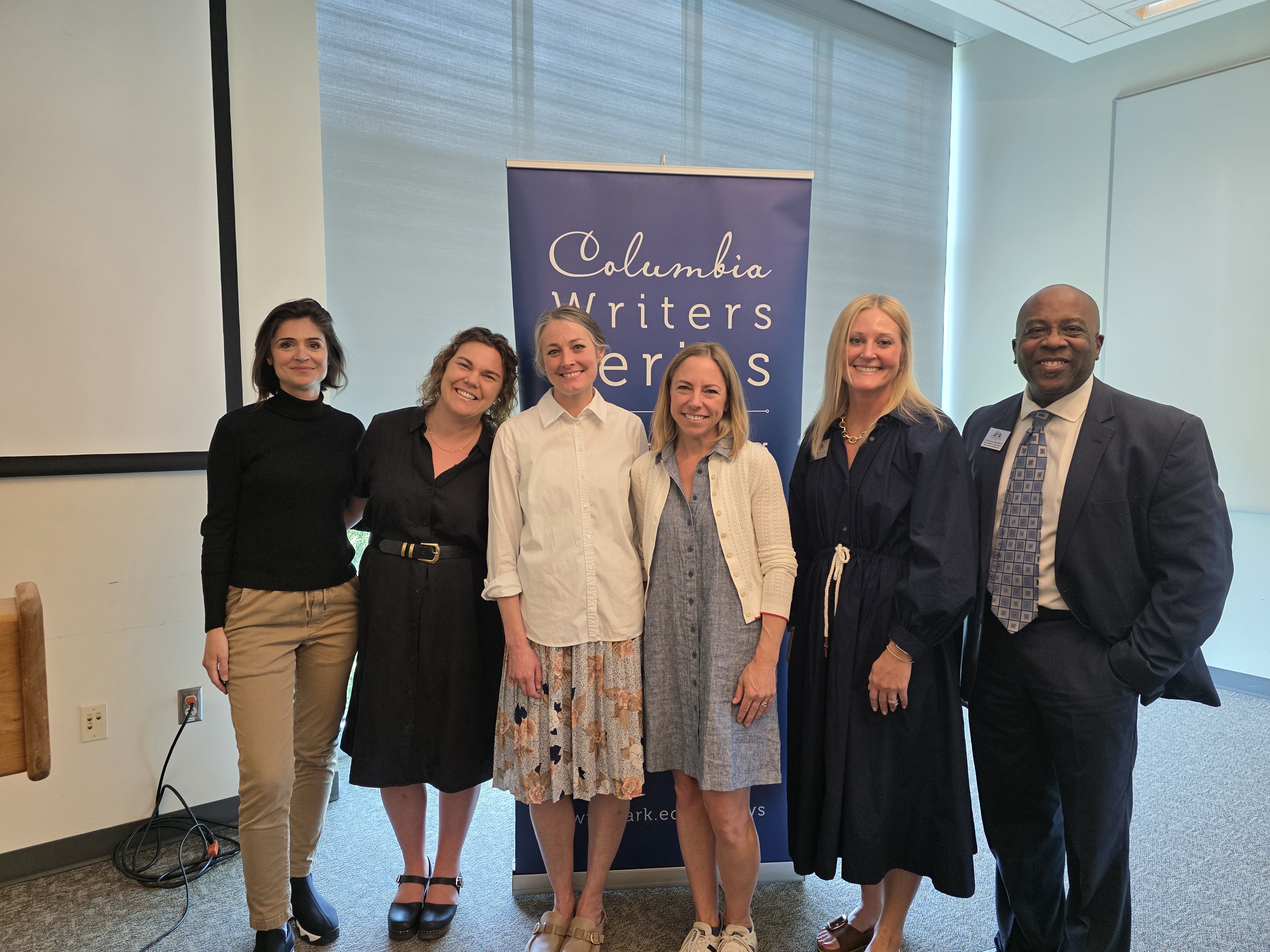
As part of the Columbia Writers Series, two acclaimed authors visited campus to read from and discuss their work.
Climate journalist and novelist Emma Pattee (pictured above) author of Tilt, reflected on how the idea for her novel developed while she was living in Clark College’s neighborhood. The excerpt she read explored art, youth, and the desire for fame. Emma explained that concerns about a major Pacific Northwest earthquake shaped the novel’s premise. At the time, she was seven months pregnant, an experience that inspired her main character’s journey. Though the novel initially had a darker, dystopian tone, it evolved into a story centered more on community and human connection.
"It's important for her to find success in art that's not tied to success and fame," Emma said of her protagonist. "The story asks, can you fulfill artistic ambition without being famous?"
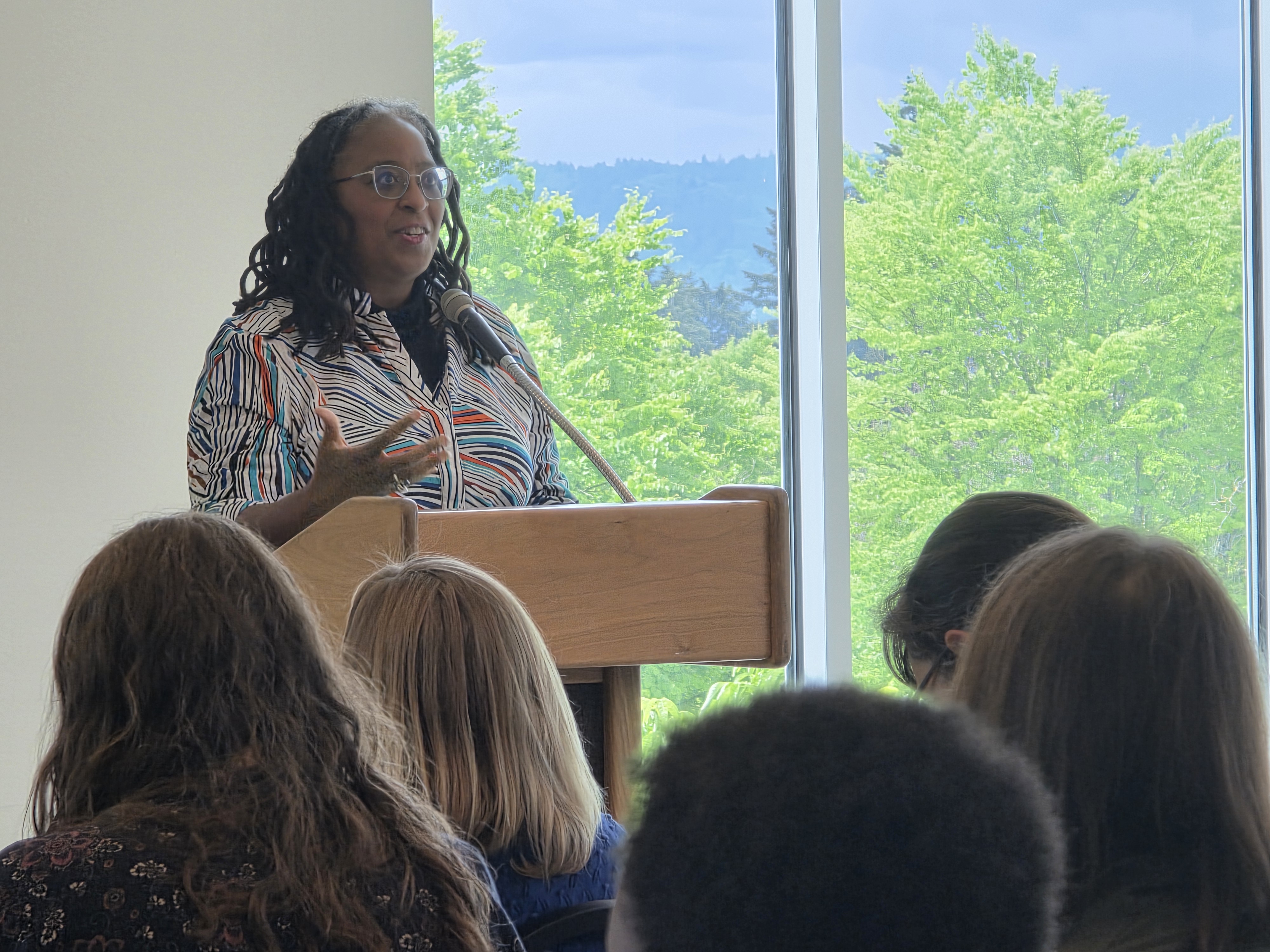
The second reading of the week was with poet and nature writer Camille Dungy (pictured right). Reading from Soil, the Story of a Black Mother’s Garden, Camille described the book as part of her own “learning process” as she reimagined relationships with both her community and the natural world. Camille discussed researching the names and histories of regional plants and emphasized the importance of calling natural objects by their names instead of simply referring to them as “it.” Students engaged deeply with her reading, asking questions about how her long-form prose informs her poetry and vice versa.
Reflecting with The Swift
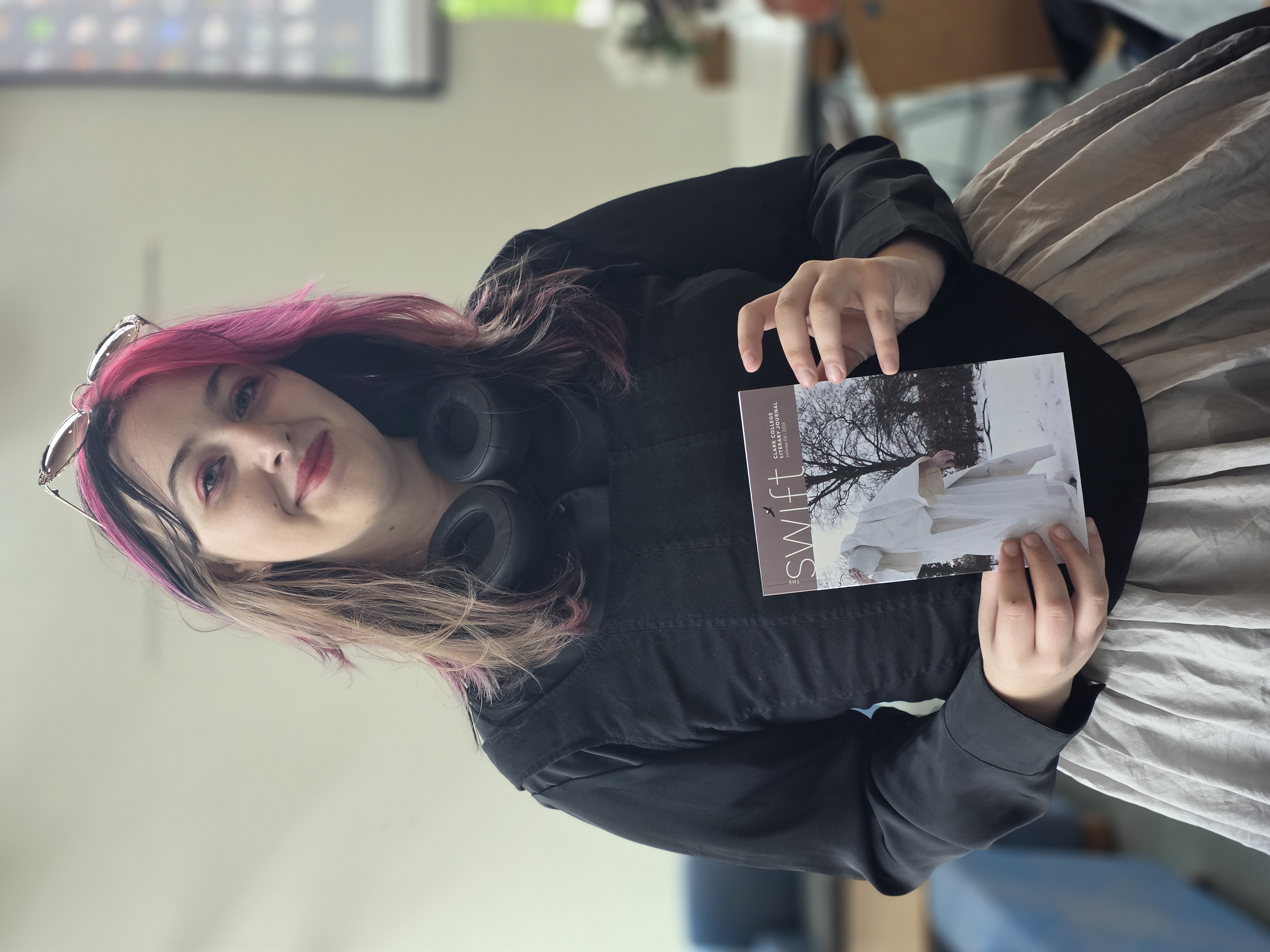
Pictured: Student Ava Hanna holding up a copy of The Swift. Ava’s story, “Liminality,” was inspired by her favorite horror author.
The fourth edition of The Swift, Clark’s literary journal, was launched at a celebration full of flowers and twinkling lights. This year, the journal received 82 submissions — the most in its history. The theme of this year’s edition is reflection.
“The purpose of literature is to connect us ... in our realities, our dreams, and through our innermost souls,” the editors wrote in the journal’s opening letter. “Our deepest hope is that when you read this journal, you take a moment to drink everything in.”
Editor Danielle Remsing said one of her favorite parts of the process was helping writers refine their work.
“You get to help authors develop their pieces, and it becomes a special process of trust and mutual respect for the work,” she said. “It’s a very collaborative process.”
Danielle explained that producing the journal involves much more than selecting pieces. Editors spend about two months reviewing and revising submissions before determining the order of the final works. She said she was surprised by the business side of the publication process, including budgeting, cover design, and coordination with the print shop.
“There’s something for everyone,” she said. “You don’t necessarily have to be a writer to be part of the process.”
Individuals who missed the launch party can still find copies of The Swift in the blue stands around campus, including outside Hanna Hall 112.
Celebrating Clark's Writers
The week-long festival concluded with a celebration of Clark students’ writing achievements.
“Gifted minds, gifted writers,” was how Professor Jill Darley-Vanis described her students — the perfect summary of the talent in the room that afternoon.
“I learned to slow down primarily through English classes,” Lucas Hill said before reading an excerpt from his piece, “Who Are We in a World Without Reason,” which won second place in the critical/literary analysis category. “Fiction is in the business of asking questions, and I believe short stories ask the best questions.”
This year also introduced a new award category, Multimodal Assignment, recognizing work that defies traditional genre conventions. Marilena Popa, who tied for first place for her piece “In Every Moment There is Music,” expressed gratitude at winning the award for a piece written in a language that isn’t her first.
“Winning an award that I put my heart and soul into feels unbelievable.”
The ceremony ended with the presentation of the Edda McCordic Talent Award for Creative Writing, which honors students for their overall contributions in creative writing and Clark’s English department. This year’s recipients were Danielle Remsing, Ilia Field, and Kristina Narmore. Danielle thanked her professors for encouraging her to use her voice and plans to continue writing after she graduates.
Learn more about Creative Writing at Clark College, including the Columbia Writers Series returning in the fall, and submissions for The Swift Clark College Literary Journal.
Photos: Clark College/Malena Goerl
Story by Malena Goerl, Staff Writer, Communications and Marketing