
Mindset Matters: Psychological First Aid
New emergency management training series kicks off with high turnout
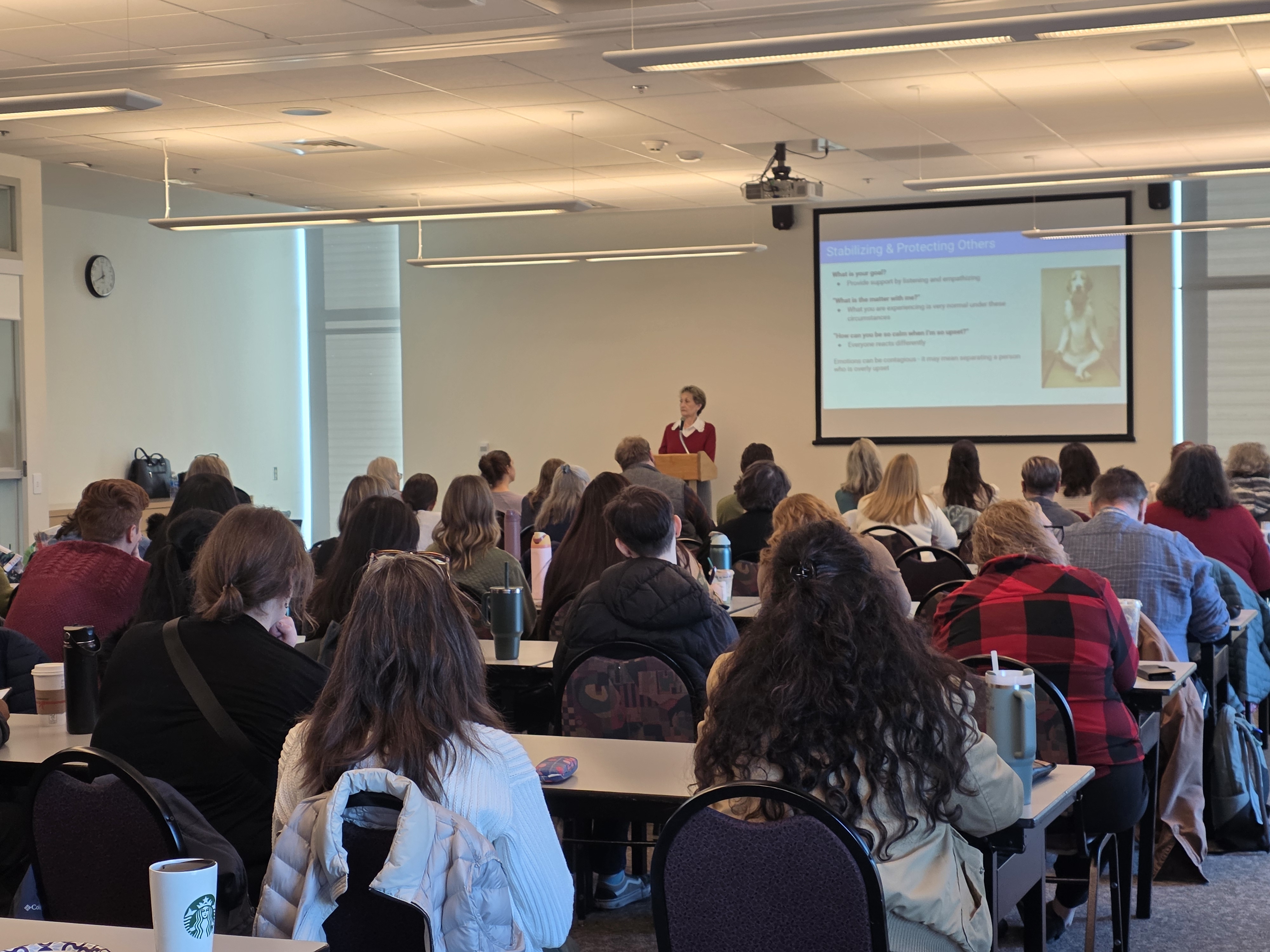
It was a packed house on Jan. 13 for Mindset Matters: Psychological First Aid, the first session in Clark’s new Emergency Management Training series for students and employees, signaling a strong interest in building campus-wide readiness for emergencies.
Presented by Jodi Blackwood, Emergency Management Coordinator for Clark Regional Emergency Services Agency (CRESA), the session focused on how people respond to crisis and why understanding those responses is a key part of preparedness.
She opened with a sobering reflection: the isolation many people experienced during the COVID pandemic was, in some ways, a preview of future challenges.
“The ability to relate to people is crucial, and it takes time to learn,” she said.
Psychological first aid has the same core principle as physical first aid: to minimize injury and future disability. Jodi reminded attendees that psychological trauma is a normal response to an abnormal situation, and that no two people experience or process trauma in the same way.
Jodi shared real-world examples of emergency dispatcher calls that highlighted how crisis exposure can shape a person over time. “It’s overwhelming, and it changes you,” she said. “We may have situations in our lives that make us more sensitive...or more callous. Be aware of how your experiences may be affecting you.”
Much of the session focused on communication—what helps, what harms, and how to adjust support for different populations. For children, that may mean getting physically at their level, and following through on your promises. For seniors, it may mean asking open-ended questions and considering what feels most important to them in the moment. Patience, Jodi noted, is universally valuable.
Participants also learned how to respond to a range of crisis reactions. Regardless of an individual’s reaction, one of the most effective tools is simply listening—without shifting the focus to one’s personal experiences. She also included a list of things not to say, such as I understand, everything will be okay, and it could be worse. Instead, focus on acknowledging pain and expressing care.
Jodi ended her presentation with a reminder to also focus on your own self-care. “Because if you don’t take care of yourself,” she asked, “who will?”
Upcoming Emergency Management Training Sessions
Earthquakes in the Pacific Northwest: What to Know and How to Prepare
Wednesday, Feb. 18, 2–3 p.m. on Zoom — Look for an email from Lindsey McKim for the registration link prior to the event.
Presented by Brian Terbush, Washington State Emergency Management Division, this session covers why earthquakes happen in the Pacific Northwest, what shaking may feel like, how to protect yourself during and immediately after an earthquake, and simple steps you can take now to prepare for future events.
Real Talk, Real Response: Understanding Active Threat Incidents
Monday, Mar. 9, 2–3 p.m. in PUB 256 B/C
In this interactive session, you’ll learn how to quickly assess an evolving situation and make the best decision based on your location and options. We’ll break down the Run, Hide, Fight model in plain language, including how it connects with Clark’s emergency procedures, and what actions can keep you and others safer whether you’re in a classroom, office, or moving around campus. You’ll also hear directly from our local first responders. They will share insight into how they respond during an active threat and will explain how medical and rescue priorities unfold once the scene is safe.
Preparedness Starts at Home
Thursday, Apr. 9, 10–11:30 a.m. in PUB 256 B/C
Presented by Jodi Blackwood, Emergency Management Coordinator, Clark Regional Emergency Services Agency (CRESA): This session covers the essentials of personal and household preparedness, understanding local hazards, creating a family emergency plan, building and maintaining emergency kits, preparing your home for utility disruptions, evacuation, or shelter-in-place, and staying informed through alerts and trusted information sources.
Photo: Clark College/Malena Goerl
Story by Malena Goerl, Staff Writer, Communications and Marketing