
MESA Students Preparing for Future Pathways
Students engage in workshops to gain skills and build connections within STEM fields
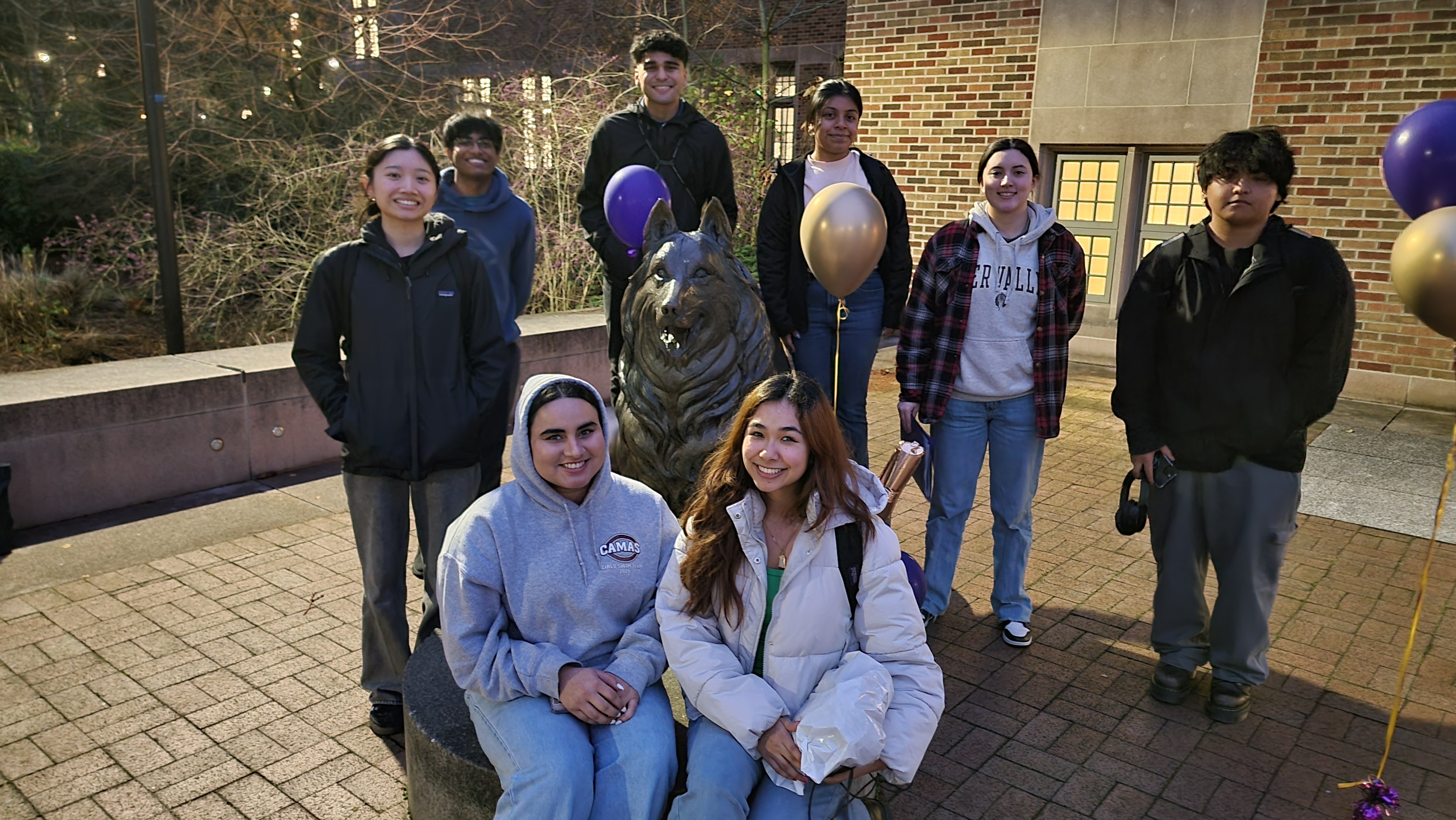
Pictured: MESA students attended the UW Student Transfer Preview Day in Dec.
During the 2025-26 academic year, the Clark College Mathematics Engineering Science Achievement (MESA) Center has been a vibrant hub of learning, connection, and opportunity for our 116 MESA scholars.
MESA’s mission is to empower students by providing them with a community that supports their higher education pathways, supporting the next generation of STEM leaders. We do this through mentorships, academic programs, and interactive workshops.
Throughout the year, students have engaged in hands-on workshops that explore career opportunities and help prepare them for future pathways. They didn’t just attend events — they gained skills, built confidence, and strengthened their sense of belonging in STEM.
Building Connection
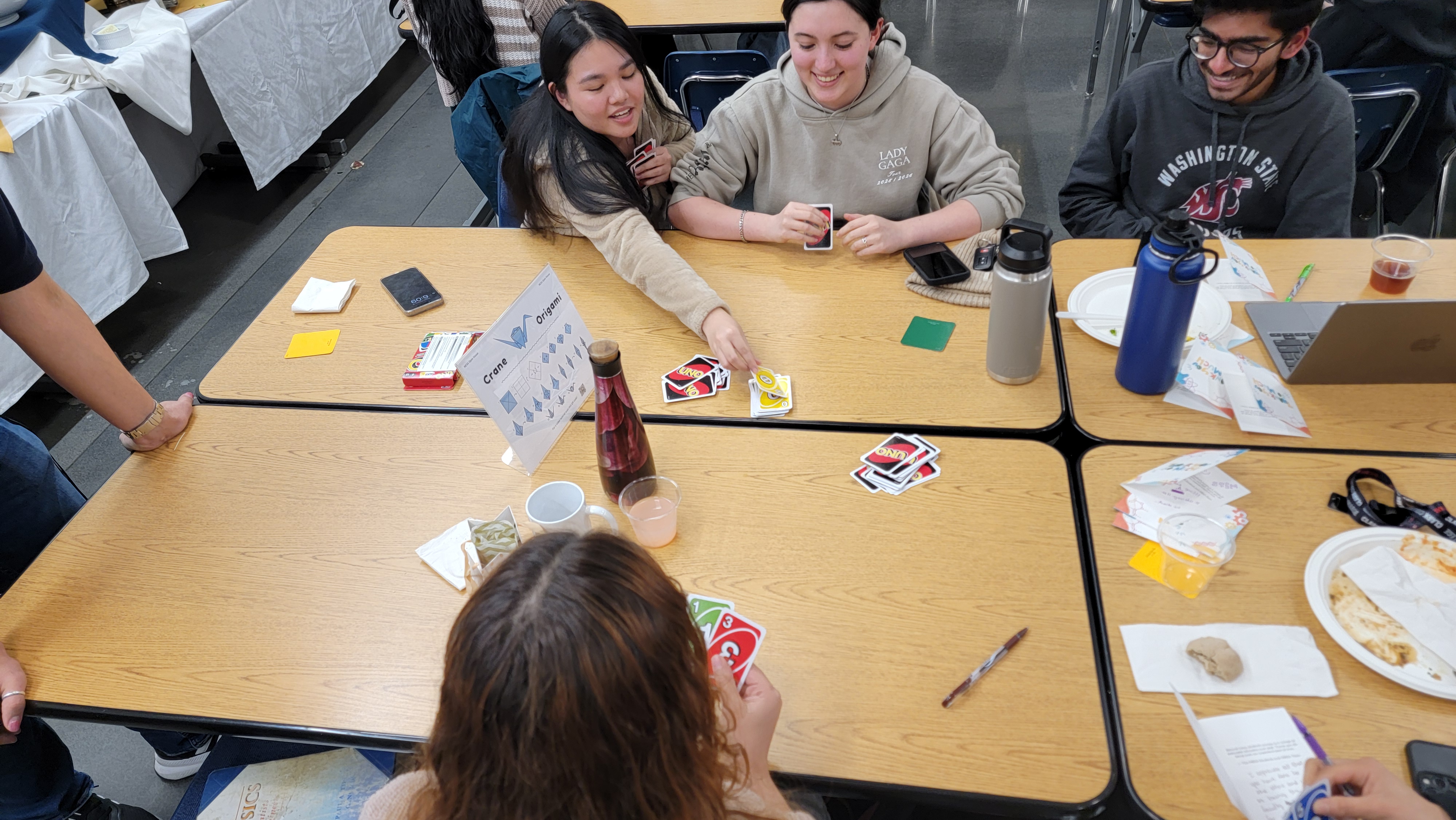
Building connections — with each other and regional STEM leaders — provides MESA scholars with a foundation that not only supports them during their education but also guides them as they navigate career pathways.
Here are ways our students are building connections this year:
MESA Fall Open House, Oct. 9: Students built community at the start of the quarter, met fellow Scholars, learned how to use the MESA Center as a resource, and began forming peer connections that support them throughout the year.
Advancing Chicanos/Hispanics & Native Americans in Science (SACNAS) National Diversity in STEM Conference, Oct. 30–Nov. 1: Four MESA Scholars attended and experienced a national STEM conference, engaged with cutting-edge research, connected with transfer institutions and employers, and saw representation of diverse scientists and engineers in the field. They practiced professional networking and learned how to confidently introduce themselves in academic and professional spaces.
Appreciation Station: A MESA Giving Event, Nov. 25: At this fun, community-building event, students practiced gratitude by writing thank-you cards to faculty, staff, family, and peers, reinforcing the supportive culture that defines the MESA community.
Board Game Night, Feb. 18: Students built friendships, reduced stress, and strengthened their sense of belonging within the MESA community (pictured above).
Silicon Forest Tech Summit, Mar. 14: Students explored emerging technologies, connected with regional industry leaders, and learned about career pathways in advanced manufacturing and tech innovation.
Building STEM Skills
Part of creating a sense of belonging in STEM is helping students build skills that they’ll carry into their careers. MESA offered many opportunities for our scholars to sharpen their STEM knowledge throughout the year:
Math Success Sessions, Oct. 8 & 15, Jan. 15 & 21: Professor Paul Casillas partnered with MESA to host Math Success Sessions, where students learned practical problem-solving strategies, developed stronger study habits for math courses, and gained tools to improve performance and confidence in math. These sessions also helped students better understand how math skills translate across STEM disciplines and into future coursework.
Virtual Career Panel: AI Tools You Can Use Right Now, Jan. 13: In partnership with the Mentoring Project, students saw live demonstrations of AI tools used by professionals, learned practical ways to apply these tools in coursework and projects, and gained insight into future technical career paths. They left with specific examples of tools they could begin using immediately.
Networking (Not the Socializing Kind) Workshop, Mar. 4: Students gained hands-on technical experience building a network with Raspberry Pi and understanding practical computer networking concepts, allowing computer science students to apply theory in a tangible, engaging way.
Finding Internship & Scholarship Support
Internships allow students to explore career pathways in a variety of STEM fields. MESA supports students through both the internship and scholarship application process.
Pacific Northwest National Laboratory Community College Internships Info Session, Nov. 4: Students learned how to apply for competitive, paid national laboratory internships and how to prepare strong applications. They also learned about the types of research projects available and how community college students are valued in national lab settings.
Taco ‘Bout Internships and Scholarships, Nov. 6 & Feb. 4: Students made tangible progress on internship and scholarship applications while the Clark College Foundation presented on scholarships, and MESA Scholars shared their past internship experiences to encourage peers to get involved. A taco bar was provided to keep students fueled as they work on their applications.
Ongoing Internship & Scholarship Fridays: In this new initiative that began last term, students sign up for one-on-one sessions with a MESA Ambassador for support on finding and applying for internships and scholarships.
Preparing to Enter the Workforce
In addition to STEM-specific skills, MESA scholars dug into career and leadership workshops, learning how to build resumes, boost their online presence, and network with others within their industry.
Virtual Career Panel: How AI is Changing Careers, Oct. 14: In partnership with The Mentoring Project, students explored how AI is shaping career fields, learned which skills are becoming valuable to employers, and connected with professionals working in emerging AI-driven roles.
Resume Writing Workshop, Oct. 23: Niira Krupnick from Career Services shared how to present academic and extracurricular experiences in a professional, results-focused language and understand how recruiters quickly evaluate resumes for internships and jobs.
LinkedIn Profile Workshop, Nov. 19: Niira returned to teach students how to build a strong professional online presence, write effective summaries, and present their experiences in a way that increases visibility to recruiters and professionals in their field.
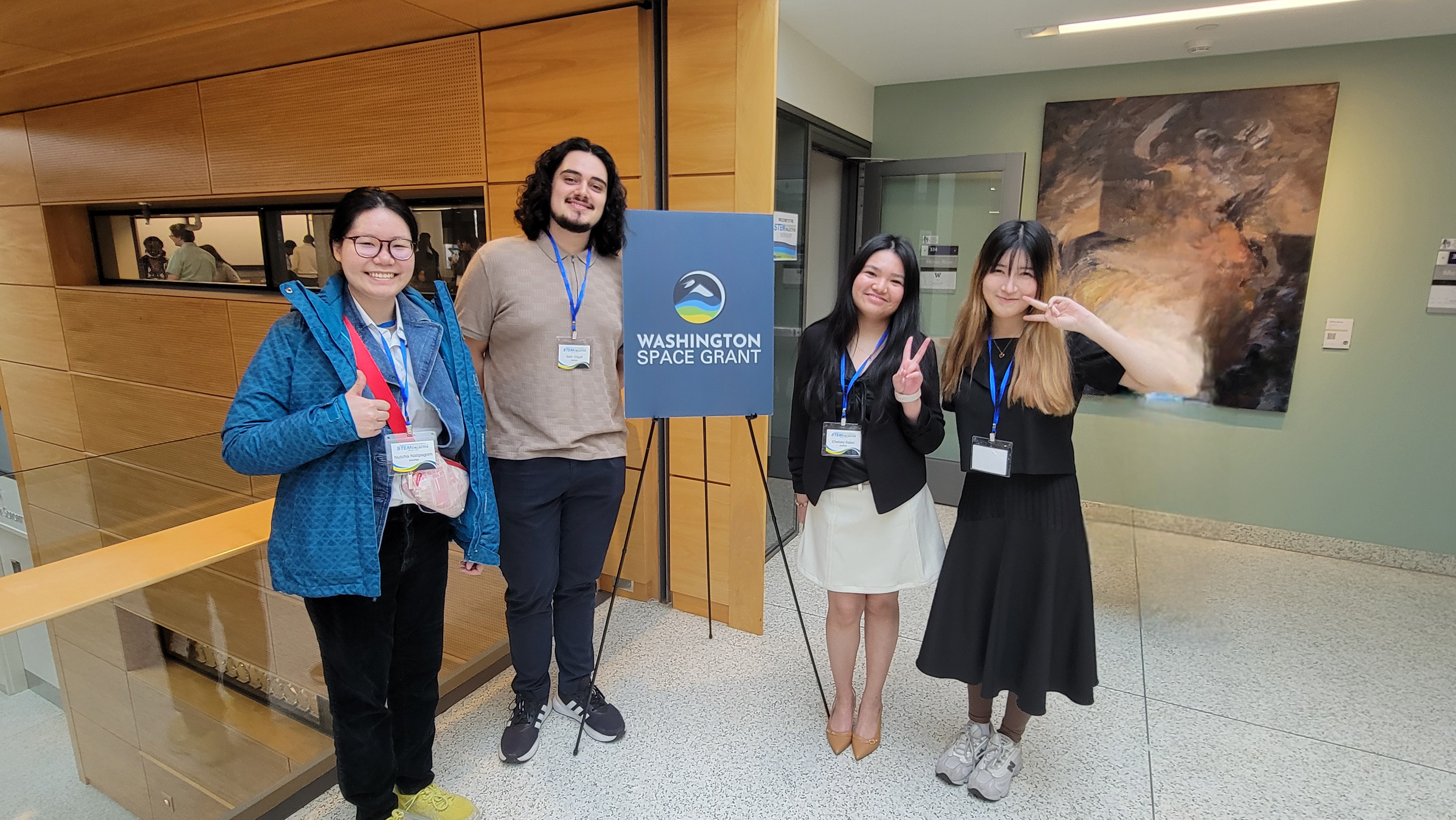
STEM Leadership Collective Workshop, Feb. 7: Students participated in the STEM Leadership Collective (pictured below), a one-day workshop designed to expand access and opportunity for students pursuing STEM careers. They strengthened their leadership, networking, and portfolio-building skills while gaining valuable insight from faculty and industry professionals about navigating academic and career pathways in STEM.
Exploring Future Pathways
MESA Scholars have many opportunities to learn about various STEM fields and the kinds of programs available for transfer students — from health sciences to engineering and computer science. They started envisioning what their futures might look like and explored how to get there.
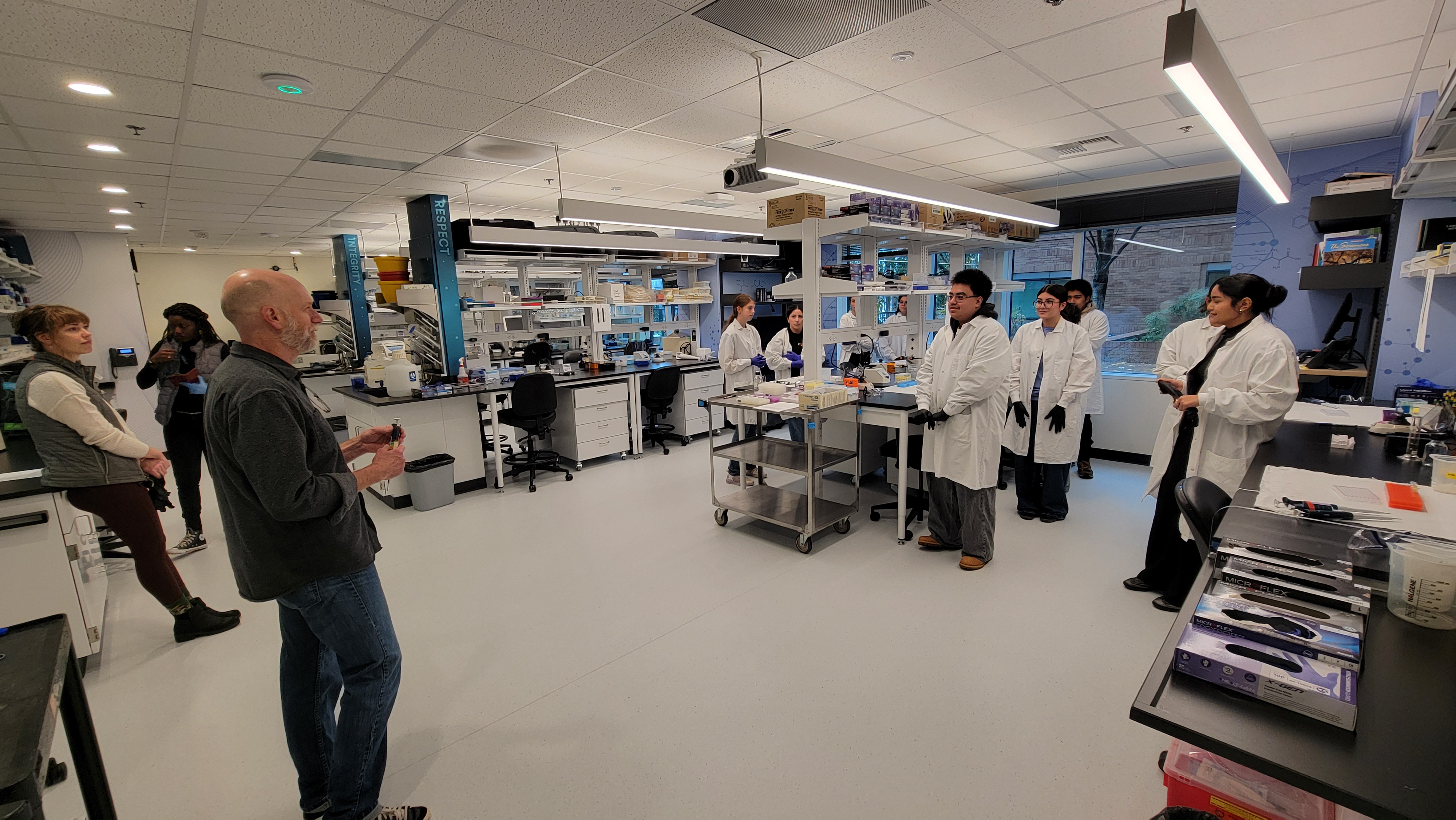
Fred Hutch Cancer Center Visit, Nov. 14: In partnership with Wenatchee Valley College’s MESA program, students toured active research labs, participated in a hands-on lab activity, and explored careers and internship opportunities in cancer research, biomedicine, and health sciences (pictured above).
UW Transfer Student Preview Day, Dec. 11: Students connected with university advisors and departments, clarified transfer expectations, and gained insight into campus resources that support transfer success.
Institute for Systems Biology (ISB) Info Session, Jan. 14: Students discovered paid summer research internships and learned how interdisciplinary STEM fields connect biology, data science, math, and engineering.
Summer Health Professions Education Program Info Session, Jan. 22: Students learned about pathways into medicine, dentistry, nursing, pharmacy, and other health care professions.
UW Application Workshop, Jan. 29: Students received guidance on crafting strong personal statements and received individualized feedback on their essays.
PSU Engineering & Computer Science Transfer Student Day, Feb. 27: Students toured labs, met future instructors and classmates, and learned how to transition smoothly into engineering and computer science programs after Clark College.
UW Summer Undergraduate Research Program Info Session, Mar. 3: Students learned about undergraduate research opportunities at the UW Applied Physics Laboratory and the benefits of how this experience can strengthen transfer and career pathways.
Upcoming Activities
We have lots more coming for MESA Scholars at Clark College this term!
-
- Career Panel: What Does a Career with AI Look Like for You? — Apr. 14
- Taco ‘Bout Internships & Scholarships — Apr. 15
- OSU Spring Preview 2026 — Apr. 17
- Preparing for Careers: Interviews, Internships, and the Power of Mentorship — Apr. 21
- iFLY STEM Experience and Indoor Skydiving — Apr. 24
- Professional Licenses for All — Apr. 29
- WSUV Admissions & Nursing Program Presentation — May 6
- Ziplining at Skamania Lodge — May 23
- MESA Graduation & Scholarship Celebration — June 2
About MESA at Clark College
MESA at Clark College prepares students who are in a Science, Technology, Engineering, and Math (STEM) graduation pathway with plans on transferring to a 4-year institution. MESA supports students as they complete their pre-transfer academic journey at Clark, with a focus on supporting their transition to a bachelor’s degree. For students who plan to continue at Clark College for a bachelor's degree (Computer Science, Cybersecurity, Dental Hygiene, Nursing), MESA will support them during their prerequisite course completion.
Clark College began its MESA program during the 2018-19 academic year. The program can serve up to 100 students and accepts applications on a rolling basis as capacity permits.
To be a MESA Scholar at Clark College, students must meet the following criteria:
-
- Be enrolled at Clark College with a minimum of 5 credits per quarter.
- Have a cumulative GPA of 2.5 or higher.
- Demonstrate intent to pursue a bachelor's degree in a STEM field.
- Have no prior bachelor’s degree in any field (applicants must be pursuing their first bachelor’s degree).
The Washington MESA program is an educational pathway program administered by the University of Washington and established by the Washington State Legislature. Clark College is one of 12 community colleges in Washington that offers a MESA transfer prep program center for its students who plan to transfer to a four-year college to earn a bachelor’s degree.
At Clark, the MESA Center includes a dedicated space for studying and creating community, as well as opportunities for mentorship, assistance with books and fees, conference participation, campus visits, and more. The MESA Program cultivates a transformative environment for students, helping them prepare for and advance in STEM careers.
Learn more about Clark's MESA program
Photos: Clark College/courtesy of Román Lara
Story by Román Lara, Director of MESA