
Juneteenth Speaker Highlights Solidarity
Dr. Daniel Atkinson shares powerful stories of Black performers at Clark’s annual event
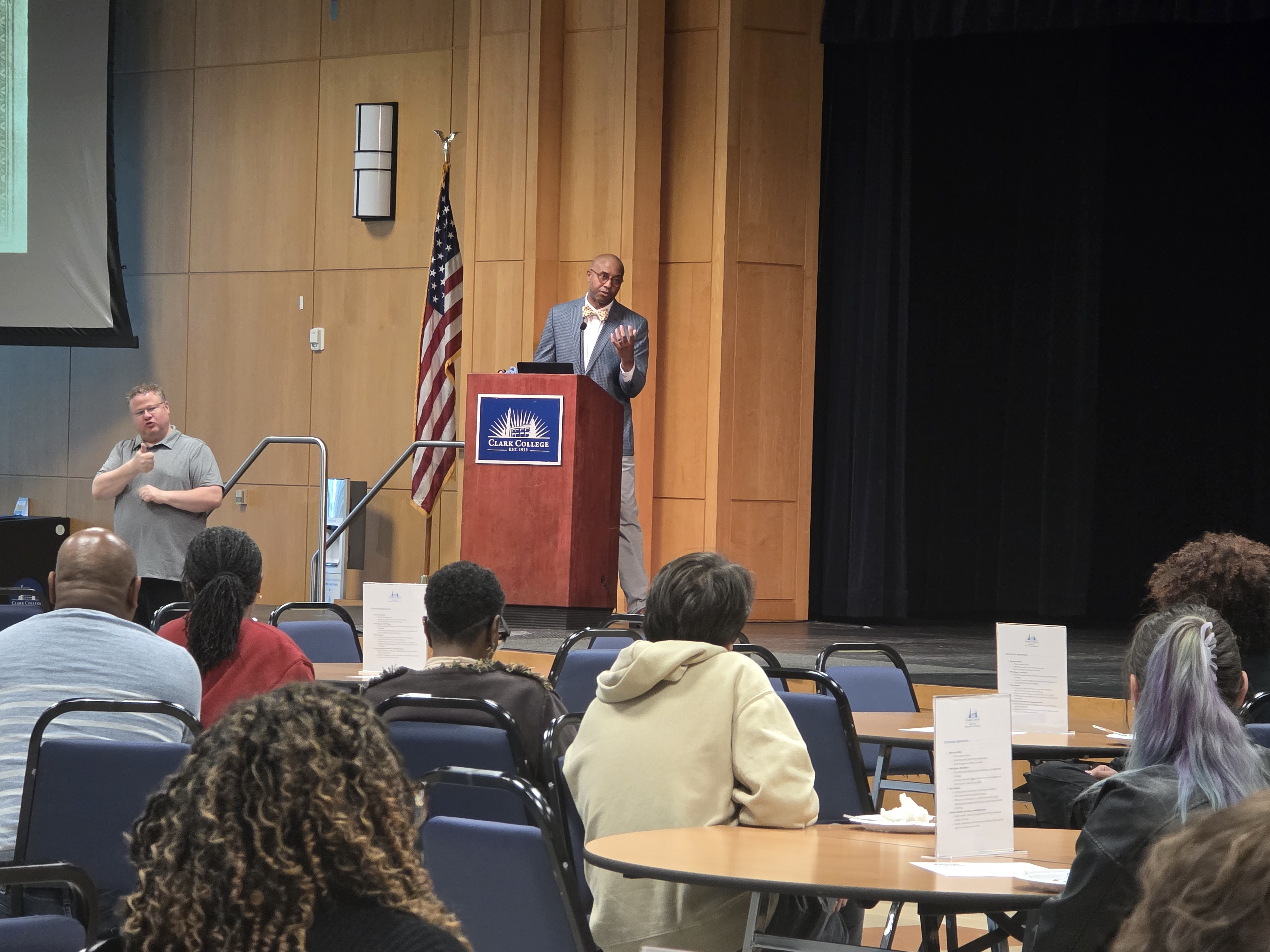 Pictured: Keynote speaker Dr. Daniel Atkinson addressed the audience during his speech
at Clark's annual Juneteenth celebration.
Pictured: Keynote speaker Dr. Daniel Atkinson addressed the audience during his speech
at Clark's annual Juneteenth celebration.Community members gathered to celebrate and reflect during Clark’s annual Juneteenth event, held June 8 at the Gaiser Student Center.
Juneteenth (“June” plus “nineteenth”) is observed annually on June 19, recognizing the date in 1865 that news of abolition finally reached more than 250,000 enslaved people in Texas — the last enslaved people in the United States to be officially informed of their freedom. It’s a day to reflect on the struggles, resistance, and determination of those who came before us.
Reclaiming the Narrative
Keynote speaker Dr. Daniel Atkinson shared the remarkable history of what he calls the Vanguard Generation, highlighting how Black performers shaped culture and challenged stereotypes in the decades following the Civil War.
“They created a platform of excellence, through talent but also through solidarity,” Dr. Atkinson said.
Dr. Atkinson began by discussing minstrelsy, a popular form of entertainment in the 19th century that relied on racist stereotypes of Black people and culture. Because these performances were widely seen throughout the United States and abroad, they became the dominant representation of Black culture for audiences who had little exposure to real Black communities.
In response, Black performers worked to create space where they could present authentic portrayals of their culture. While many faced pressure to make their work more palatable to white audiences, Black artists continued to challenge stereotypes and advocate for genuine representation.
Central figures in Dr. Atkinson’s presentation were George Walker and Bert Williams, known as the influential entertainment duo Williams & Walker. Together with George’s wife, Aida Overton Walker, they became some of the most recognizable entertainers of their era. Because they had achieved mainstream success, they snuck acts into their shows that exemplified the human condition from the Black perspective.
They also controlled their own publishing and marketing. Dr. Atkinson explained that this meant Williams and Walker intentionally shared photos of themselves both in and out of costume “to trick people into seeing them as humans,” rather than performers only there for the entertainment of others.
Dr. Atkinson also highlighted Aida’s reputation as a highly skilled performer. George recognized her world-class talent, and the duo began including her in their performances, continuing their efforts to give Black artists a platform. After George died, Aida often played both the male and female main roles. She knew that if she stopped, they would lose control of the company — and their narrative.
Throughout the presentation, Dr. Atkinson emphasized the power of solidarity. Progress, he said, comes from communities working together to preserve their stories. He encouraged young audience members to continue learning from those who came before them.
“Talk to your elders,” he said. “Take it with you and pass it on when you become the elders. That’s how we stay alive.”
About the Keynote Speaker
Dr. Daniel Atkinson is an ethnomusicologist who studies how music reflects culture and social behavior with a focus on Afro-American vernacular expression. He is the author of The Rediscovery of George Nash Walker: The Price of Black Stardom in Jim Crow America, a biography of the co-founder of the Black theatre company Williams and Walker. Dr. Atkinson currently works for the August Wilson Legacy Foundation.
Celebrate Juneteenth in the Community
Clark employees and community members are encouraged to get involved with organizations and events to celebrate Juneteenth. Join the Vancouver community at the city’s annual Juneteenth Freedom Celebration event on Saturday, June 20, 10 am to 3 pm, at Esther Short Park.
Photos: Clark College/Malena Goerl
Story by Malena Goerl, Staff Writer, Communications and Marketing