
How Bee Campus Impacts Year-Round Learning
Bee-centered curriculum from graphic design to chemistry
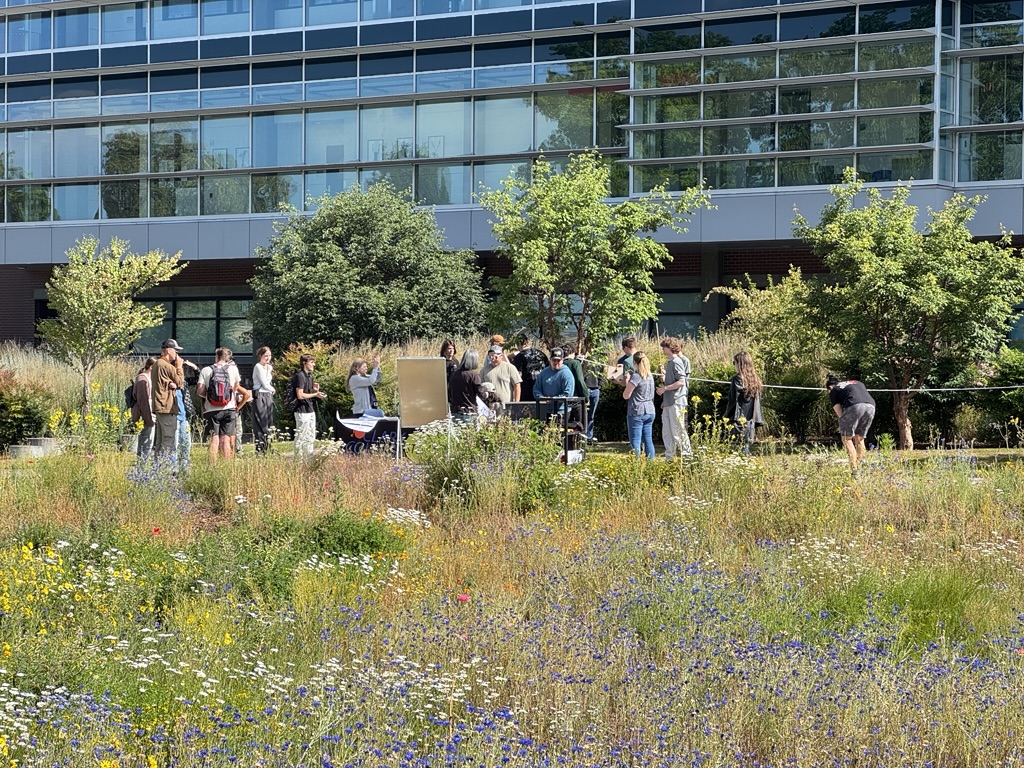 Pictured above: Engineering students in the STEM building bee garden during their
capstone project
Pictured above: Engineering students in the STEM building bee garden during their
capstone project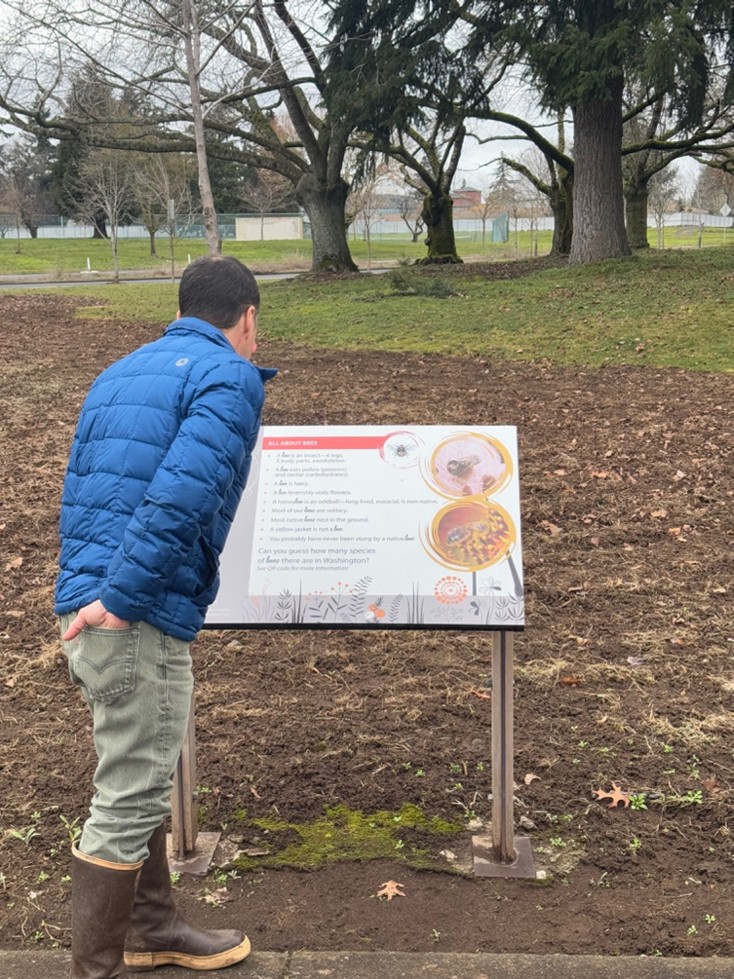
While Bee Campus bursts into view each spring with blooming pollinator gardens, its impact extends far beyond the season and inspires curriculum all year.
Instructors across disciplines find Bee Campus has a place in the classroom all year round, weaving bee-centered learning into their courses. The buzz doesn’t stop when the flowers fade.
Chemistry Students Test Bee Habitat
Professor Natasja Swartz Jensen’s chemistry classes do Bee Campus projects every quarter. Over 120 students in her winter Chem101 classes will test and analyze soil samples and air pollution across different seasons. They will evaluate how these factors influence bee counts in the spring.
She said, “My students are not STEM students. Most of them are pre-health… they are very caring of each other, and aware of the world around them. We are using a ‘planetary health’ theme because it’s very difficult to be a healthy organism in an unhealthy environment. I went in this direction because I want it to be worth their time. I realized it’s worth their time if they are engaged in these collaborative projects.”
Fall and Spring Cohorts Collaborate
Professor Alison Davidson, who teaches biology, says of the bees, “It helps they are stinking cute. The students fall madly in love with them… any hook I can use to get the students interested and engaged is beneficial.”
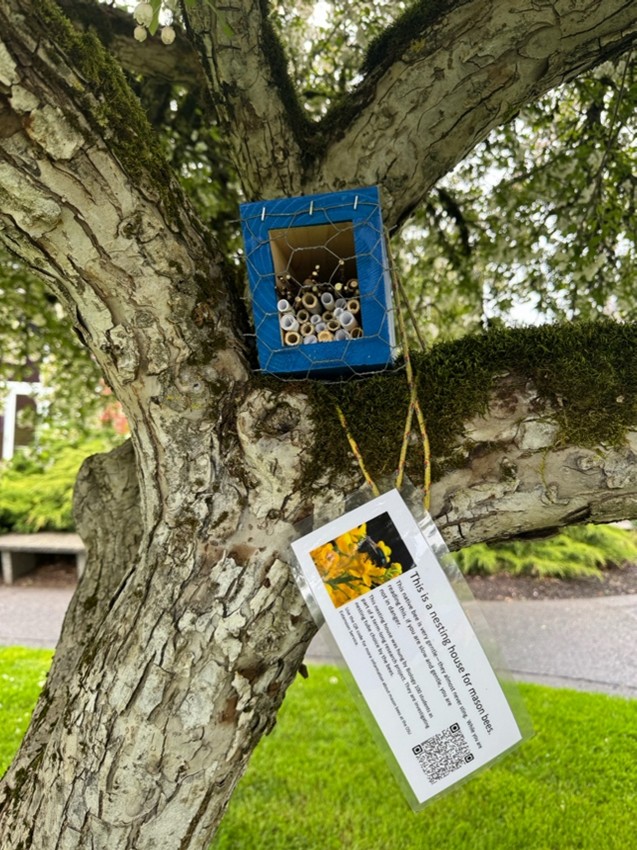
She described how her spring and fall students collaborate. The spring biology students set up mason bee houses, which are nesting sites for mason bees. Then, the fall students analyze the results and leave notes for the next spring students to use to improve the process. “It’s a collaboration for the different cohorts of students who never see each other.”
The Importance of Real-World Projects
Both professors emphasized the value of giving students experiences with science in real-world, unpredictable conditions.
As Davidson put it: “When we do projects that are more authentic research-style work, students see that we as professors don’t know what will happen. It’s good for students to experience that. It puts them out of their comfort zone. They want to know if they’re doing this right. The answer is, we don’t know.”
She summed up Bee Campus’s influence on curriculum when she added, “Bee Campus gives us this lovely canvas we can paint however we want to lead the students through the experiences.”
Bee Campus Across Disciplines
They’re not alone. Instructors have used Bee Campus to engage students in different, and sometimes unexpected, subjects:
-
- Graphic design students worked with the Bee Committee to design bee campus t-shirts with biologically accurate bees, and they were printed as merchandise for the bookstore. (Pictured right)
- Engineering students used Bee Campus as inspiration for a capstone project where they created machines that sow seeds for the bee gardens.
- Statistics instructors are in talks to use bee count data in class.
- Librarians created book displays about bees and native plants in collaboration with the Bee Committee.
The possibilities for Bee Campus to influence curriculum are endless, and the Bee Committee is open to collaborating with any interested instructors.
Learn More About Clark's Bee Campus
Clark College earned certification as a Bee Campus affiliate in April 2023. A Bee Campus USA affiliate is a college campus that includes a bee habitat, becoming the fifth college in Washington to earn that distinction. Learn more about Clark’s Bee Campus status here.
Photos: Clark College/Carly Rae Zent
Story by Carly Rae Zent, Digital Media Specialist, Communications and Marketing