
Connecting with Nature at the Early Learning Center
Child and Family Studies garden teaches children about caring for plants and the outdoors
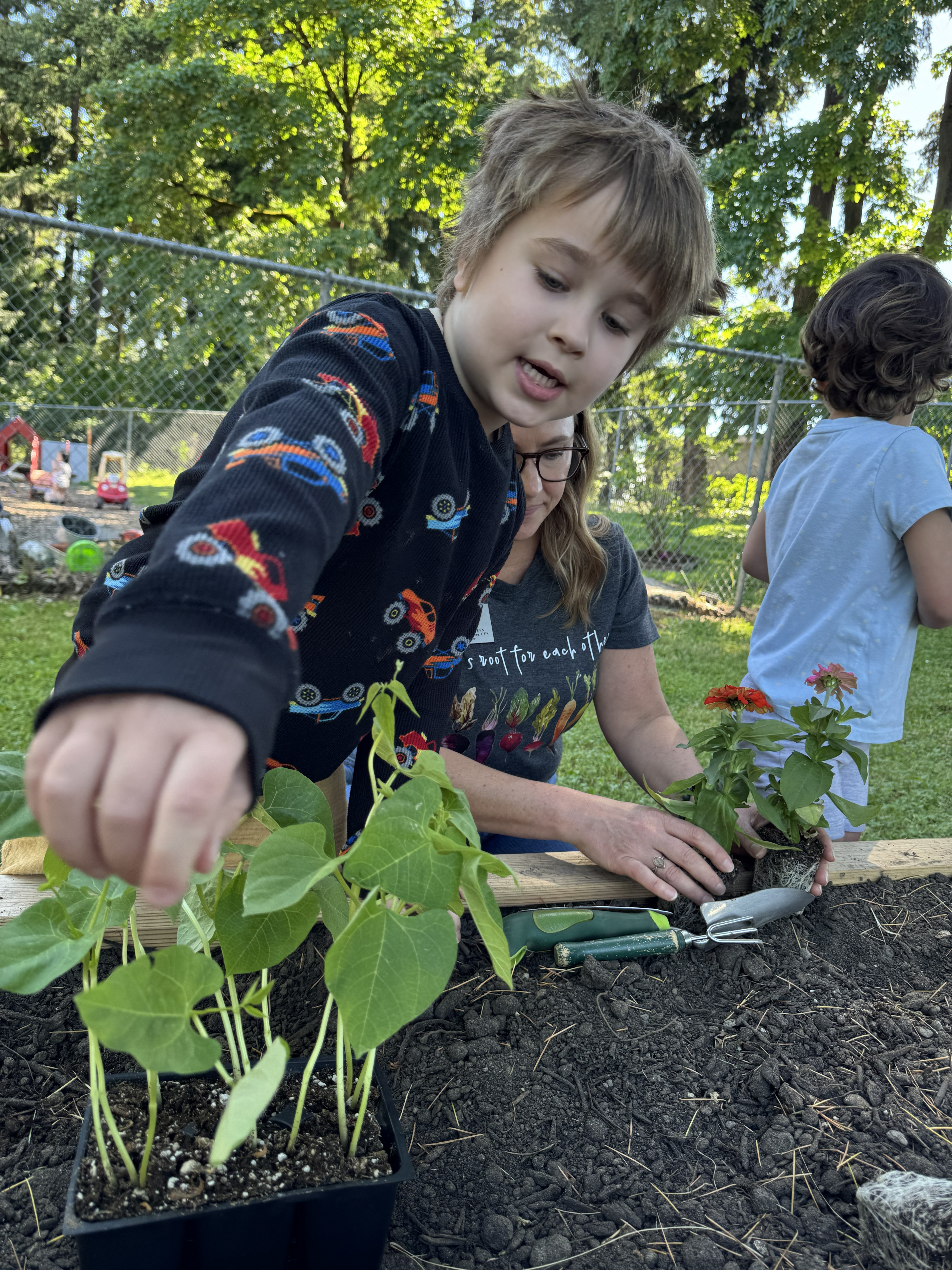
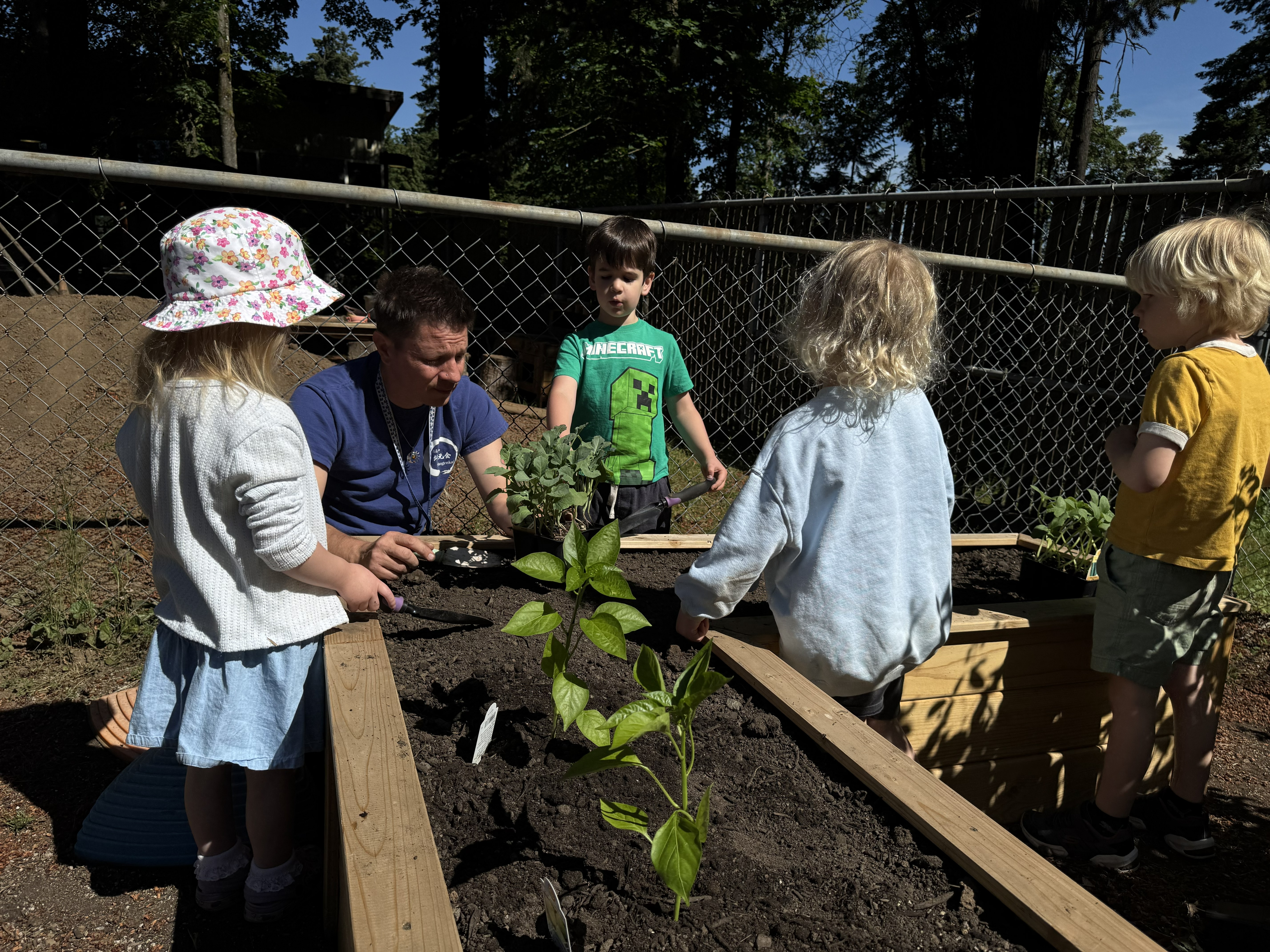 Pictured: Outdoor instructor Matthew Philbrook helps Child & Family Studies children
plant vegetables in the Early Learning Center's garden.
Pictured: Outdoor instructor Matthew Philbrook helps Child & Family Studies children
plant vegetables in the Early Learning Center's garden.Little hands are making big things happen in Clark’s Child and Family Studies program. On a sunny morning in June, groups of children gathered around newly built planter boxes at the program’s Early Learning Center, excited to dig into the soil and learn how plants grow.
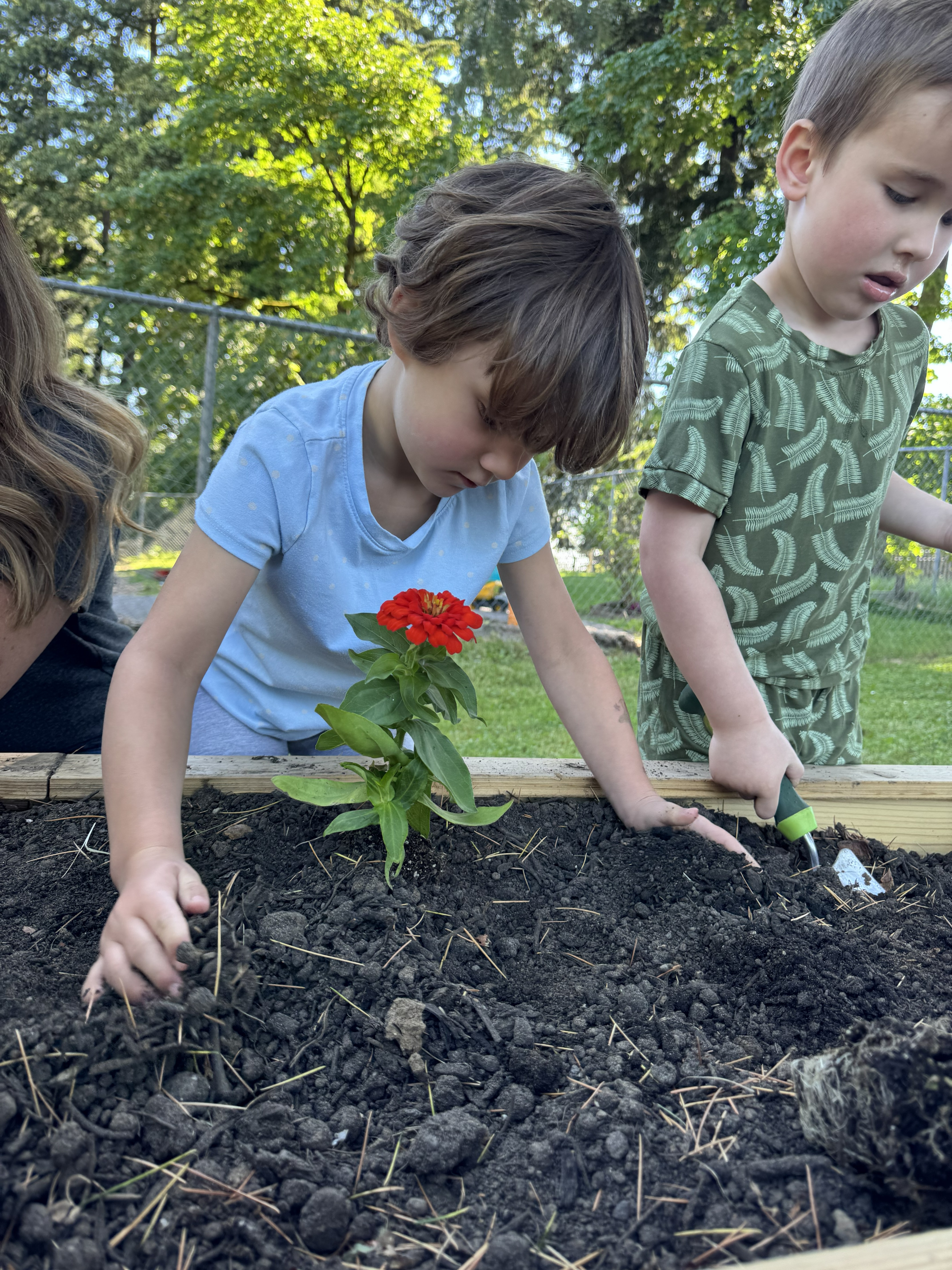
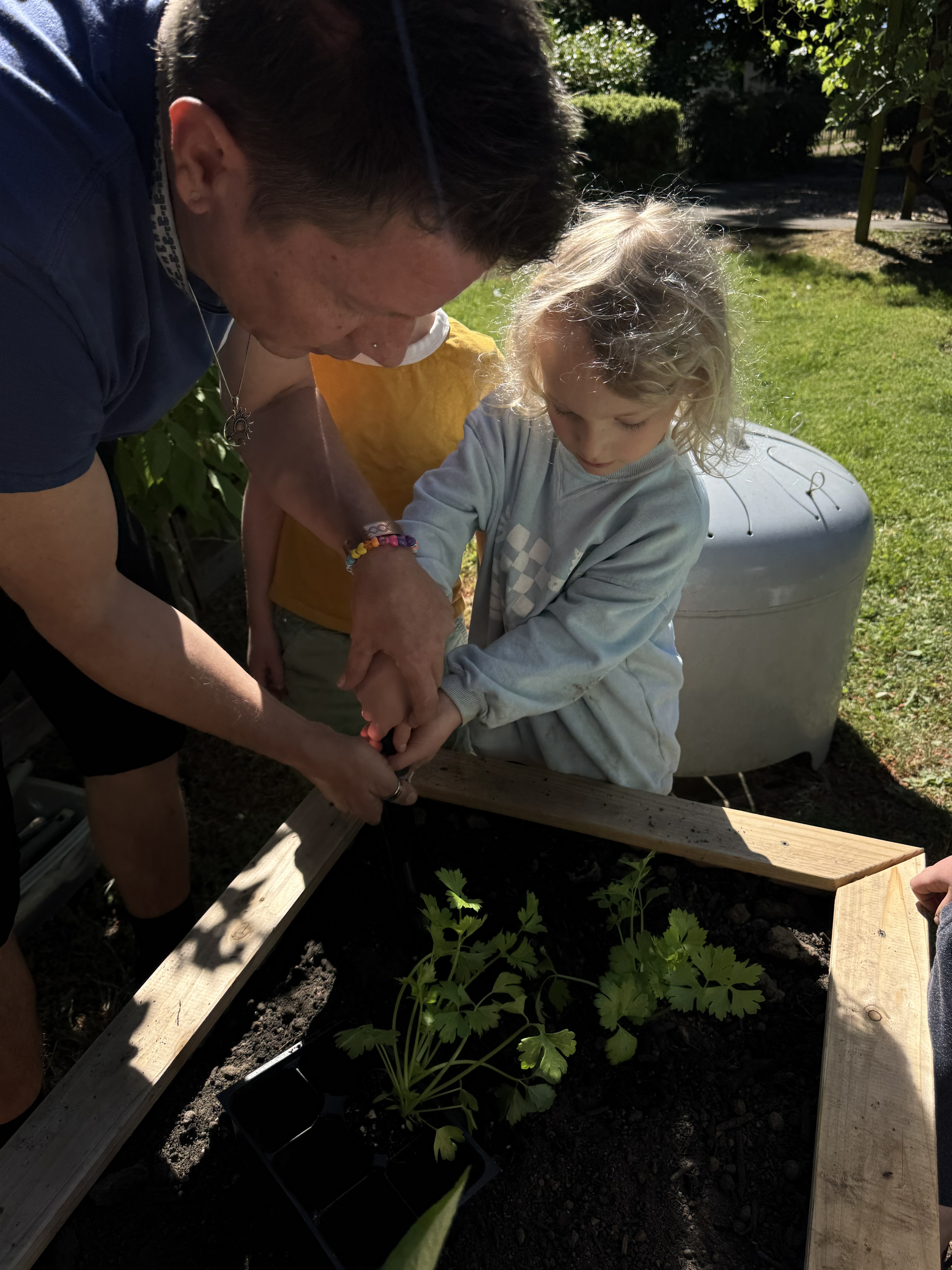
Guided by outdoor instructor Matthew Philbrook and Director Rose Witteveen, the kids planted flowers, herbs, and vegetables, including celery, bell peppers, broccoli, cucumbers, and green beans.
The young gardeners approached the project with enthusiasm, eager to share what they already knew about plants and to learn more. One boy was particularly excited to plant broccoli — his favorite vegetable. Another proudly announced that he had already planted corn and pumpkins at home, so he was confident he could help with today’s activity.
As the small hands reached into the dirt and carefully tucked the sprouting plants into the ground, Rose and Matthew taught them about what they were planting, how to care for them, and the role water, sunlight, and soil play in helping them grow.
“The main goal of the project is to have kids learn about planting — how plants grow differently in the ground versus a box, how to water them, things like that,” said Matthew. “Of course, we want the plants to successfully grow as well. But it’s an experimental year.”
This was the first year that the Early Learning Center had a dedicated outdoor instructor. Working part-time with the program, Matthew helps children connect with nature and teaches them how to respectfully engage with the living things they find outdoors, from ants and birds to rabbits and other wildlife.
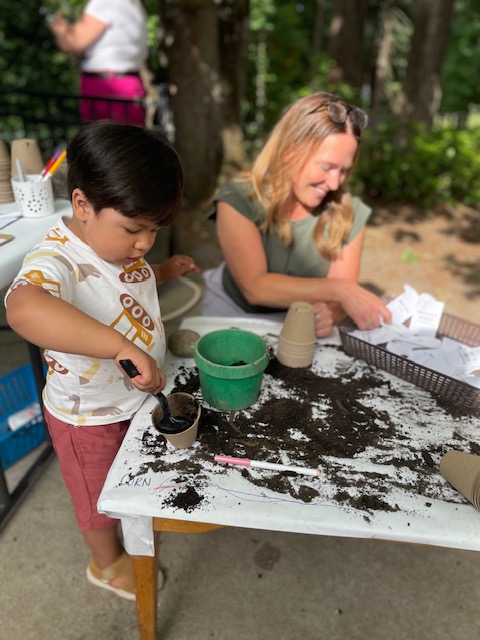
The garden project itself was a community effort. The nine planter boxes were built during a community garden party event and the program’s Family Workday earlier in the spring term. Families, staff, and community members worked together to construct the garden beds, begin planting seeds, and care for the center’s outdoor environments.
The lesson also has a long-term goal. As the plants grow, students will eventually have the opportunity to taste what they helped bring to life. The center’s cook will prepare some of the harvest, including the herbs, flowers, and vegetables, allowing the children to experience the full journey, from seed to table.
Gathered around another planter box, Rose held up a photo of a vegetable.
“What do you think this is?” she asked.
“A jellybean!” one child guessed.
His guess wasn’t too far off. The picture showed a green bean.
“Does anyone know the story of Jack and the Beanstalk?” Rose asked. “These are going to grow into beanstalks.”
“Will they grow as tall as the moon?” another child wondered.
“No,” she smiled. “But they’ll grow to the top of the fence.”
The kids chattered excitedly. For them, helping a beanstalk grow to the top of the fence sounded plenty magical.
About Child and Family Studies at Clark
Clark College’s Child and Family Studies provides a variety of services to families, which are open to Clark students and employees, as well as members of the greater community, and serves children ages 12 months to five years.
The Child and Family Studies program is founded on a belief in the importance of early childhood education and that children learn best in environments that foster inquiry. Classrooms are designed to encourage young learners to engage with materials that interest them. Every classroom is overseen by an experienced teacher; Clark students enrolled in the Early Childhood Education program are also present, as well as aides, college faculty, and other parents. Learn more about Child and Family Studies.
Photos: Clark College/Carly Rae Zent
Story by Malena Goerl, Staff Writer, Communications and Marketing