
Clark, WA State Patrol Partner on Phlebotomy Training
Allied Health and CCE develop a specialized phlebotomy course for state troopers
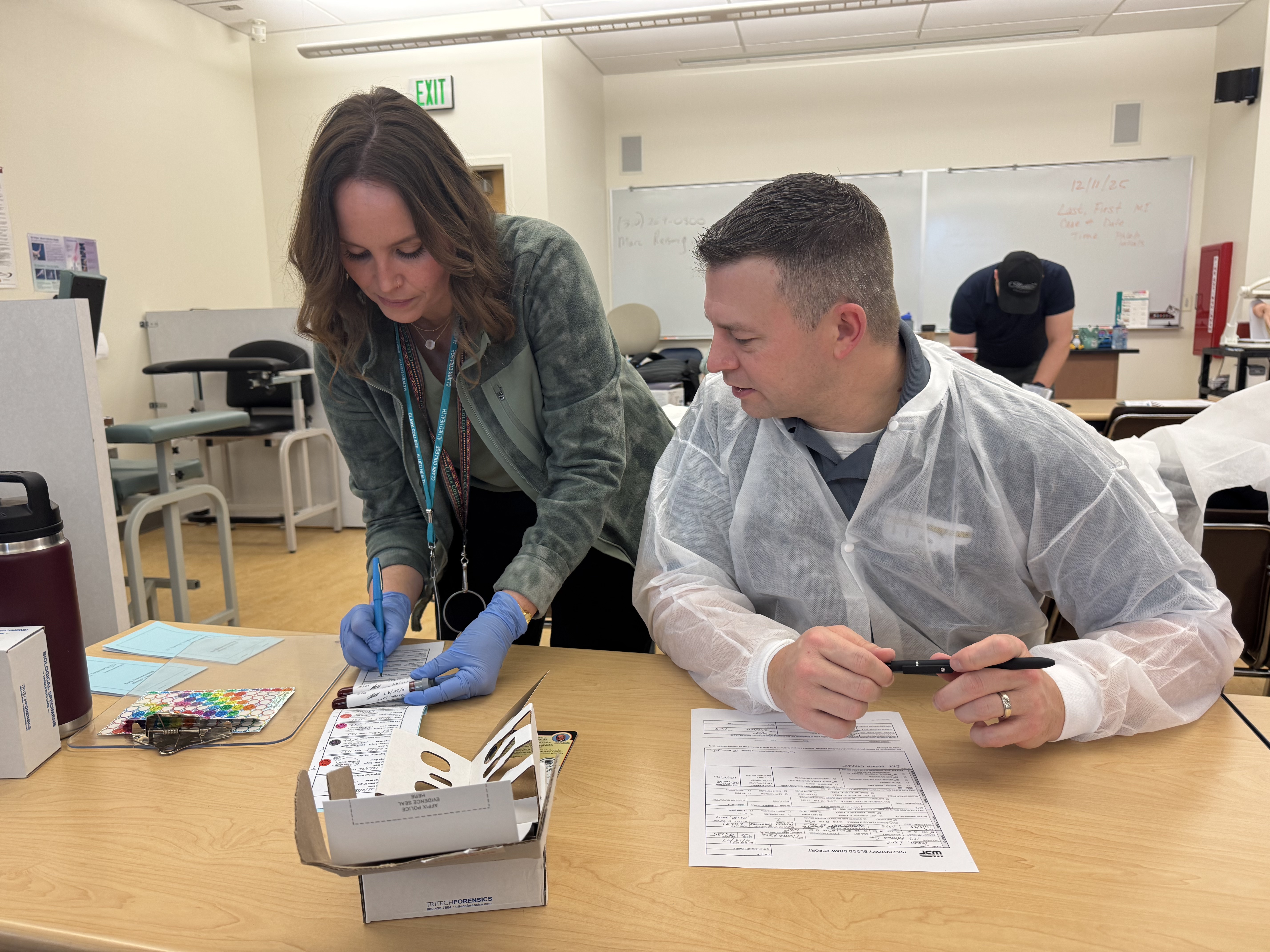
Pictured: Dr. Amy Castellano, head of Clark's phlebotomy program, reviews a log of live blood draws with Trooper Hansen
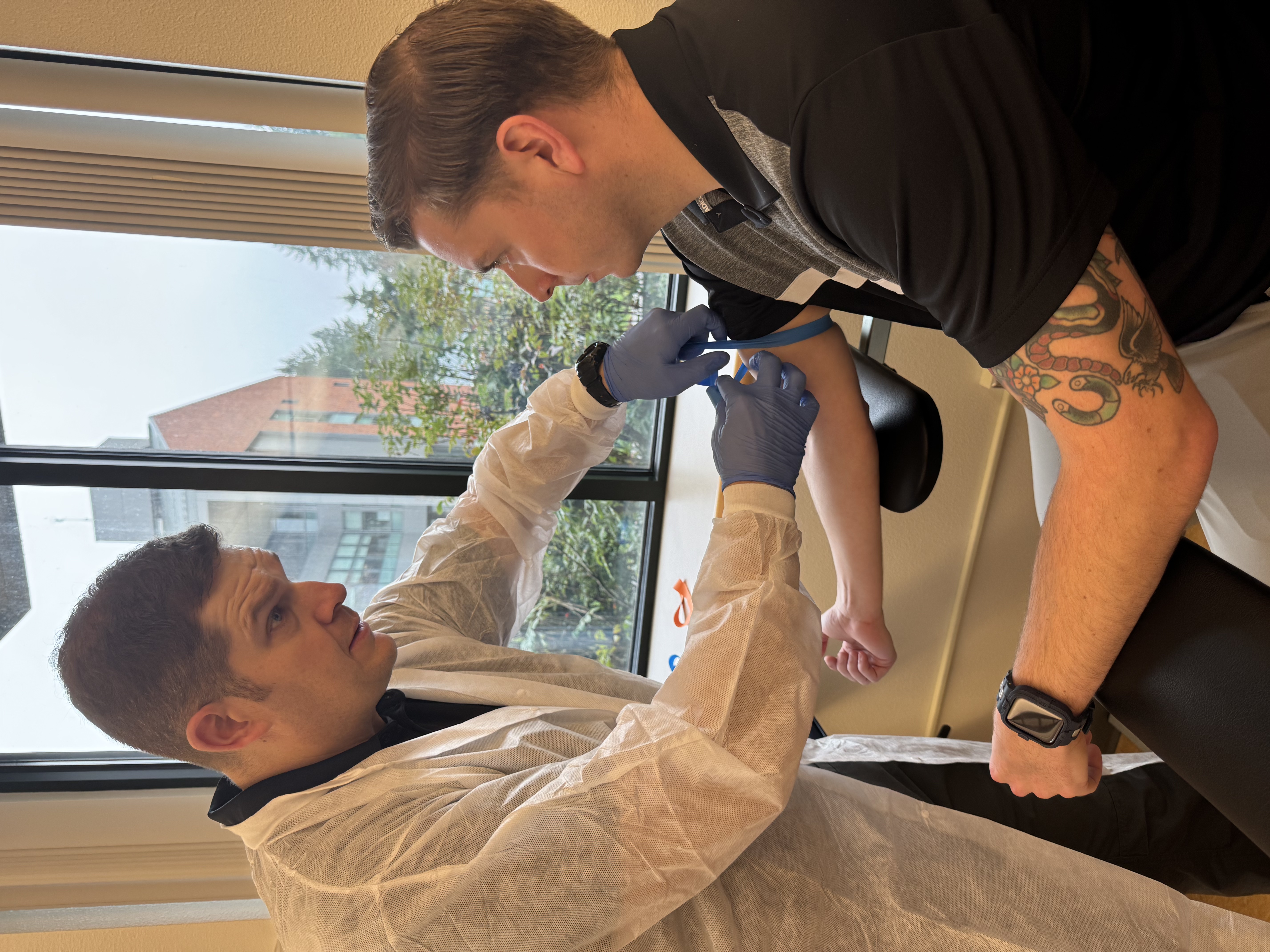
Washington State Patrol troopers recently rolled up their sleeves—literally—for hands-on phlebotomy training, thanks to a partnership with Clark’s Allied Health and Community and Continuing Education programs. Held at Clark College at WSU Vancouver campus the week of Dec. 8, the training focused on practical, field-ready skills that troopers can use to make Washington’s roads safer.
The five-day training equips troopers with the skills needed to safely and effectively draw blood in DUI investigations, allowing them to collect evidence following an impaired driving offense without having to take them to a hospital—which can be time-consuming and may compromise the evidence—thus streamlining investigations while maintaining accuracy.
“There have been two similar trainings in other parts of the state, but this is the first in Southwest Washington,” said Kamla Anand, Phlebotomy Coordinator for the Washington State Patrol.
Dr. Amy Castellano, the head of the phlebotomy program at Clark, worked closely with the Washington State Patrol for almost a year to condense an entire program’s worth of material into a focused course tailored specifically to law enforcement needs and real-world conditions they encounter in the field. The revised training includes 16 hours of hands-on instruction and four hours of policy.
At the end of the training, volunteers—including members of Mothers Against Drunk Driving—came to campus to allow troopers to complete live blood draws, reinforcing the shared community goal of reducing impaired driving. Throughout the week, troopers also practiced with each other, logging dozens of repetitions.
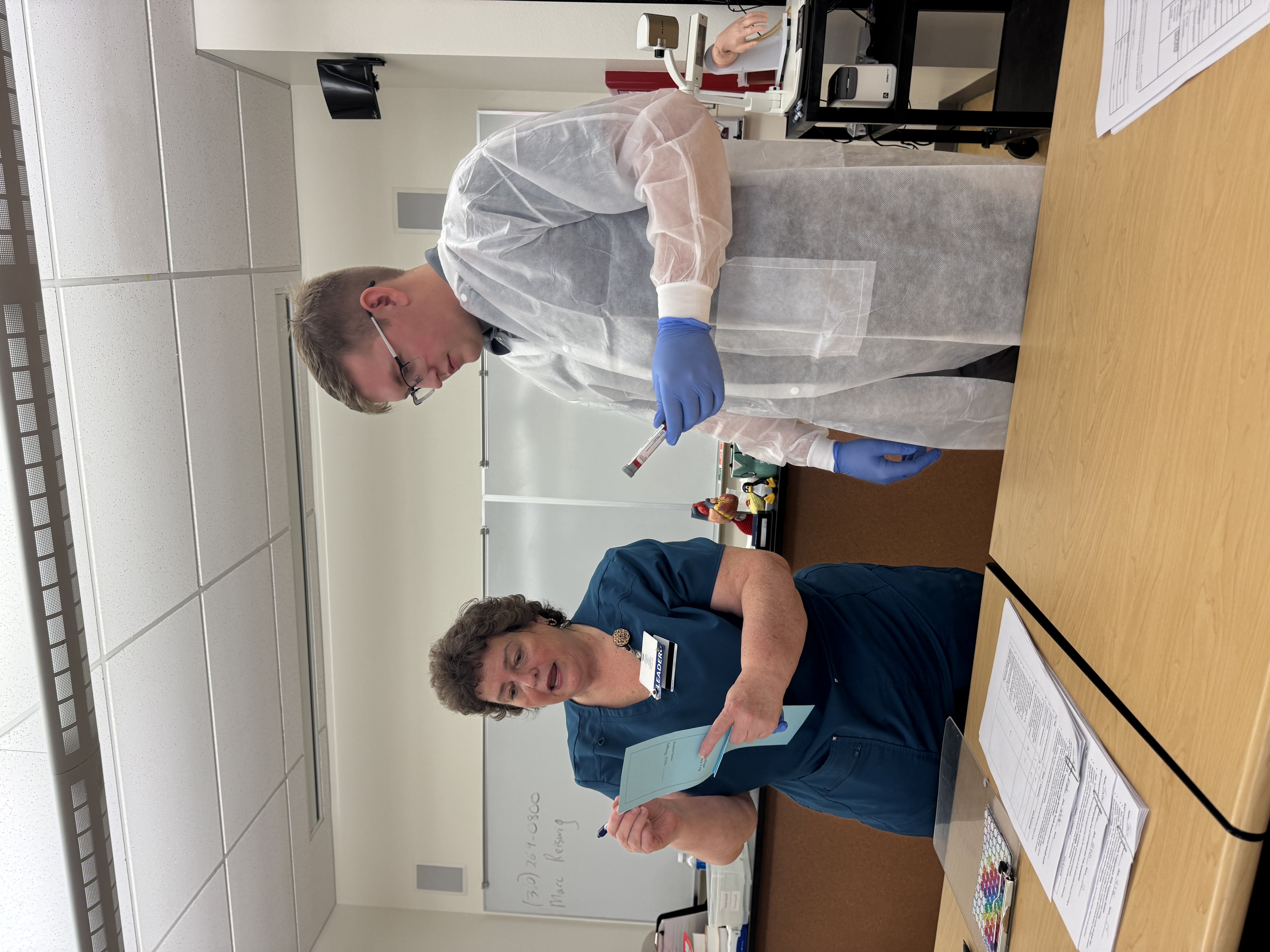
Faculty member Lori Anderson (pictured right with a state trooper), who has taught in Clark’s phlebotomy program for more than 30 years, guided troopers through each step.
“The troopers were very receptive to feedback,” Lori said. “They’ve quite literally given their blood, sweat, and tears to keep the roads safe. They genuinely want to help the community.”
“It was an honor to be selected to hold this training for the WSP,” Amy added. “Lori and I were very impressed with the officers’ professionalism and their careful and thoughtful approach in performing the procedural steps. They were eager to learn why they were doing what they were doing and make it as safe and painless as possible.”
To complete the training, troopers were required to successfully perform 20 live blood draws with an 80% success rate, meaning each tube was filled to the appropriate level and labeled correctly, just as it would need to be in the field.
Learn More About Phlebotomy at Clark
Clark College’s Phlebotomy program prepares students for careers in a growing health care field through hands-on training with experienced faculty. Students learn a range of blood-collection techniques, specimen processing, safety and infection-control practices, and complete a clinical externship that provides real-world experience. Graduates are eligible to pursue Washington state licensure and national certification. Learn more about Clark’s Phlebotomy program.
Photos: Clark College/Carly Rae Zent
Story by Malena Goerl, Staff Writer, Communications and Marketing