
A STEM-Licious Experience
Clark hosts annual camp for high school students to explore STEM and Culinary fields
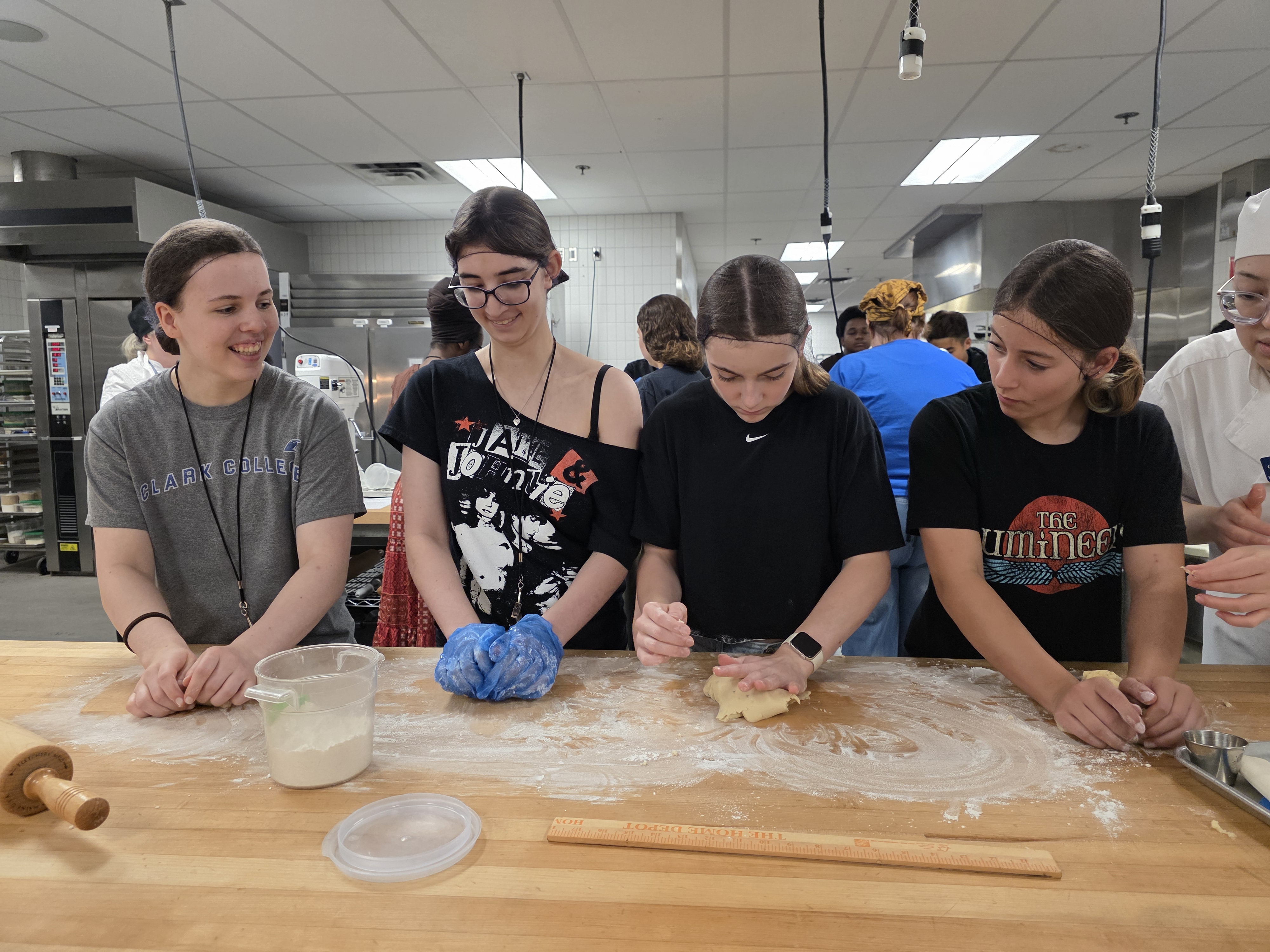 Pictured: STEM-licious camp attendees bake honey lavender shortbread cookies at the
McClaskey Culinary Institute.
Pictured: STEM-licious camp attendees bake honey lavender shortbread cookies at the
McClaskey Culinary Institute.During the last week of June, local high schoolers proved that learning doesn’t stop at the end of the school year. More than 30 students explored the STEM and culinary fields at this year’s STEM-licious camp, a fusion of science, engineering, and the culinary arts.
Students were divided into two groups: Team Measuring Mash and Team Cosmic Cup. Over the course of two days, each group got to sink their hands and minds into scientific sessions on topics from astronomy to baking, thanks to generous support from Guided Pathways, Pacific Power Foundation, the Clark College Innovation Grant, and Entry Services.
From the Sky to the Land
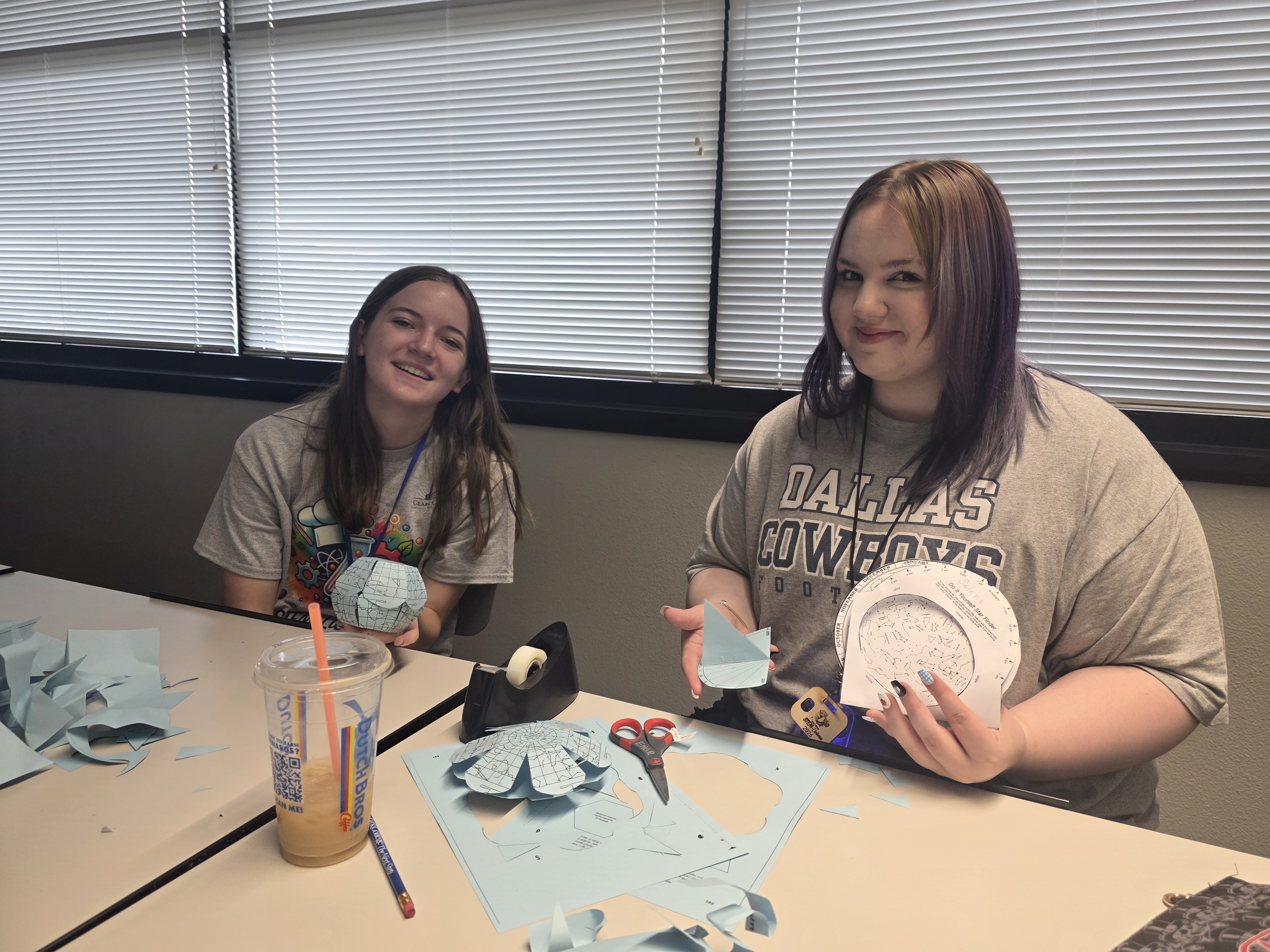
Pictured: Camp attendees hold up astronomy projects: a celestial globe, sundial, and star finder.
In Dean Theo Koupelis’s classroom, students shot for the stars with projects that had them looking to the sky. One astronomy task had them decoding “extraterrestrial” messages using prime numbers. But the skill isn’t just for celestial situations — it’s also important for careers in cybersecurity. Any time a transaction happens online, Theo explained, prime-numbered codes are used.
Their hands stayed busy throughout the session: they created their own star finders while discussing constellations. Then, constructed a sundial out of paper — the same method, but with rocks and a stick, that historical scientists used to determine the size of Earth. Finally, students built their own celestial globe.
In Professor Brian Miyake’s surveying session, students learned how to use a compass and measure distance with nothing but their own two feet. Brian also emphasized the importance of measuring accurately in the surveying field — down to the hundredths of an inch, to be exact.
To show exactly why this was important, students paced down the path outside of the Health Sciences building, counting their steps aloud, then calculated how many feet were in one step. Then, they put that measurement to the test during a scavenger hunt. Students were given a direction and a distance, and using their compasses, they paced their way to various landmarks around campus. While a few participants found their way to the correct plaque on the ground, others learned the hard way that accuracy is key when they ended a few yards away from their classmates.
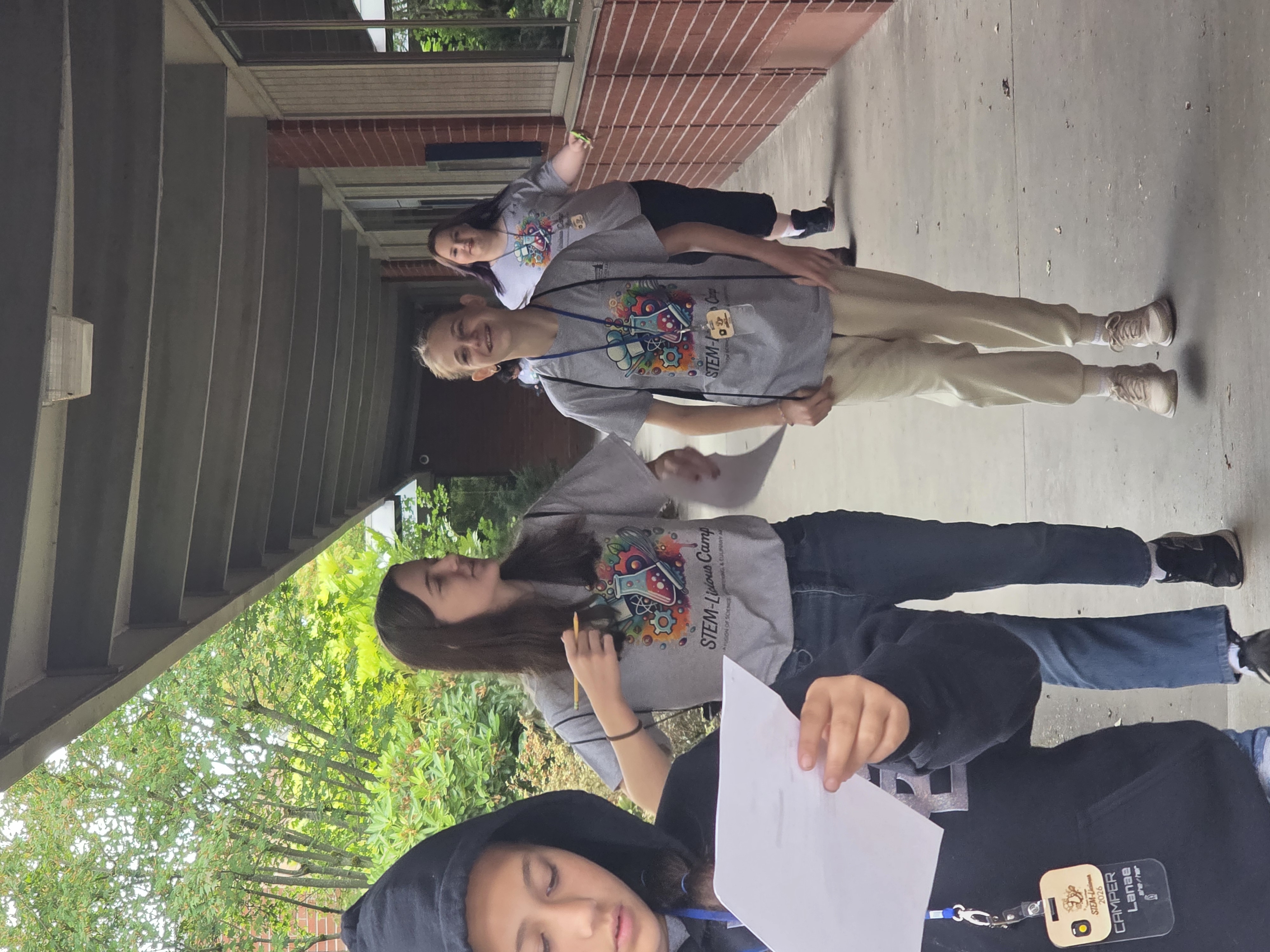 Pictured: Students count how many steps they take in a set distance.
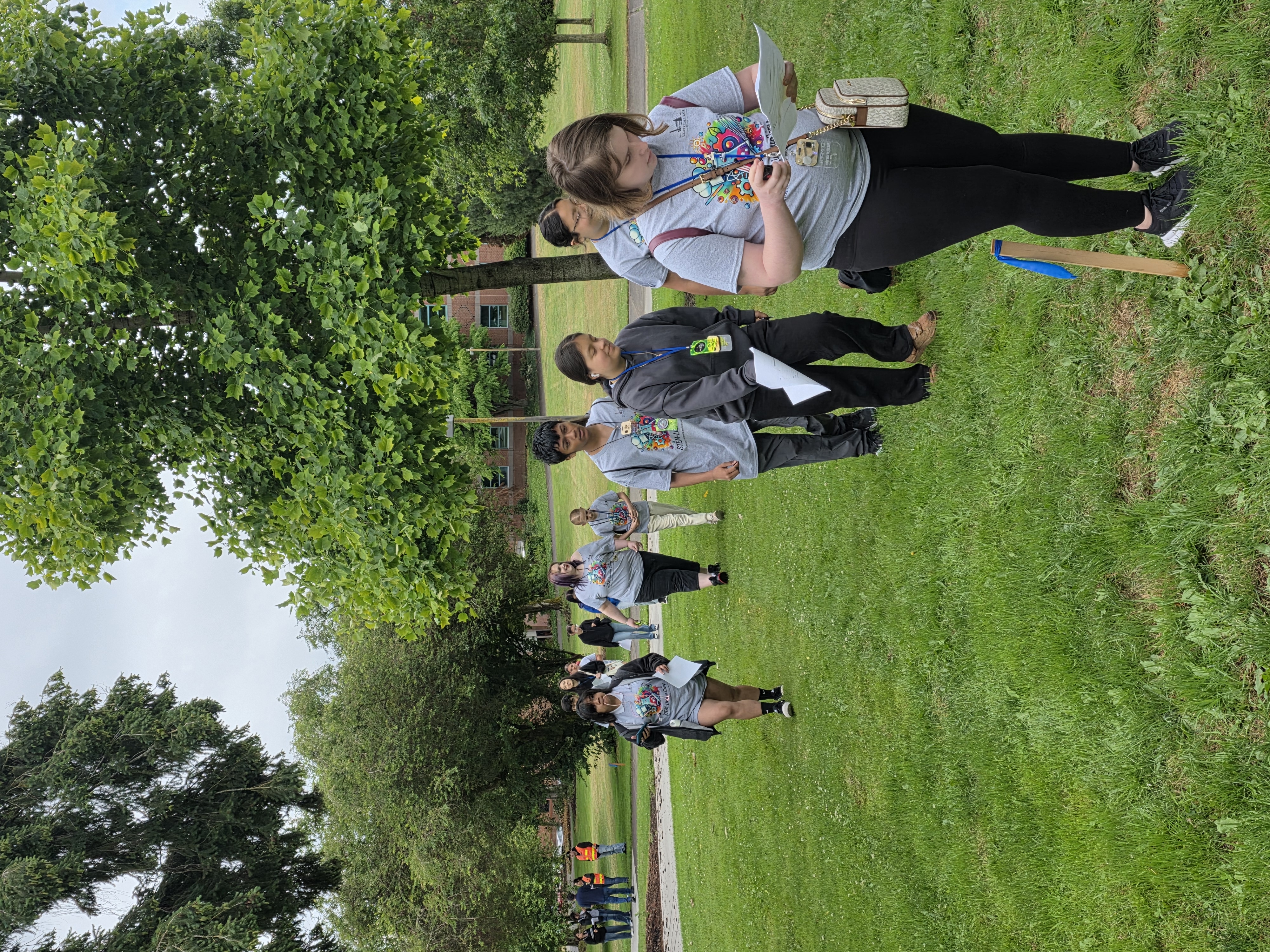 Pictured: Students look for clues during a scavenger hunt.
Honing in the Hive
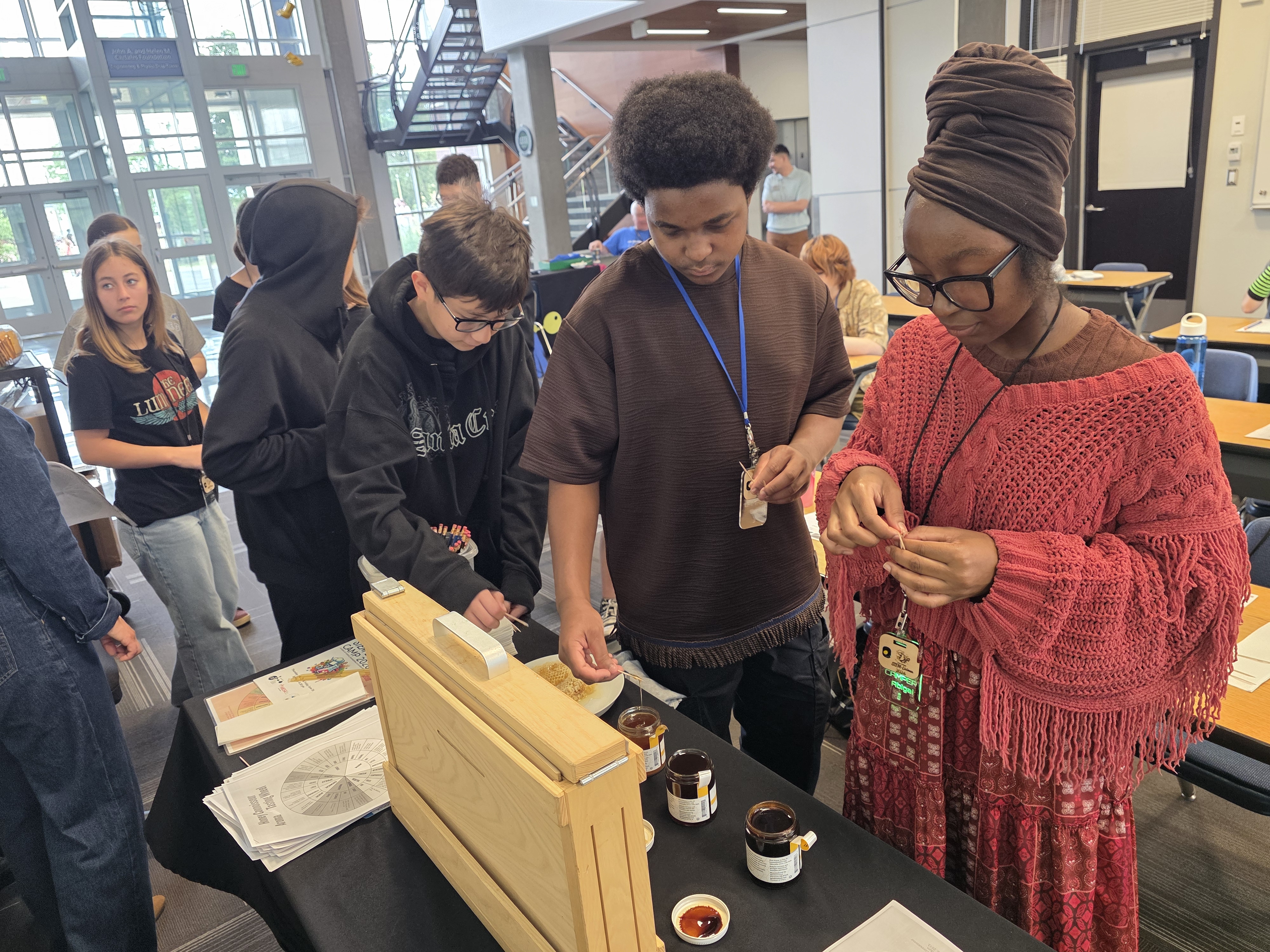
Pictured: Camp attendees taste honey during a presentation from Jacobson Salt Co.
The students’ scientific journey continued when Daniel Szumlas and Kyle Roslund from the Vancouver Bee Project discussed the many bee species found in Washington. Students observed bees under a microscope to identify some of their unique features before heading to the bee garden outside of the STEM building. Armed with nets and bee jars, students searched for bees on the flowers, capturing them just long enough to identify their species before setting them free again.
Then, Emily Schmiedel, the Head Beekeeper in the Jacobson Salt Co’s Hive Steward Program, spoke with the students about the complexity of honey. Students got to taste different flavors while learning about the process of making honey, such as how bees mix pollen and enzymes in their guts before storing the honey in the hive to continue processing.
As students noted the flavor, texture, and smell of the various honeys, Emily explained that to name a honey after a certain flavor, like blackberry, you have to be able to prove that it’s the primary floral source for those bees — but that specificity is why she loves honey. “It’s a snapshot of a moment in time of a landscape,” she said.
Students were curious about the conservation of this unique field and asked about how they can best support local bees and beekeepers. One student found the session so inspiring that he is now considering beekeeping as a future career.
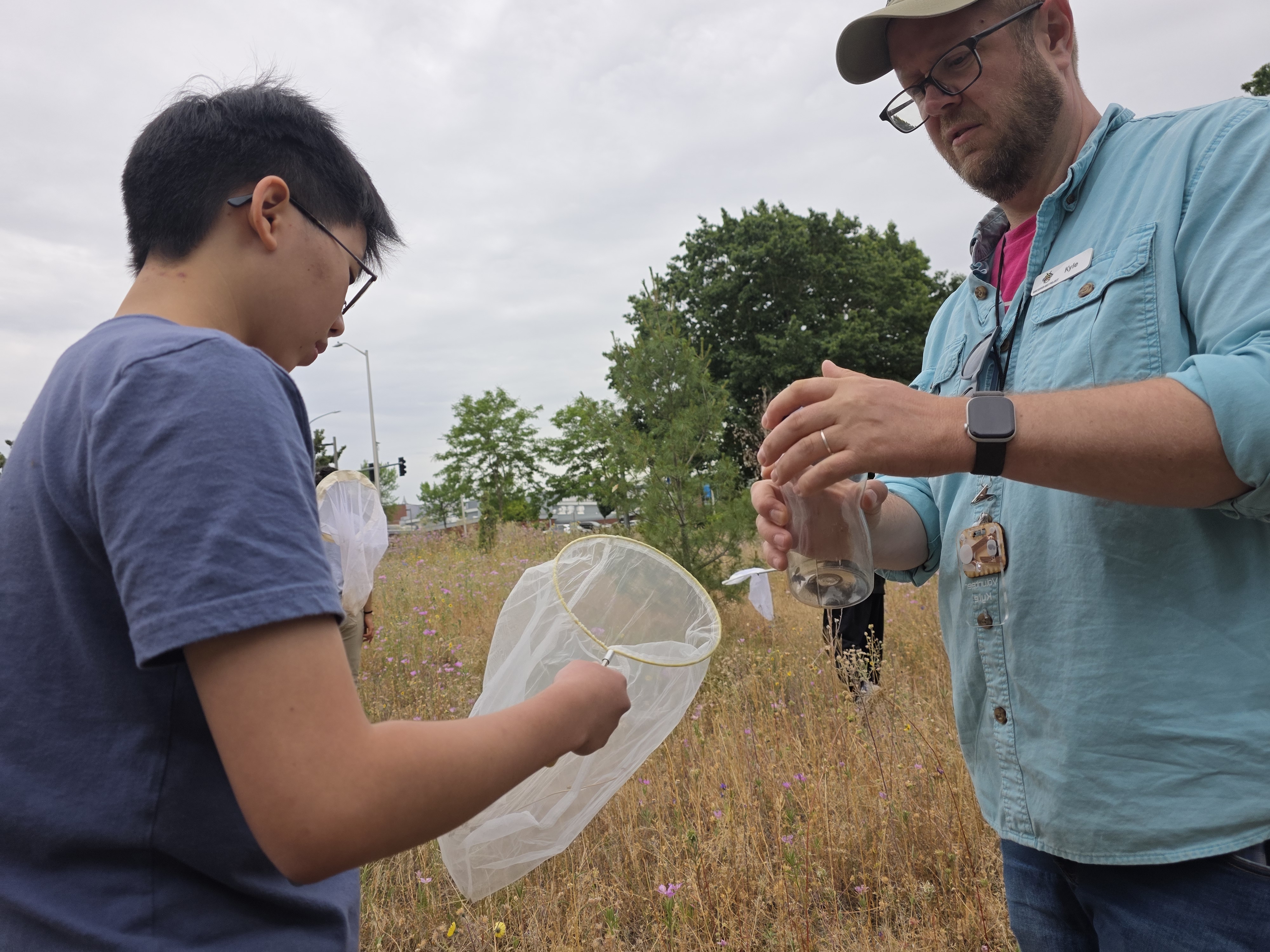 Pictured: Kyle Roslund (right) and a student capture a bee.
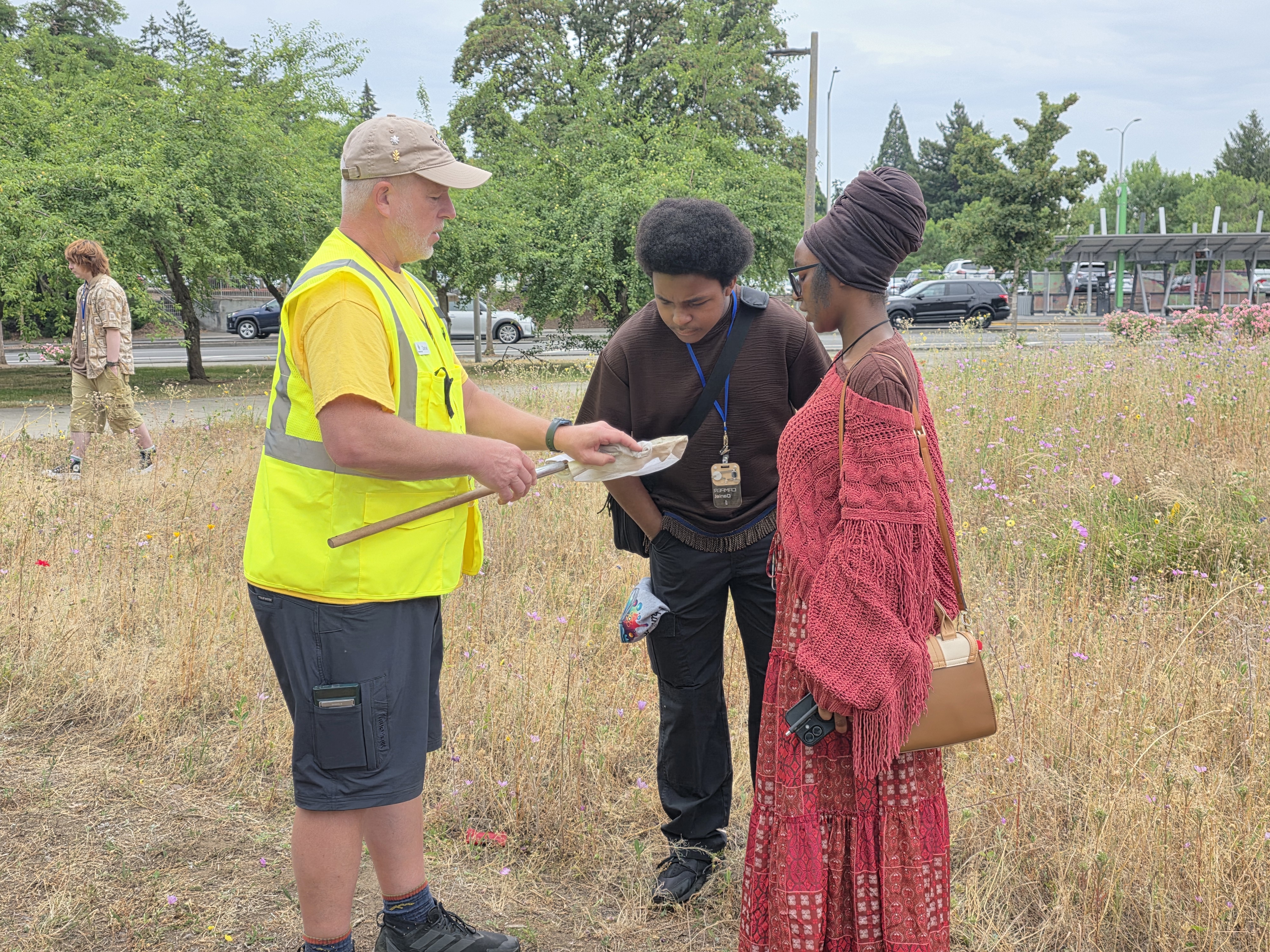 Pictured: Daniel Szumlas (left) captures a bee in a net.
A Taste of Honey
In the kitchen at the McClaskey Culinary Institute, students saw another side of science when they learned to cook and bake with the sweet ingredient they now knew all about — honey. With Chef Wendy Rodgers and Chef Melanie Hendry, students baked honey lavender shortbread cookies, honey brown butter cookies, and honeycombs. On the culinary side, Chef Rebecca Kaplan and Chef Amanda Howell walked students through the process of making their own honey ricotta, which they ate with toast, grilled peaches, and other fresh garnishes.
Many students joined STEM-licous specifically to learn more about the science behind food. One student had recently made a cake that didn’t rise, and he was looking forward to learning the reason why while at camp. Another student explained that while she wants to be a nurse practitioner, she is also passionate about baking.
“Baking is my hobby,” she said. “I make all kinds of things, but I wanted to learn more!”
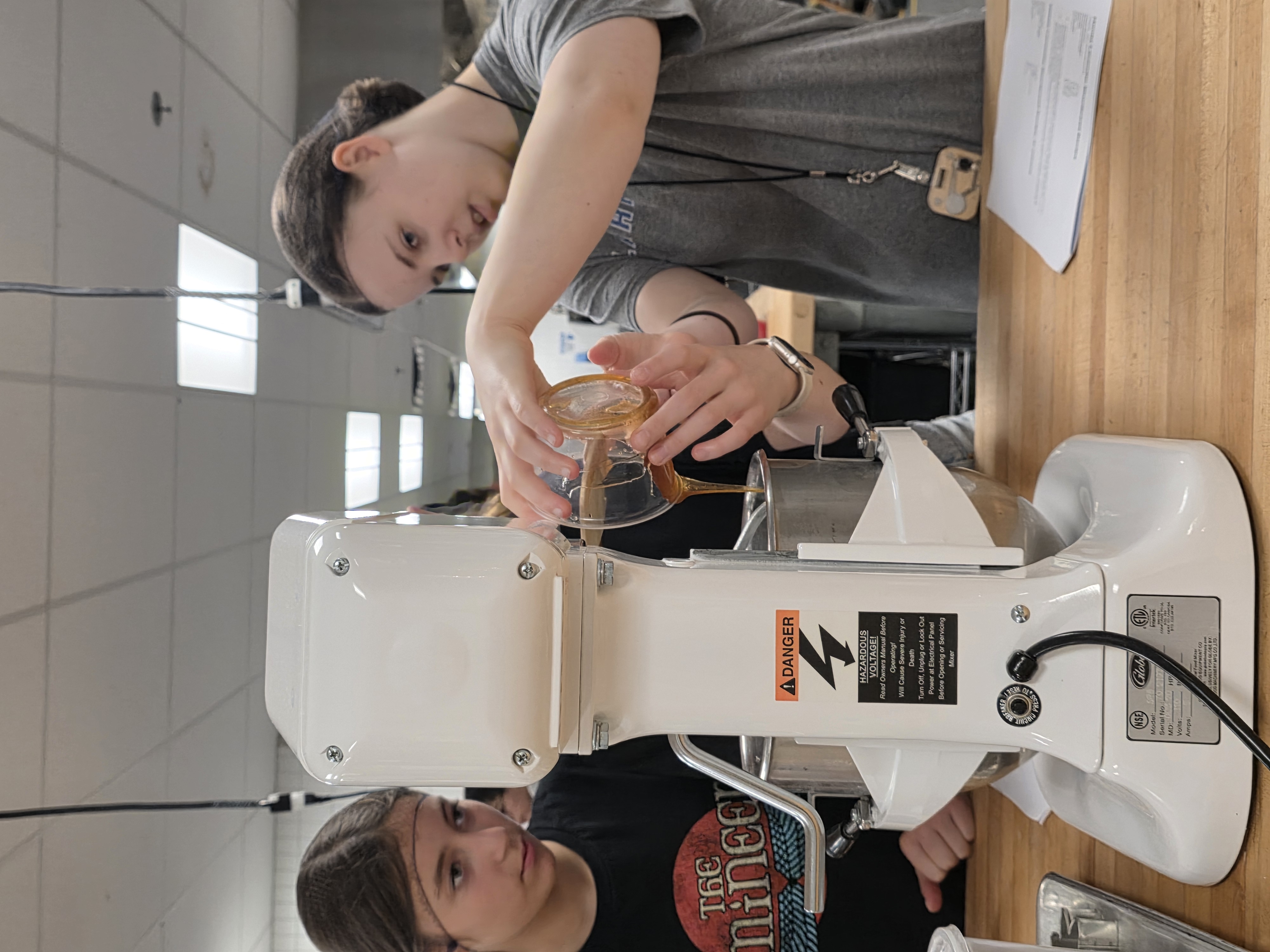 Pictured: Students pour honey, the star ingredient of the day, into their mixing bowl.
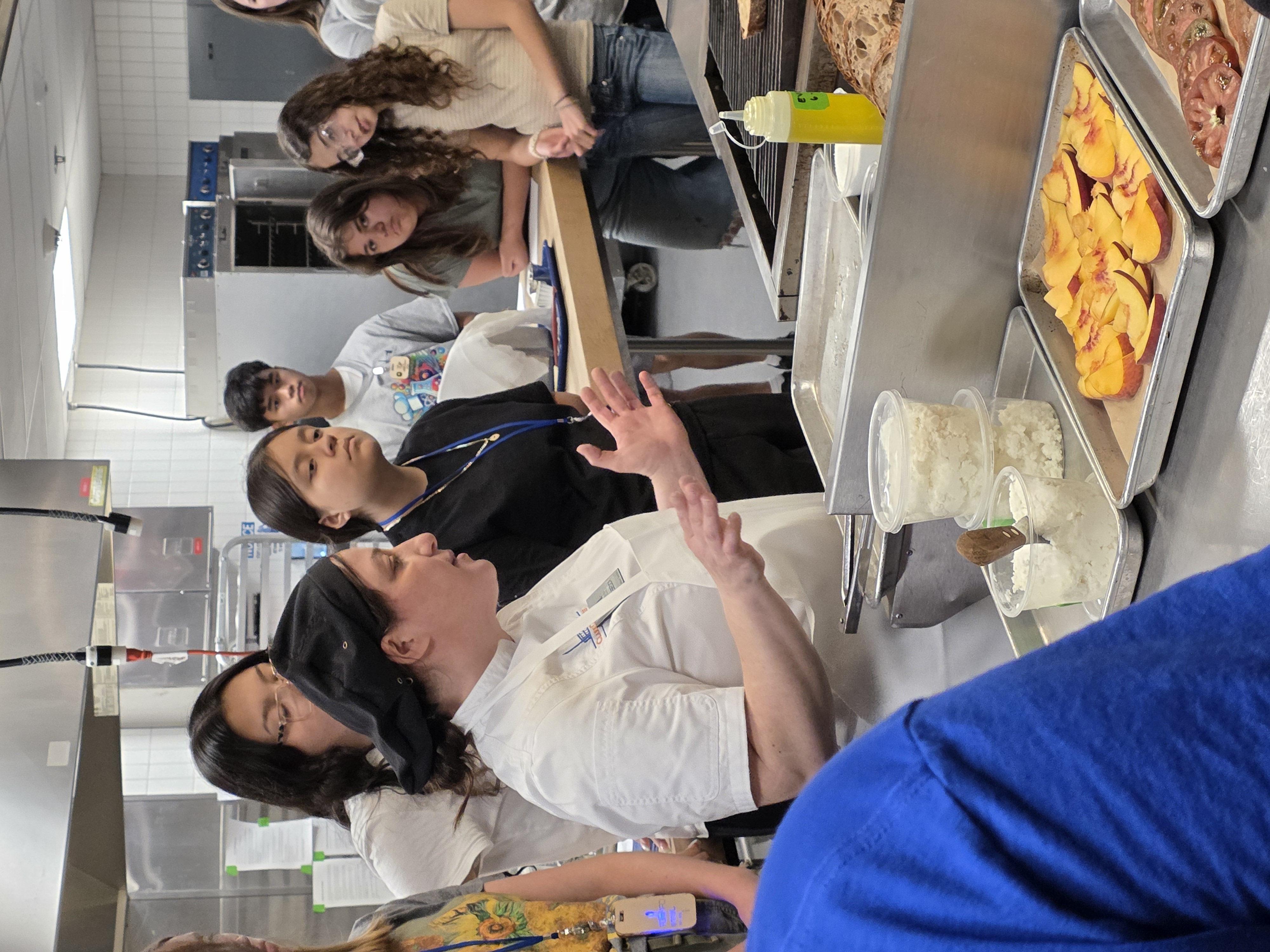 Pictured: Chef Rebecca Kaplan explains how to make honey ricotta.
Learn More About the Programs Behind STEM-Licious
Clark College’s STEM degrees and certificates equip students with hands-on, real-world experience in Science, Technology, Engineering, and Math. The program is anchored by a state-of-the-art, 70,000-square-foot STEM building featuring advanced labs, a high-tech makerspace, and unique learning tools like a 44-foot drop tower. With small class sizes, cutting-edge labs, expert faculty, and a collaborative learning environment, the program prepares students for transfer to a four-year university or entry into high-demand careers in today’s tech-driven world. Learn more about Clark’s STEM Programs.
Mathematics, Engineering, Science Achievement (MESA) at Clark College prepares students who are in a STEM graduation pathway with plans on transferring to a 4-year institution. MESA supports students as they complete their pre-transfer academic journey at Clark, with a focus on supporting their transition to a bachelor’s degree. Learn more about MESA at Clark.
The Tod and Maxine McClaskey Culinary Institute at Clark College is the only public, accredited culinary program in the metro region offering a two-year associate in applied technology degree. Students benefit from a rigorous curriculum, a seasoned team of instructors with real-world experience, state-of-the-art culinary facilities, and strong industry partnerships. Learn more about Cuisine Management at Clark.
Photos: Clark College/Malena Goerl
Story by Malena Goerl, Staff Writer, Communications and Marketing