
Anthropology
About
Anthropology is the holistic study of humankind – encompassing culture, evolution, and ecological adaptation. Insights and practices from anthropology can be applied in health care, education, environmental studies, the social sciences, law, business, and more.
Request Information
Contact
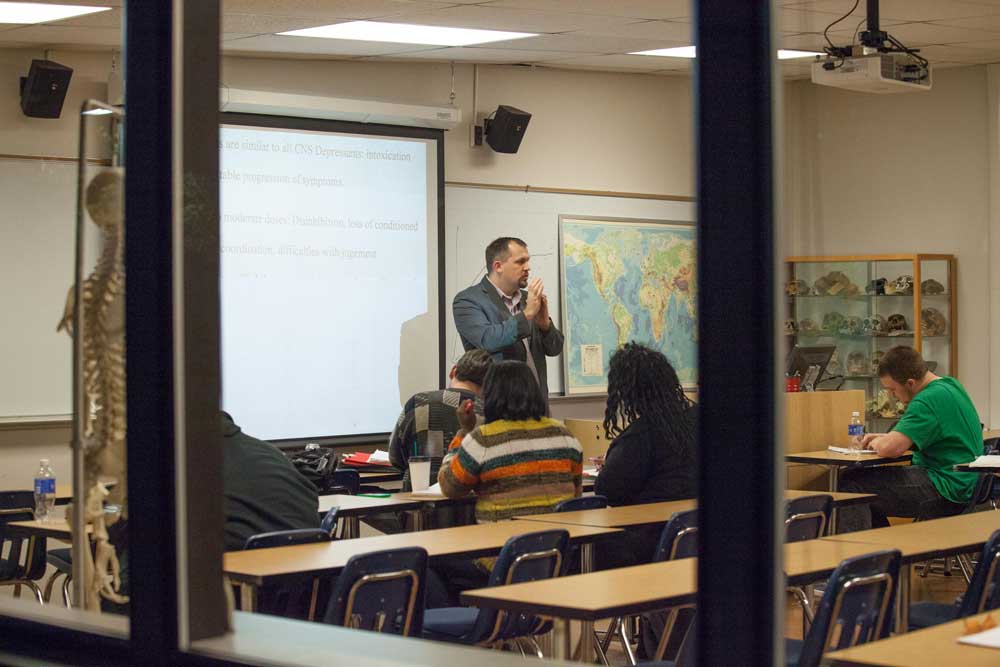
Learning to analyze humankind from a cultural and biological lens
What does it mean to be human?
What can we learn from the diversity of ways that people (living in different places and times) live, adapt, and conceptualize their worlds?
How are we shaped by ecology, evolution, and culture, and how do we compare with other species that share some of our abilities?
Anthropology studies these questions from a broad, cross-cultural, comparative perspective.
Using the tools of science, anthropologists explore how culture, ecology, and evolution shape the ways we grow up; think; learn; communicate; form relationships; organize ourselves into societies; experience differences in power and inequality; cope with health challenges; and make a living.
Clark's Anthropology Department offers students access to expert faculty and classes in these core subfields of anthropology:
- Archaeology (the study of ancient and prehistoric cultures of the world, including how they adapted to local environments, and methods for analyzing archaeological data)
- Cultural anthropology (the study of cultural diversity)
- Biological Anthropology with lab (overview of the subfields of biological anthropology)
- Primatology (the study of the behavior & adaptations of primates, including the evolution of intelligence, and implications for understanding humans)
Coursework provides students with transferable skills for a variety of career paths. It also provides a solid foundation for students who plan to transfer to a 4-year institution to complete a major in anthropology.
Learn more about our course offerings
Benefits of anthropological training for a wide range of career paths
Anthropology prepares us to face the challenges of the 21st century with crucial skills and tools, including open-minded curiosity, scientific critical thinking, and cultural relativism.
In addition, studying anthropology offers extremely useful insights for a variety of fields – including health care; psychology; communication; education; environmental studies; history; political science; gender studies; economics; business; law; human-centered design; philosophy; systems analysis, and more.
Career pathways for aspiring anthropology majors
Students of anthropology develop skills in research, analysis, communication, and understanding human diversity.
For students with a bachelor's degree, these skills can prepare students for employment in cultural resource management, museums, research, government, nonprofits, community organizations, business, communications, and health-related fields.
With appropriate coursework, students with bachelor's degrees in archaeology and biological anthropology can also pursue entry-level jobs as field and laboratory technicians.
A bachelor's degree in anthropology can also provide students with a foundation for pursuing advanced training in the traditional subfields of anthropology, as well as in
- Medicine, epidemiology, and public health
- Contract archaeology and cultural resources management
- Ethnic studies, area studies, and gender studies
- Ecology, conservation, and resource management
- Cognitive science, linguistics, and neuroscience
- Law and forensic investigation